One of Washington’s most powerful Republicans has made a major decision about his future before voters determine which party will control Congress.
The declaration comes as the GOP prepares to spend hundreds of millions of dollars to protect vulnerable seats and preserve what its leader sees as an essential barrier against Democrats.
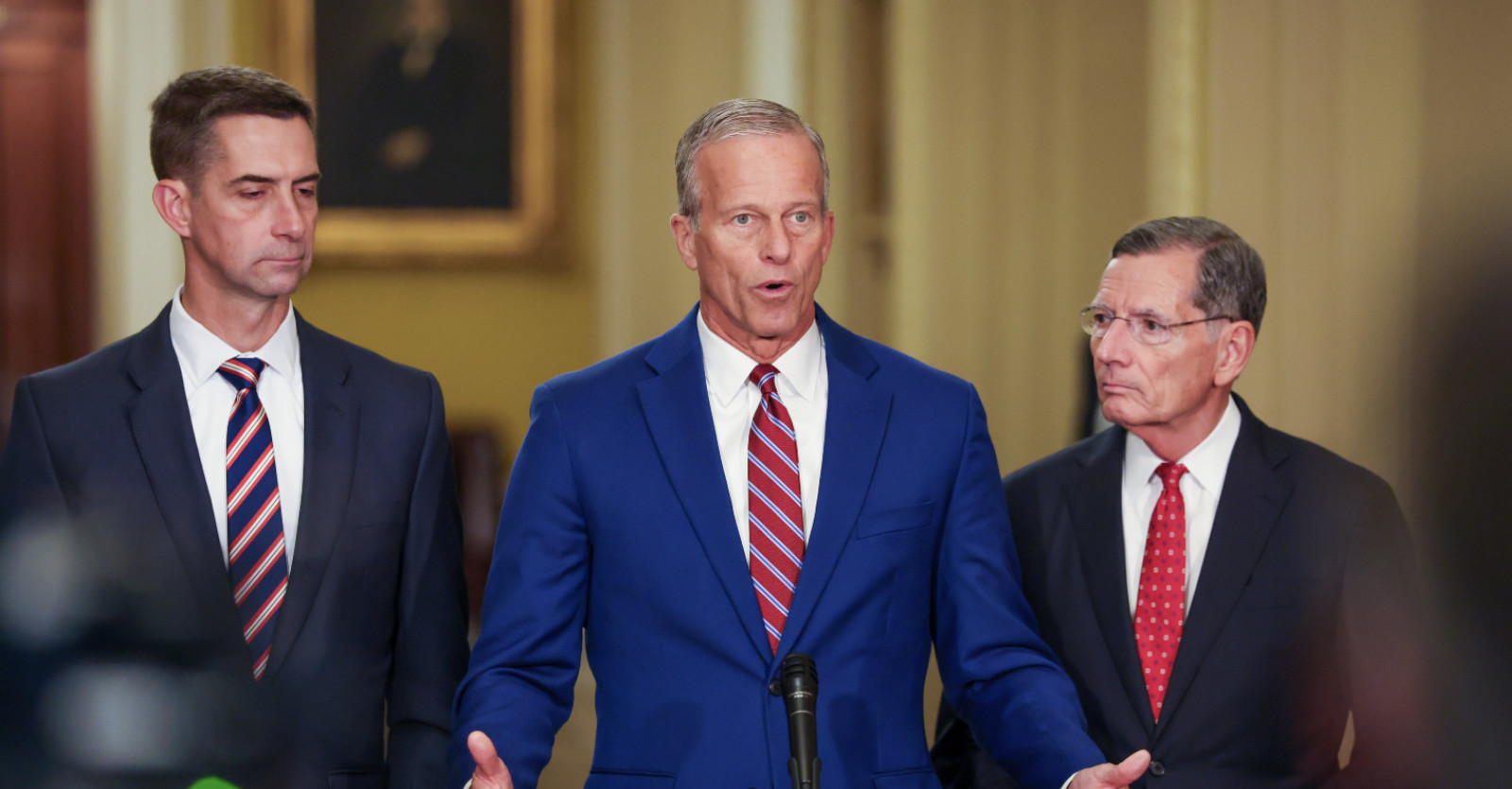
Senate Majority Leader John Thune plans to seek another term as the Senate Republican leader even if the party loses its majority in the 2026 midterm elections, the South Dakota Republican told Axios.
“That’s ultimately up to the conference,” Thune said when asked whether he would seek to remain leader following a possible Republican defeat, before confirming, “That’s the plan.”
Thune acknowledged that another Republican could challenge him for the position and said the midterms’ outcome would shape how conference members view the party’s leadership and direction.
“You can’t rule anything in or out,” Thune said about a possible leadership contest.
Thune portrayed the Senate as a critical “firewall” that could stop Democrats from pursuing investigations and impeachment efforts if they regain control of the House while Republicans retain the Senate.
“We will spend probably the next two years — if the House flips — trying to do impeachment or investigations, etc.,” Thune said.
A Republican-controlled Senate would also retain power over judicial and executive branch nominations, allowing the party to continue advancing nominees put forward by President Donald Trump.
Thune is giving Republican candidates significant flexibility as they navigate what he described as a difficult political environment, including permission to distance themselves from Washington leaders or particular positions when their races require it.
His general instruction to Republican senators is to avoid surprising leadership, remain with the team whenever possible, and ultimately do what is in the best interest of their states.
The majority leader also wants the Senate to hold additional votes that Republican candidates can promote at home, including possible action on permitting reform legislation that is currently being negotiated.
Thune said he could schedule a procedural vote on permitting reform after the final vote on the Protect College Sports bill, while another possibility involves House-passed legislation targeting the energy costs associated with data centers.
This development comes as President Donald Trump is preparing to take a prominent role in the final stretch of the 2026 midterm campaign as Republicans fight to maintain control of both chambers of Congress.
James Blair, Trump’s political director and one of the president’s top midterm strategists, outlined the GOP’s closing strategy.
Blair said the effort will combine national messaging, aggressive turnout operations, and substantial campaign spending in competitive House and Senate races.
Blair described the strategy as “twofold,” arguing that both national political conditions and the strengths and weaknesses of individual candidates shape congressional elections.
“Elections are not all national, and they’re not all local,” Blair said. “It’s a little bit of both.”
At the national level, Republicans intend to link Democratic candidates to positions taken by the broader Democratic Party, while GOP candidates will be encouraged to draw direct contrasts with their individual opponents.
Blair argued that Republicans should prevent Democrats running in competitive states and districts from separating themselves politically from their national party.
A major component of the strategy will involve Trump himself.
Blair said the president will become “extremely active” during the final six weeks of the campaign, with appearances and political activity increasingly coordinated with the beginning of early and mail voting around the country.
Republicans also plan to encourage supporters to vote before Election Day rather than relying exclusively on the traditional Nov. 3 turnout operation.
“Vote now by mail if you want to. Vote in person early if that’s your preference. Don’t wait till Election Day,” Blair said.
That effort is particularly focused on what Blair called “low- and mid-propensity” Republican voters — people who supported Trump in presidential elections but are historically less consistent participants in midterms.
Trump’s political operation believes the president is particularly effective at reaching those voters and is building its turnout effort around that assumption.
This article may contain commentary which reflects the author's opinion.
