Two Supreme Court justices from opposite ends of the ideological spectrum joined Tuesday in criticizing the federal government’s prosecution of a Mexican national, raising concerns that authorities violated constitutional protections against prosecuting someone twice for the same offense.
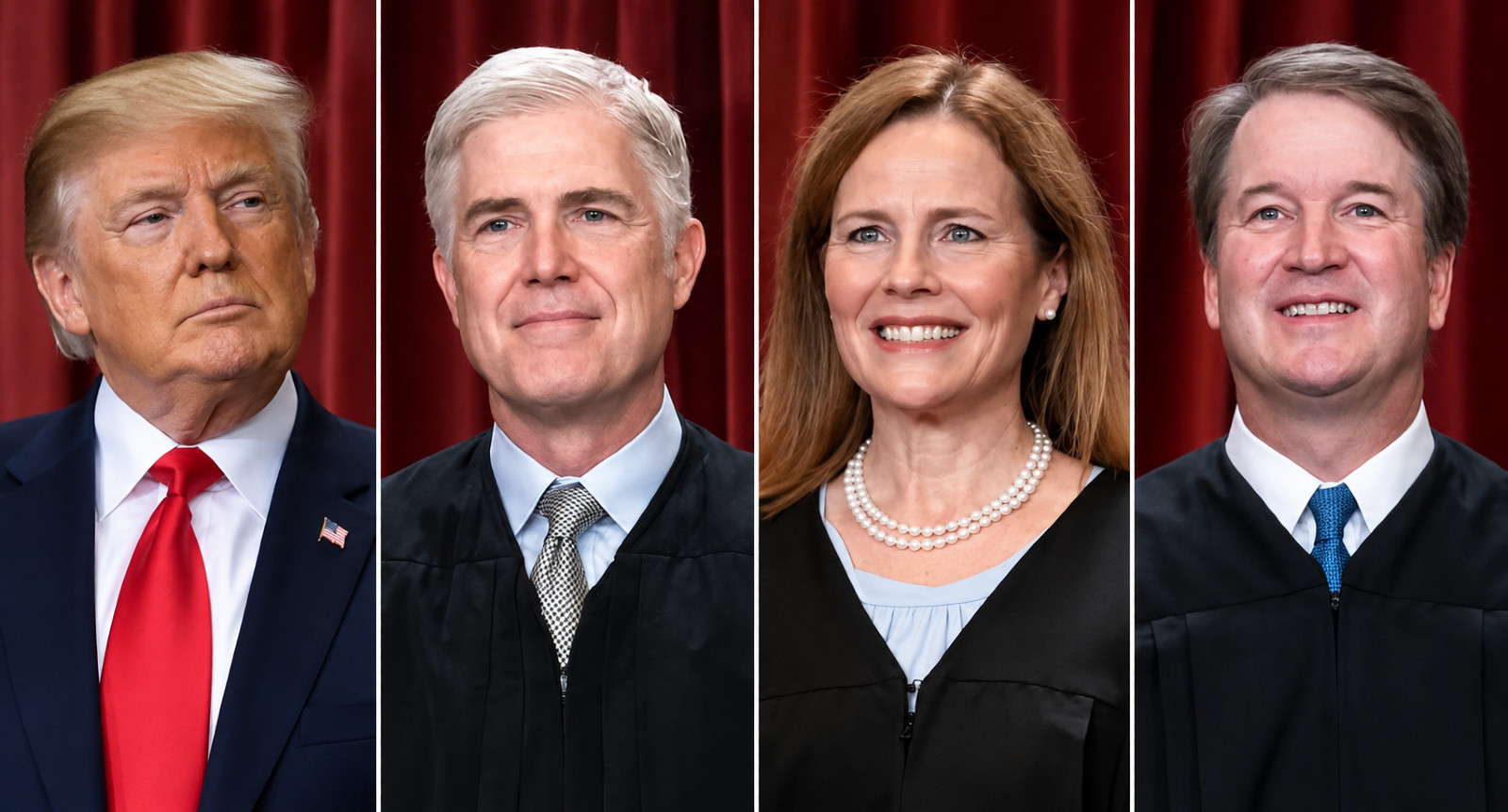
Justice Sonia Sotomayor, appointed by former President Barack Obama, and Justice Neil Gorsuch, appointed by President Donald Trump, questioned the government’s handling of Jesus Herrera-Salazar, who was convicted twice of illegally being present in the United States following deportation.
The unusual agreement came as the Supreme Court declined to hear Herrera-Salazar’s appeal, leaving his convictions intact while prompting a written statement from the two justices.
Sotomayor, joined by Gorsuch, warned that the government’s actions raised significant questions under the Fifth Amendment’s Double Jeopardy Clause.
The case began in 2020 when Herrera-Salazar was arrested in Texas and charged with being unlawfully present in the United States after previously being deported.
He pleaded guilty to violating federal immigration law and served a prison sentence.
Following his release, Herrera-Salazar was placed under federal supervision and specifically instructed not to leave the Eastern District of Oklahoma.
However, while complying with those restrictions, he was stopped by police in Heavener, Oklahoma, in April 2022.
Federal prosecutors subsequently charged him again during the Biden administration with being illegally present in the country, relying on the same underlying deportation and unlawful return that formed the basis of his original conviction.
A jury found him guilty, resulting in another prison sentence and an additional period of supervised release.
Herrera-Salazar challenged the second prosecution, arguing that the government had violated his constitutional rights by punishing him twice for the same continuing offense.
The U.S. Court of Appeals for the 10th Circuit rejected that argument, concluding that the two convictions involved separate violations of federal immigration law.
However, Sotomayor and Gorsuch questioned that reasoning.
In her written statement, Sotomayor argued that the government’s interpretation of the law created a situation in which Herrera-Salazar could face repeated prosecution simply for remaining in the country.
She noted that federal authorities had specifically prohibited him from leaving the United States while he was under supervision.
The justice questioned how the government could legally require someone to remain in the country and then prosecute that individual for continuing to be present.
Sotomayor also challenged the appeals court’s interpretation of the federal statute prohibiting previously deported immigrants from being found in the United States without authorization.
She argued that the offense involved continuous conduct rather than separate criminal acts occurring whenever authorities encountered the same individual.
Under the government’s interpretation, she warned, prosecutors could theoretically bring additional charges for each day a previously convicted individual remained in federal custody.
That reasoning, she suggested, would undermine constitutional protections intended to prevent repeated punishment for the same criminal conduct.
Sotomayor described Herrera-Salazar’s circumstances as a situation in which the government effectively left him without a lawful alternative.
After completing his first prison sentence, he was required to remain within a designated area of Oklahoma.
Yet his continued presence in the United States became the basis for another prosecution.
The justice characterized the situation as a “Hobson’s choice,” meaning Herrera-Salazar faced circumstances in which either available course of action could expose him to legal consequences.
Despite their objections, Sotomayor and Gorsuch agreed that the Supreme Court should decline to review the case.
Herrera-Salazar had already completed both prison sentences and was deported to Mexico in 2024.
Sotomayor explained that she hoped the unusual circumstances would not arise again, making further Supreme Court intervention unnecessary in this particular case.
However, she urged lower courts to give greater consideration to constitutional protections if similar prosecutions occur.
The case underscores the distinction between enforcing immigration statutes and ensuring that criminal prosecutions comply with constitutional safeguards.
While the Supreme Court declined to intervene, the justices’ statement could influence how lower courts evaluate similar double jeopardy challenges in future immigration cases.
This article may contain commentary which reflects the author's opinion.
