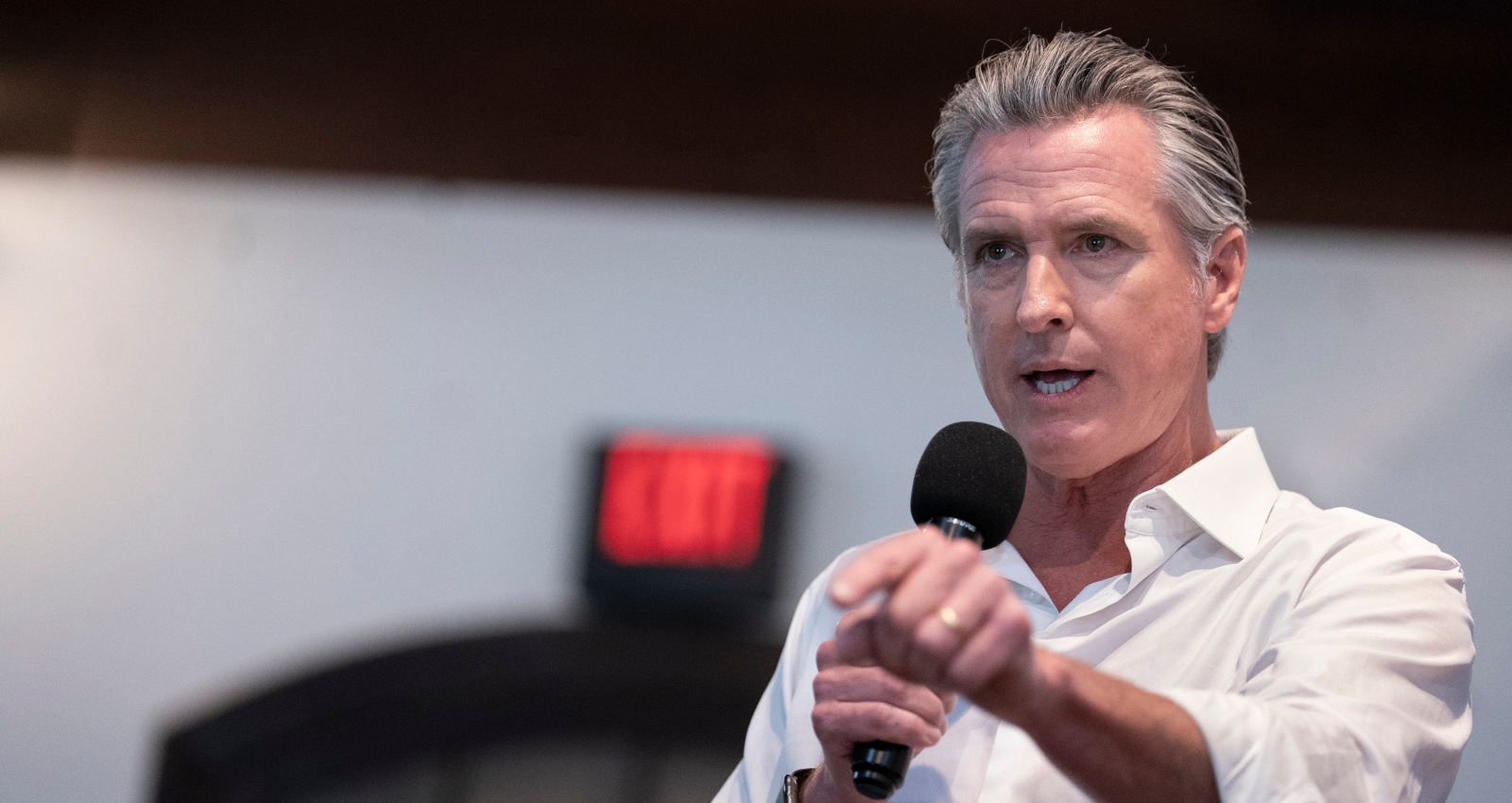
California Gov. Gavin Newsom is facing a new problem as the end of his time in office nears and as he likely prepares for a 2028 White House bid.
Newsom has a major labor confrontation on his hands after thousands of state employees authorized a one-day strike amid stalled contract negotiations involving demands for substantial pay increases, expanded benefits and more flexible work arrangements.
The Service Employees International Union Local 1000, which represents approximately 100,000 California government workers, announced Thursday that 96.2% of participating members voted to authorize a walkout scheduled for October 21.
The union is demanding salary increases totaling 20% over three years, including 7% in 2026, another 7% in 2027 and 6% in 2028.
The proposed raises would increase government payroll expenses, although the total cost to California taxpayers has not been publicly established.
The dispute comes as California continues confronting budget pressures and concerns about the long-term cost of government operations.
SEIU Local 1000 represents employees working in approximately 140 state departments and agencies, including the Department of Motor Vehicles, transportation agencies, hospitals and offices administering unemployment and disability benefits.
The union announced plans for picket lines in Sacramento, Oakland, San Francisco, Fresno, Los Angeles, San Diego and several other California communities.
If the walkout proceeds, it would mark the first statewide strike in the union’s history.
Union members previously authorized a strike in 2016, but negotiations with then-Gov. Jerry Brown produced an agreement before workers walked off the job.
The current contract expired June 30, leaving employees without a new labor agreement for more than three months.
Union President Anica Walls accused Newsom’s administration of refusing to seriously consider the organization’s proposals.
She said the union’s demands include higher salaries, more affordable healthcare coverage and modernized workplace policies.
The union also wants greater flexibility for employees whose responsibilities can be performed remotely.
The union’s proposed wage increases have attracted attention because California taxpayers ultimately finance state employee compensation.
The requested increases would amount to 20% when the three annual percentages are added together. Compounded, the increases would produce an overall raise of approximately 21.4%.
The total expense would depend on how many workers receive the increases, their existing salaries and the final agreement’s benefit provisions.
Economist Wayne Winegarden told The Center Square that the proposed raises could worsen California’s fiscal challenges.
He questioned whether the state could sustainably absorb additional payroll obligations while maintaining existing services.
Union officials counter that state employees have already accepted financial sacrifices during previous budget negotiations.
They argue that higher compensation is necessary to retain experienced workers and keep pace with rising living expenses.
Walls has also maintained that the union’s workforce accounts for less than 3% of the state budget and deserves greater consideration during negotiations.
The latest confrontation follows a difficult period for California’s public employees.
Under their previous three-year contract, workers represented by SEIU Local 1000 were scheduled to receive three successive 3% raises, with some employees qualifying for additional salary adjustments.
The agreement was projected to increase state spending by approximately $1.5 billion over its duration.
However, subsequent budget difficulties disrupted portions of the arrangement.
The Newsom administration withheld a conditional additional 1% increase in 2025 after the required economic conditions were not met.
State employees also accepted temporary compensation reductions as California officials sought to address budget shortfalls.
Those concessions effectively offset some previously negotiated wage increases.
The union additionally agreed to delay a scheduled raise until next summer.
These developments have become central to the union’s argument that workers have already contributed to the state’s efforts to control spending.
The dispute intensified after SEIU Local 1000 filed an unfair labor practice complaint with California’s Public Employment Relations Board.
The union accused the California Department of Human Resources, which negotiates labor agreements for Newsom’s administration, of refusing to bargain in good faith.
Union officials alleged that the state rejected numerous proposals without meaningful negotiations.
In late September, the labor board found that the state had failed to meet its good-faith bargaining obligations.
The Newsom administration has maintained that it remains willing to negotiate.
This article may contain commentary which reflects the author's opinion.
