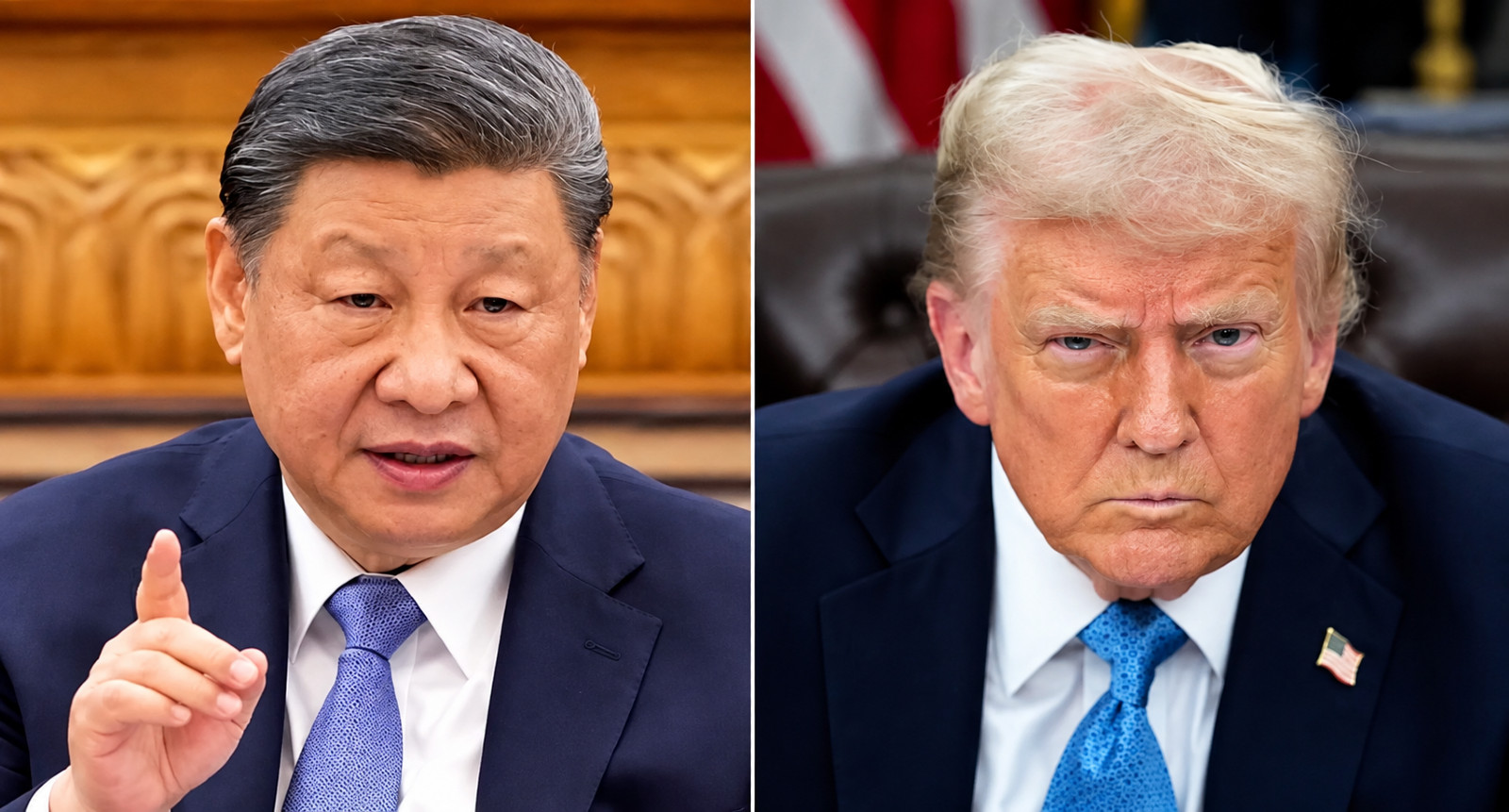
President Donald Trump will host Chinese President Xi Jinping at a White House state dinner Thursday evening, with some of the most powerful figures in the American technology industry expected to attend as artificial intelligence emerges as a major issue surrounding the leaders’ summit.
The guest list is expected to include executives and founders whose companies sit at the center of the global race to develop artificial intelligence, advanced semiconductors, and other technologies.
Among those expected to attend are Tesla and SpaceX CEO Elon Musk, Meta CEO Mark Zuckerberg, Nvidia CEO Jensen Huang, OpenAI CEO Sam Altman, Amazon founder Jeff Bezos, Google CEO Sundar Pichai, and Microsoft CEO Satya Nadella. Apple executive chairman Tim Cook is also expected to attend the dinner.
Forbes estimated that the technology billionaires attending the event collectively have personal fortunes totaling approximately $2.2 trillion, underscoring the extraordinary concentration of wealth and corporate influence expected inside the East Room.
Other business leaders scheduled to attend include AMD CEO Lisa Su, Qualcomm CEO Cristiano Amon, Pfizer CEO Albert Bourla and JPMorgan Chase CEO Jamie Dimon. OpenAI President Greg Brockman is also expected to participate.
The unusually technology-heavy guest list comes as the United States and China compete for leadership in artificial intelligence and as some of the industry’s most prominent figures debate whether increasingly powerful AI systems could eventually pose serious risks to humanity.
AI is expected to be discussed during Trump’s meetings with Xi, according to senior U.S. officials. The issue encompasses not only safety but also national security, semiconductor exports and the broader technological competition between Washington and Beijing.
The United States has restricted China’s access to some of the most advanced American-made semiconductors, including high-end chips produced by Nvidia, in an effort to prevent cutting-edge technology from strengthening Beijing’s military and intelligence capabilities.
China, meanwhile, has made developing a domestic semiconductor industry and increasingly sophisticated AI systems a national priority.
The competition has complicated the debate over AI safety. Some industry leaders have warned that rapidly advancing systems could eventually become difficult for humans to control, while others argue that slowing American development could allow China to gain an advantage.
Anthropic CEO Dario Amodei recently called for greater caution surrounding the development of increasingly powerful AI. Other prominent technology figures, including Altman, Musk and Google DeepMind CEO Demis Hassabis, have previously supported efforts to establish safeguards for advanced AI.
Trump has taken a markedly different approach.
The president has argued against regulations that he believes could slow American innovation and has emphasized beating China in the race for AI supremacy. This week, Trump dismissed some warnings surrounding AI as exaggerated and criticized proposals for international oversight as a “globalist scheme.”
Huang has similarly argued that American companies should move quickly.
“We should go as fast as we can, irrespective of anybody else,” the Nvidia chief told CBS News, while adding that companies should not release products before they are safe and ready.
The White House gathering could therefore put several competing views on AI development under the same roof.
The dinner will cap a day of elaborate ceremonies and high-level negotiations between Trump and Xi.
Trump and first lady Melania Trump personally welcomed Xi and his wife, Peng Liyuan, at Joint Base Andrews on Wednesday evening. On Thursday, the Chinese leader is scheduled to receive a formal state arrival ceremony at the White House involving 479 members of the U.S. military, military bands and a flyover featuring a B-2 Spirit bomber and four F-22 Raptors.
Trump and Xi will also hold bilateral discussions covering trade, tariffs, Taiwan, technology and other areas of disagreement between Washington and Beijing.
The two governments entered the visit after agreeing to extend their current trade truce through Jan. 10, providing additional time to negotiate over tariffs and other economic disputes.
The corporate presence at Thursday’s dinner will be overwhelmingly American.
Xi had initially been expected to travel with a sizable group of Chinese executives, but reports this week indicated that he was unlikely to bring a major business delegation. That stands in contrast to Xi’s 2015 state visit, when a substantial group of Chinese business leaders accompanied him.
This article may contain commentary which reflects the author's opinion.
