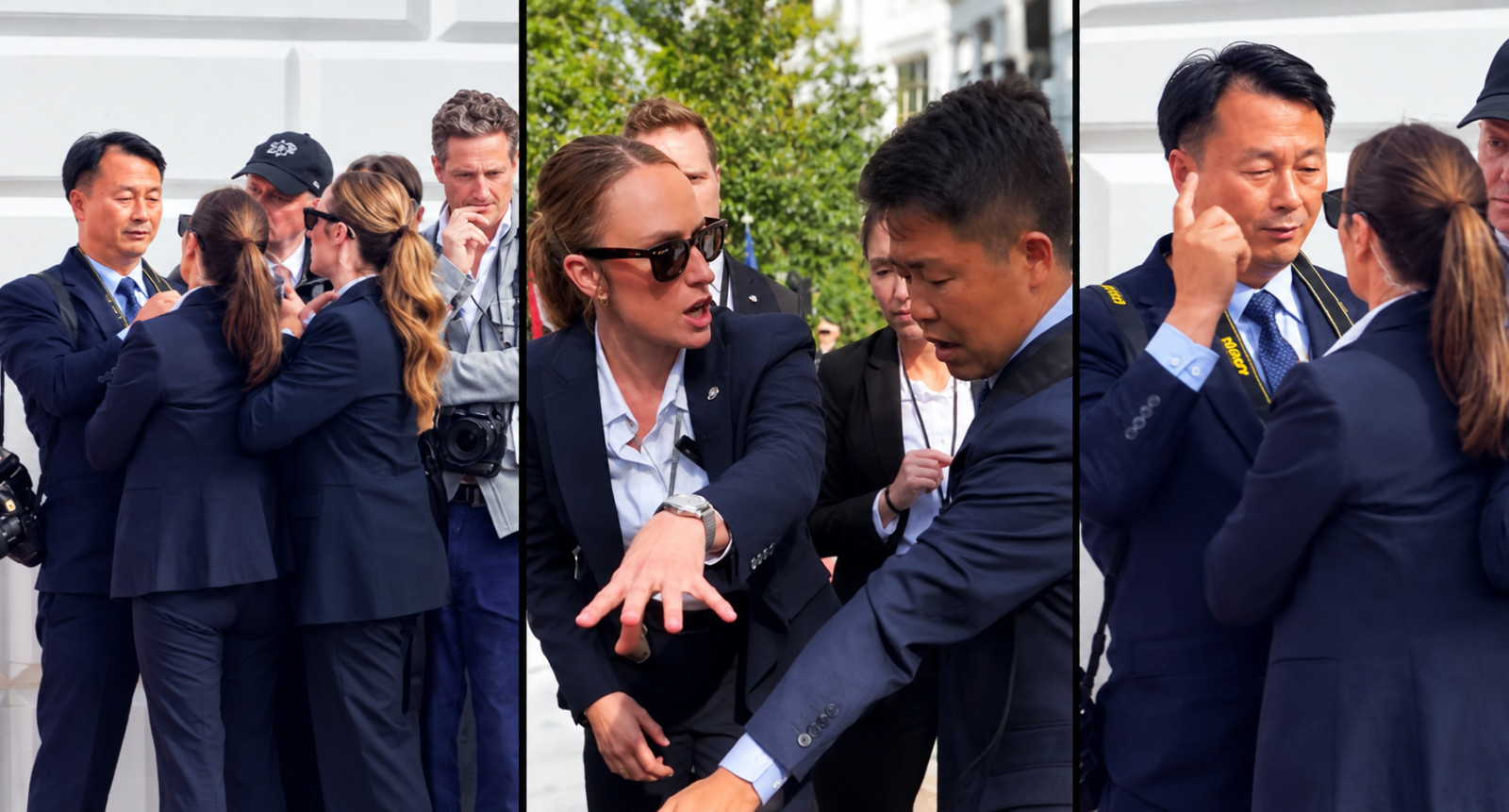
Tensions flared outside the White House Thursday as Chinese crews jostled for position before President Donald Trump met with Xi Jinping.
American reporters described pushing, shouting, and disputes with White House personnel as the Chinese leader’s arrival approached.
Video shared by journalists showed a crowded press area while camera crews competed for views of the state arrival ceremony.
Connor Stringer, The Telegraph’s chief Washington correspondent, described the scene as chaotic in a post on X.
He said members of Xi’s traveling press corps pushed and shoved while trying to secure their positions.
Stringer also reported shouting as some members of the group resisted instructions to move for Secret Service personnel.
His account described a tense scramble among reporters, rather than a fight between Trump and Xi’s delegations.
Townhall White House correspondent Cameron Arcand said he warned someone against touching another reporter’s microphone.
“It got pretty heated over here,” Arcand wrote on X while describing the dispute.
Washington Examiner correspondent Christian Datoc separately reported friction over the placement of official government cameras.
Datoc said White House and Secret Service officials warned they could remove a Chinese official over interference with camera shots.
The dispute unfolded on the South Lawn shortly before Xi’s scheduled arrival for an elaborate White House welcome.
Daily Wire correspondent Mary Margaret Olohan said American reporters can be aggressive but accused Chinese journalists of ignoring instructions.
Epoch Times reporter Emel Akan also described repeated arguments between Chinese camera operators and White House staff.
Another reporter, Iris Tao of NTD News, alleged a Chinese photographer later shoved an American reporter inside the briefing room.
Tao said that incident occurred as journalists rushed toward coverage of the leaders’ Oval Office talks.
Those accounts came from journalists at the scene; officials had not publicly announced any arrests related to the disputes.
The episode threatened to distract from a carefully planned visit between the leaders of the world’s two largest economies.
Chaos ahead of Xi Jinping’s arrival at the White House as the travelling Chinese press corps push and shove their way into position.
Lots of shouting and raised voices as they refuse to move for Secret Service.
A reminder that they trampled a White House staff member during… pic.twitter.com/l78TYLLkaa
— Connor Stringer (@connorstringer) September 24, 2026
Just also had to shout at a guy not to touch a reporter’s microphone.
It got pretty heated over here. https://t.co/vjxkNwbqcA
— Cameron Arcand (@cameron_arcand) September 24, 2026
Trump and First Lady Melania Trump had greeted Xi and his wife, Peng Liyuan, at Joint Base Andrews Wednesday.
The White House said their state visit marked more than a decade since the Chinese couple’s previous White House appearance.
Thursday’s arrival ceremony included military honors, marching units and a flyover featuring a B-2 bomber and four F-22 fighters.
The event provided an imposing backdrop for talks involving trade, artificial intelligence and the balance of power in Asia.
Trump had described the visit as a “big day” and emphasized the importance of his talks with Xi.
Treasury Secretary Scott Bessent previously discussed trade, critical minerals and artificial intelligence with Chinese Vice Premier He Lifeng.
The two countries also explored a mechanism for alerting each other about serious artificial intelligence incidents.
Rare earth supplies and Chinese purchases of American agricultural products remained among Washington’s concerns heading into the summit.
Taiwan presented another major issue, with Beijing pressing Washington over its relationship with the self-governed island.
China claims Taiwan as its territory, while American support for the island remains a recurring source of tension.
After the talks, China’s official news agency said Xi urged the United States to handle Taiwan with prudence.
The agency also reported that Xi wanted Washington to oppose Taiwanese independence, a position stronger than existing American language.
Reuters reported no immediate White House indication that the Trump administration had accepted that proposed change.
Bessent said the countries agreed to extend their existing trade truce by two months as negotiations continued.
That extension left larger disputes over tariffs, rare earths and technology restrictions unresolved during Thursday’s visit.
The friction also occurred amid a separate White House dispute over access for American news organizations.
This article may contain commentary which reflects the author's opinion.
