The U.S. Supreme Court delivered its long-awaited ruling over the summer on a case involving a former Seattle-area football coach who was fired from his job because he refused to stop praying on the field with players.
The nation’s highest court sided with the high school football coach in the crucial First Amendment case. Now, Joe Kennedy has been reinstated as the Washington state high school football coach after he lost his job in 2015 for praying on the field after games.
“Bremerton School District shall not interfere with or prohibit Kennedy from offering a prayer consistent with the U.S. Supreme Court’s opinion,” the attorneys wrote in the filing, according to court records. Some details remain in discussion, with the filing stating, “The parties disagree on the specific wording of this portion of the injunction.”
The documents note the “Bremerton School District cannot retaliate against or take any future adverse employment action against Kennedy for conduct that complies with the terms of the Court’s Order.”
When the school district learned that Kennedy was praying with the team, they told him that he could pray separately from the students. Kennedy declined to change his practice, was put on paid leave, and then filed a lawsuit.
Last year, lower courts sided with the school district. The case went before the Supreme Court in April and the decision is being closely watched by many. During oral arguments two months ago, the Supreme Court’s conservative justices seemed sympathetic to Kennedy.
The Washington Post reported:
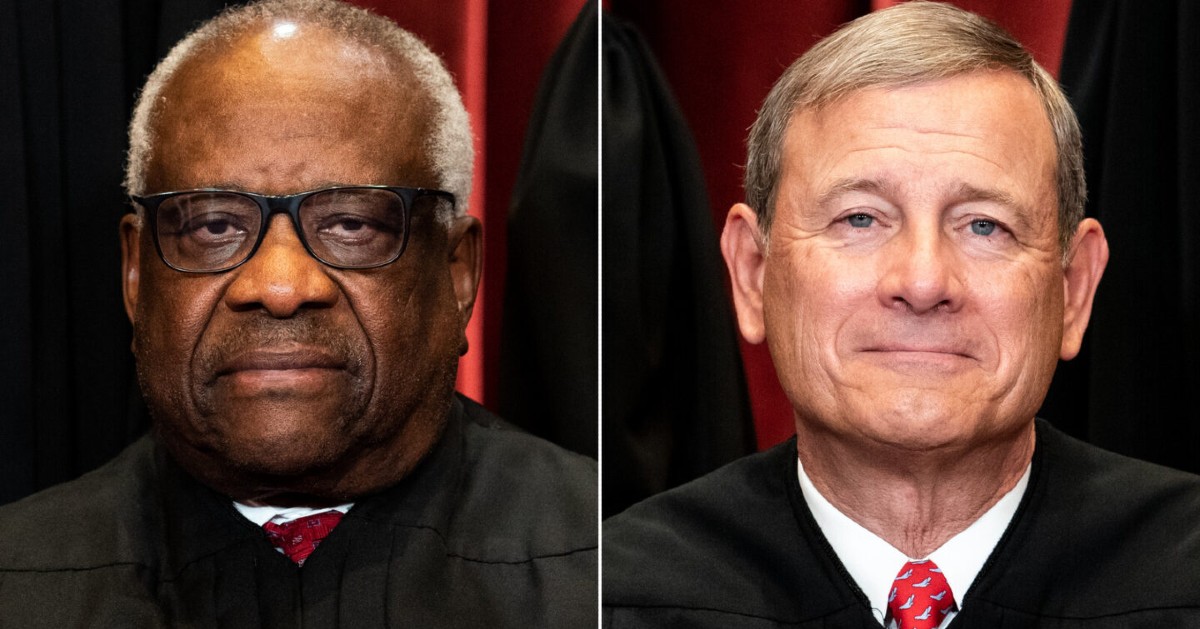
Questions from the court’s conservatives indicated they believe the school district has misread the court’s precedents regarding government endorsement of religion and perhaps was hostile to such demonstrations. Justice Clarence Thomas questioned whether Kennedy would have been disciplined if he had taken a knee during the national anthem to protest racism. Justice Samuel A. Alito Jr. questioned Katskee, legal director at Americans United for Separation of Church and State, about other political activism.
Suppose “when Coach Kennedy went out to the center of the field … all he did was to wave a Ukrainian flag. Would you have fired him?” Alito asked. Katskee said the school district could discipline a coach for such actions because it “doesn’t want its event taken over for political speech.” “Where is the school district rule that says that?” Alito demanded.
“No teacher or coach should lose their job for simply expressing their faith while in public,” Kelly Shackelford, president, and CEO of First Liberty, who is representing the case, said in a statement.
“By taking this important case, the Supreme Court can protect the right of every American to engage in private religious expression, including praying in public, without fear of punishment,” he added.
“Paul Clement, former U.S. Solicitor General, partner at Kirkland & Ellis LLP and First Liberty volunteer attorney, said, ‘We look forward to presenting the Coach’s case, which goes to the heart of the First Amendment, to the Justices,'” the Daily Wire reported. “Joe Kennedy’s case, now six years after the events, has led to renewed optimism by the coach who still desires to return to the football sidelines.”
“Six years away from the football field has been far too long. I am extremely grateful that the Supreme Court is going to hear my case and pray that I will soon be able to be back on the field coaching the game and players I love,” Kennedy said in the statement.
Justice Neil Gorsuch wrote the majority ruling in the June decision seven years after the events.
“Here, a government entity sought to punish an individual for engaging in a brief, quiet, personal religious observance doubly protected by the Free Exercise and Free Speech Clauses of the First Amendment. And the only meaningful justification the government offered for its reprisal rested on a mistaken view that it had a duty to ferret out and suppress religious observances even as it allows comparable secular speech,” ” Gorsuch wrote. “The Constitution neither mandates nor tolerates that kind of discrimination.”
BREAKING! SCOTUS announced it will hear Coach Kennedy’s case. This is the final play of a long legal battle. He was fired for silently praying on the football field. A victory could impact all government employees and also change the way courts consider religious freedom. pic.twitter.com/kYgl5SZ7pS
— First Liberty Institute (@firstliberty_) January 14, 2022
This article may contain commentary which reflects the author's opinion.
