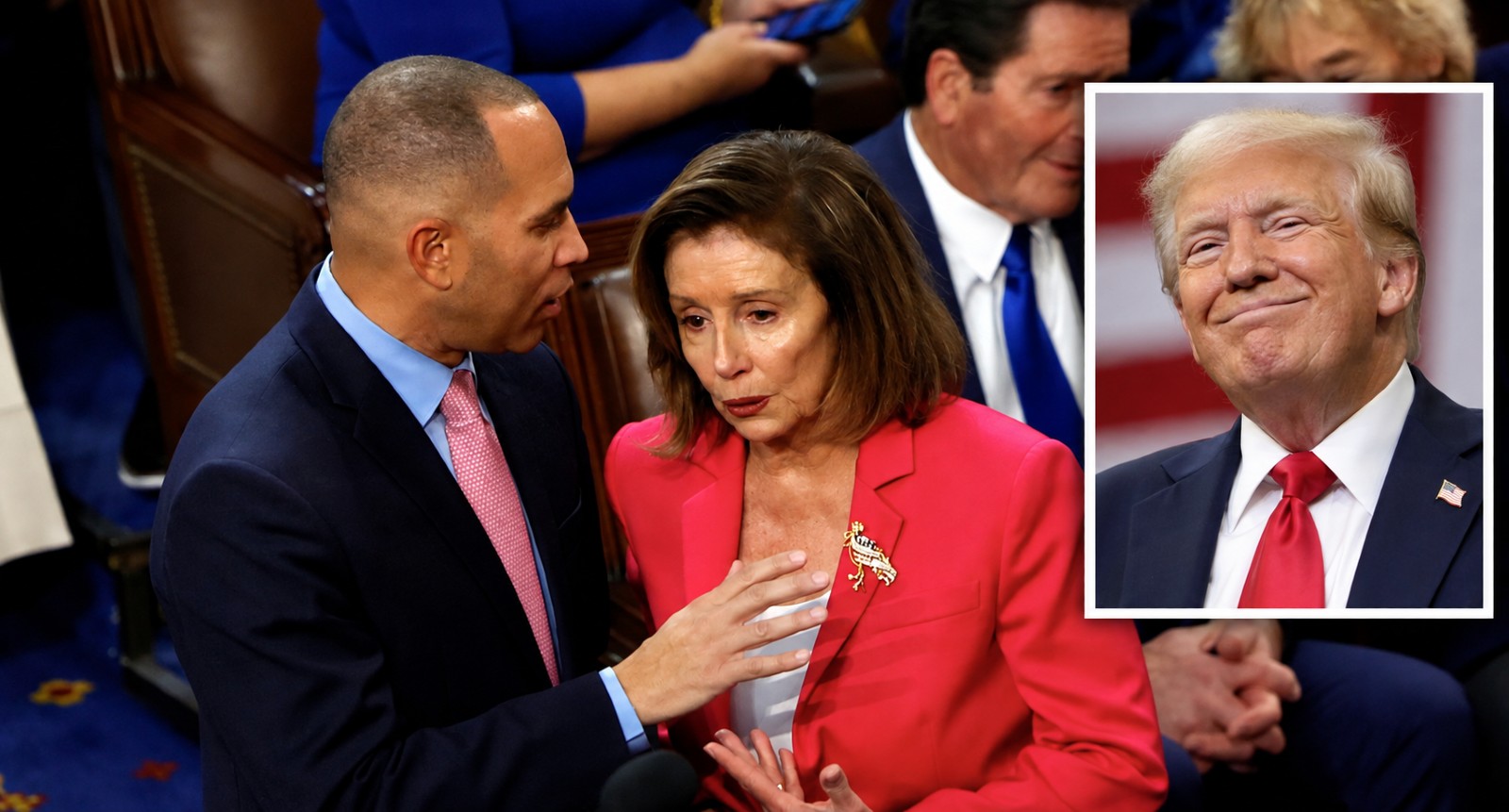
The battle for which party will control the House of Representatives after the midterm elections is intensifying.
The Democratic Party’s advantage over Republicans on the generic congressional ballot has narrowed for the second consecutive week, according to a new Rasmussen Reports survey released as the November midterm elections enter their final stretch.
The latest Rasmussen Reports national telephone and online survey found that 47% of likely U.S. voters said they would support the Democratic candidate for Congress if the election were held today, compared with 44% who would vote for the Republican.
Another 4% said they would support some other candidate, while 4% remained undecided.
The three-point Democratic advantage represents another tightening from Rasmussen’s previous polling and continues a two-week movement toward Republicans in the pollster’s generic congressional ballot.
The survey provides a national snapshot rather than measurements of individual House districts. Because control of the chamber will be determined by hundreds of separate races, the generic ballot cannot by itself predict which party will control the House after November 3.
Still, the narrowing margin comes at an important moment, with both parties pouring money and resources into competitive districts across the country.
The latest numbers suggest Democrats continue to hold a national advantage among likely voters, but their margin has decreased as Election Day approaches.
Generic ballot polling asks voters which party’s congressional candidate they would support without identifying particular candidates.
The measurement is closely watched because it provides an indication of the national political environment facing House candidates.
The movement is particularly notable because it marks the second consecutive week in which the Democratic advantage has declined in Rasmussen’s polling.
The results do not necessarily mean voters are switching parties. Weekly changes can also result from differences in the people responding to individual surveys, turnout expectations and normal statistical variation.
Other national generic-ballot surveys have produced different margins, reflecting differences in polling methodology, sample composition and likely-voter models.
President Donald Trump has increasingly focused his attention on congressional races as Republicans attempt to maintain control of Capitol Hill.
Trump has signaled that he intends to spend much of the final weeks before Election Day campaigning for Republican candidates.
The president and his political operation have sought to motivate voters who supported him in presidential elections but have historically been less consistent about voting in midterm contests.
Republican strategists have emphasized immigration, taxes, energy costs, crime and the economy while arguing that Democratic control of the House would lead to investigations of the Trump administration.
Democrats, meanwhile, have concentrated heavily on healthcare, abortion, the cost of living and opposition to Trump’s agenda.
Both parties are attempting to nationalize House races while tailoring their messages to individual districts.
The battle for the House is ultimately expected to depend on a relatively small collection of competitive districts rather than the nationwide popular vote.
Many congressional districts strongly favor one party, leaving relatively few genuine battlegrounds.
Those contests stretch across states including California, New York, Pennsylvania, Arizona and other politically competitive areas.
Even modest shifts in voter enthusiasm or turnout could therefore affect multiple races.
National generic ballot results must also be interpreted cautiously because congressional district boundaries and the geographic distribution of each party’s voters mean the nationwide vote does not translate evenly into House seats.
A party can win more votes nationally while still failing to capture a House majority.
The final weeks of the campaign will increasingly center on which party can turn supporters into actual voters.
Midterm electorates traditionally differ from presidential electorates, making turnout operations particularly important.
Trump’s political team has argued that Republicans need to reach less-frequent voters who turned out for the president but may otherwise skip congressional elections.
Democrats are similarly working to mobilize younger voters, suburban voters and other constituencies that have played important roles in recent elections.
This article may contain commentary which reflects the author's opinion.
