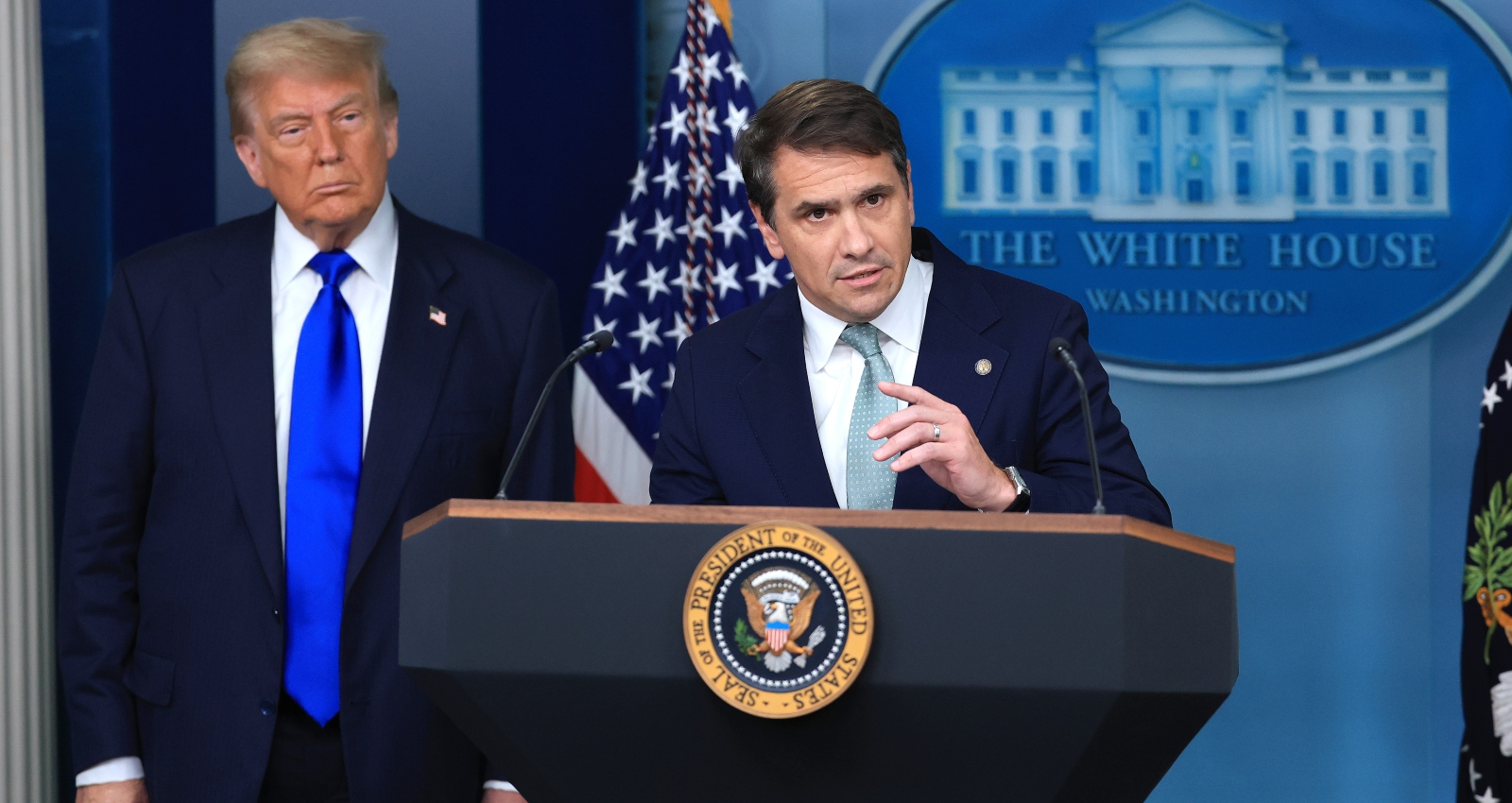
The Justice Department announced Friday that it considers the federal prohibition on licensed gun dealers selling handguns to adults ages 18 to 20 unconstitutional and will no longer seek criminal penalties against dealers for violating the restriction.
The conclusion came in a new opinion from the Justice Department’s Office of Legal Counsel, which determined that the decades-old age restriction cannot be reconciled with the Second Amendment under recent Supreme Court precedent.
Federal law has generally prohibited federally licensed firearms dealers from selling handguns or handgun ammunition to anyone under 21. Adults ages 18 to 20 have been permitted under federal law to purchase rifles and shotguns from licensed dealers and, subject to state law, could acquire handguns through certain private transactions.
The restriction dates to the Gun Control Act of 1968.
Assistant Attorney General T. Elliot Gaiser, who leads the Office of Legal Counsel, argued that 18-, 19- and 20-year-olds fall squarely within “the people” whose right to keep and bear arms is protected by the Constitution.
“Eighteen-year-olds may vote, serve on juries, be drafted, and face adult criminal penalties,” Gaiser said in announcing the decision.
The Justice Department said its analysis was based largely on the Supreme Court’s decisions in District of Columbia v. Heller, New York State Rifle & Pistol Association v. Bruen and subsequent Second Amendment cases.
Under the framework established by those rulings, the government must demonstrate that a firearms restriction is consistent with the nation’s historical tradition of gun regulation once conduct falls within the Second Amendment’s text.
The Office of Legal Counsel concluded that the government could not identify a sufficiently comparable historical tradition of preventing otherwise law-abiding adults under 21 from purchasing firearms.
Instead, the opinion noted that militia laws during the Founding era commonly required men beginning at age 18 to serve and provide their own weapons.
The Justice Department therefore concluded that federal prosecutors may not impose criminal penalties on licensed dealers who sell handguns to otherwise eligible adults between 18 and 20.
The opinion does not formally erase the federal statutes from the books, however.
An Office of Legal Counsel opinion does not itself strike down an act of Congress or create binding precedent for federal courts. It instead establishes the Justice Department’s legal position and is expected to mean federal prosecutors will stop bringing cases against licensed dealers solely for selling handguns to otherwise lawful purchasers in that age group.
The constitutional issue has divided federal courts.
The 5th U.S. Circuit Court of Appeals has ruled that the federal restriction violates the Second Amendment, while the 4th Circuit reached the opposite conclusion. Other federal appeals courts have issued conflicting rulings involving similar state restrictions on firearm purchases by adults under 21.
The Supreme Court has not yet issued a definitive ruling on whether the federal handgun-purchase restriction for 18- to 20-year-olds survives the constitutional test established in *Bruen*.
Gun-control organizations criticized Friday’s announcement.
Everytown Law said the administration’s decision would prevent federal prosecutors from enforcing an existing public-safety restriction, while GIFFORDS argued that the Justice Department was declining to defend a law enacted by Congress.
The opinion does not eliminate other federal restrictions on firearm purchases.
Adults ages 18 to 20 would still be subject to background checks and federal prohibitions applying to people barred from possessing firearms for reasons such as certain felony convictions. State laws imposing their own minimum-age requirements also raise separate legal questions and are not automatically invalidated by the Justice Department’s opinion.
Friday’s announcement is the latest Second Amendment policy change by the Trump administration. The Justice Department has also created a dedicated Second Amendment Section within its Civil Rights Division and this week sued San Jose, California, challenging the city’s nearly $1,600 concealed-carry permit fee as unconstitutional.
For now, the most immediate effect of the new opinion is a significant change in federal enforcement policy.
This article may contain commentary which reflects the author's opinion.
