A new name is circulating in Democratic politics, attached to candidates who may soon test their party’s internal balance.
The group is loose, its future uncertain, and its ambitions are drawing attention well beyond individual congressional races.
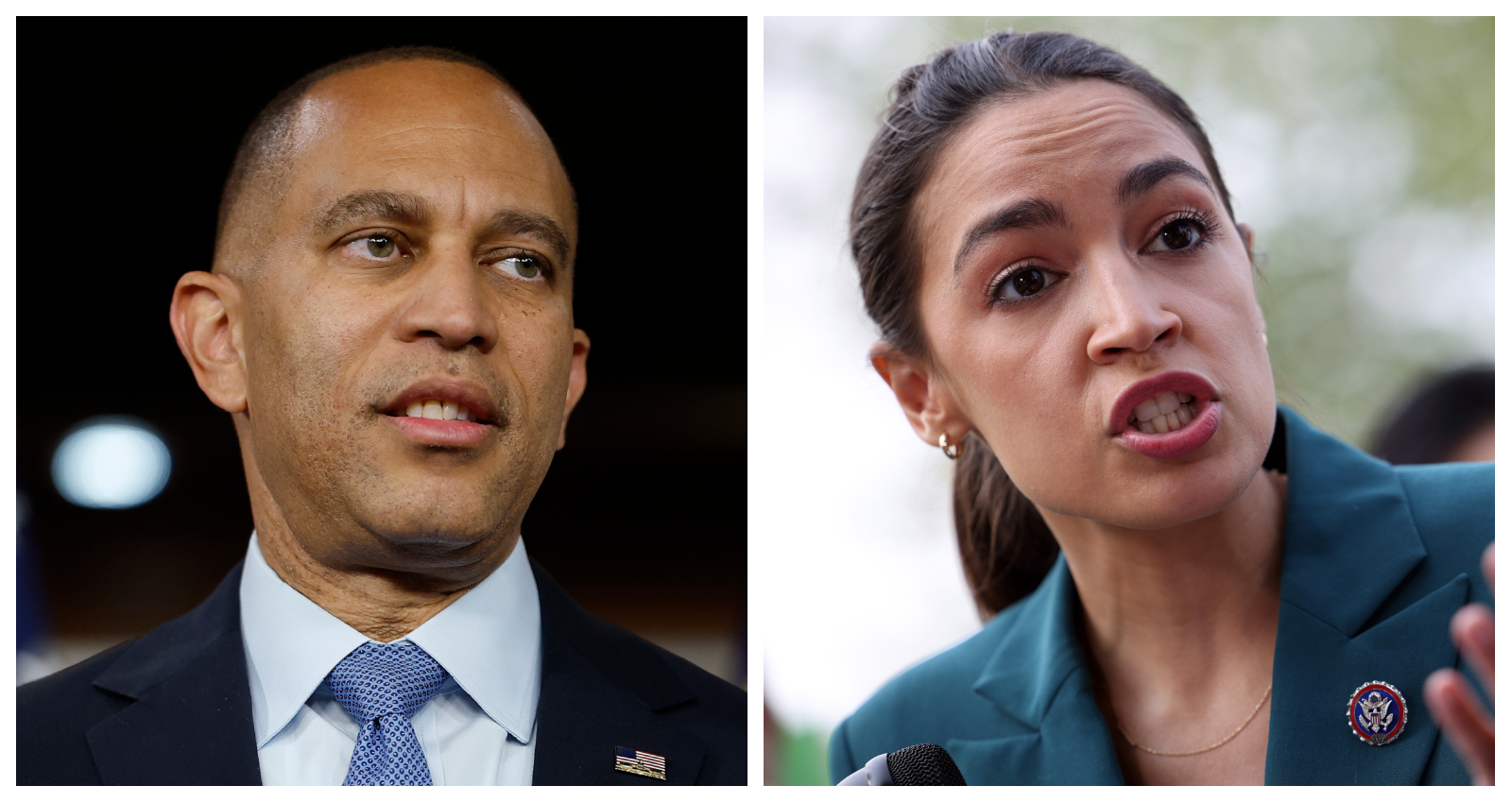
Several Democratic Socialists of America-backed candidates are being called “The Bloc,” a potential counterweight to party leaders including Minority Leader Hakeem Jeffries (D-N.Y.)
Townhall identified Melat Kiros, Darializa Avila Chevalier, Claire Valdez, Adam Hamawy, Donavan McKinney and Chris Rabb as titular ‘members.’
The six are candidates in Colorado, New York, New Jersey, Michigan and Pennsylvania, according to the report.
They have not formed a formal congressional caucus, and the label describes an emerging political alignment.
The report presents no joint platform endorsed by all six beyond their broad association with Democratic Socialist organizers.
That leaves questions about where their priorities overlap and how they would handle disagreements.
The comparison is with “The Squad,” the informal grouping of high-profile progressive House members.
Townhall portrays the newcomers as younger and more openly socialist, while describing their primary victories as a warning.
That is the outlet’s assessment; whether the candidates gain seats and act together remains to be seen.
Their approach could matter if future House margins give a small faction leverage over leadership and legislation.
Kiros is running in Colorado’s First District, while Avila Chevalier seeks a New York seat in the 13th.
Valdez is associated with New York’s Seventh District, and Hamawy with New Jersey’s 12th.
McKinney is listed in Michigan’s 13th, with Rabb seeking Pennsylvania’s Third District.
The outlet groups their positions under one political banner, though their campaigns and priorities are not identical.
Townhall says Kiros described the September 11 attacks as “inevitable,” a remark that merits careful public scrutiny.
It characterizes Avila Chevalier as supporting the abolition of police, prisons and borders.
The report also says she reposted a statement asserting that “all deportation is wrong.”
According to Townhall, Valdez advocates a sharp break with current American policy toward Israel.
It describes McKinney as favoring abolition of Immigration and Customs Enforcement.
Rabb calls himself a “proud troublemaker” and supports Medicare for All and the Green New Deal.
Those positions involve public safety, immigration enforcement, government spending and the scope of federal power.
Townhall describes Hamawy as a friend of the “Blind Sheik,” tied to the 1993 World Trade Center bombing.
It offers no detail substantiating the claimed relationship, so the assertion should be treated as Townhall’s characterization.
The larger political question is whether these candidates can turn primary victories into coordinated influence in Washington.
Townhall cites a message warning moderate Democrats to “either listen to them or be forced to listen to them.”
That quotation signals a confrontational approach, although it does not specify a formal legislative demand.
Republican campaign officials have seized on the grouping to challenge Democrats in competitive elections.
National Republican Congressional Committee spokesman Mike Marinella accused moderates of taking “their marching orders from the Bloc.”
His claim is a campaign argument, not evidence that every Democratic nominee shares the six candidates’ positions.
The conflict reaches beyond personalities to questions of party leadership and policy priorities.
Jeffries and other Democratic leaders could face pressure if an organized left flank gains enough House votes.
Still, an aspiring bloc’s influence depends on November outcomes, membership and willingness to bargain over legislation.
The label alone does not establish how any candidate would vote once elected.
Nor does a shared political sponsor erase differences among candidates from separate states and districts.
For Republicans, the grouping offers a way to link Democratic candidates to controversial proposals.
For the candidates, it offers visibility and a possible route to amplify their priorities, Townhall reported.
The competing narratives will become more concrete if the group secures seats and confronts a real vote.
This article may contain commentary which reflects the author's opinion.
