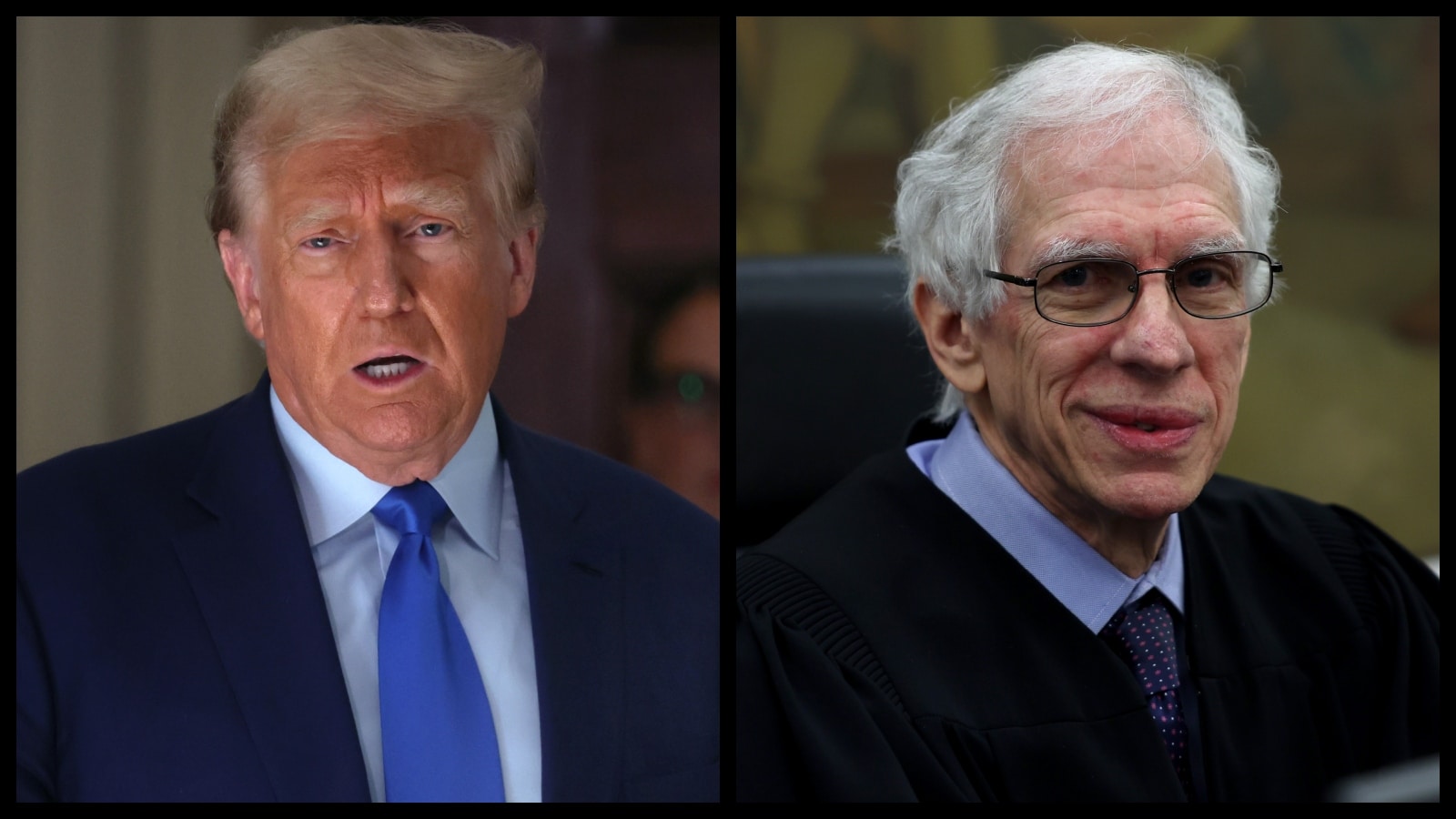
A noted legal expert has chided New York Judge Arthur Engoron over his language and behavior as he presides over former President Donald Trump’s $250 million civil fraud trial.
Attorney Michael Conway, who is a former House Judiciary Committee counsel, cited in a column for MSNBC the trial of the so-called “Chicago 7,” reminding “Engoron that the defendants in the notorious case went out of their way to antagonize Judge Julius Hoffman, which seems to be Donald Trump’s strategy in a case where Engoron has already found evidence of fraud.”
Conway went further by pointing out that during his testimony, Engoron frequently clashed with both Trump’s legal team and the former president himself, adding that the profanity will undoubtedly be brought up in an appeal.
“In New York, Engoron has used strident language in rejecting Trump’s legal positions, terming them ‘pure sophistry,’ ‘risible,’ ‘bogus arguments,’ and ‘egregious’ in his summary judgment opinion. He sanctioned five Trump attorneys for $7,500 each for the ‘borderline frivolous’ arguments in their briefs,” Conway wrote.
“Harsh language isn’t a problem if it’s justified. But the more Engoron pushes the envelope, the more he risks an appellate court disagreeing with his assessment. And Trump’s lawyers can and will argue the judge’s rhetoric is evidence of judicial bias,” Conway wrote.
The legal expert then added that “there are other examples of Engoron seemingly overreacting in response to relentless complaining from Trump’s lawyers” before noting: “He needs to take all necessary steps to ensure that a New York appellate court cannot overturn his decision. And that means not reacting to Trump’s hate-filled speech or to his lawyers’ baiting and provocation. It’s simply not worth it.”
Meanwhile, a lawyer for Trump said this week that the former president will be the last witness in the $250 million civil fraud case brought against him by New York Attorney General Letitia James.
Christopher Kise said Trump’s testimony will take place on Dec. 11 “in the trial brought by New York Attorney General Letitia James, accusing him and his co-defendants of falsely inflating Trump’s assets for financial gain,” CNBC reported.
Kise added that Trump’s son, Donald Trump Jr., will be testifying for the defense on Dec. 6. He, his father, and Eric Trump, another of Trump’s sons, have all already testified after answering questions from James’ office attorneys.
CNBC noted further: “Trump, who is running for president again in 2024, has decried the case as a witch hunt and lobbed accusations of political bias at James, as well as the presiding judge and his principal law clerk. Manhattan Supreme Court Judge Arthur Engoron has imposed gag orders barring Trump, his lawyers, and the other defendants in the case from commenting publicly about his clerk, Allison Greenfield. Engoron has also expressed concern about the hundreds of threatening and harassing messages that have inundated his chambers during the trial.”
Also, last week a state appeals court in New York reimposed a gag order against Trump that was issued by the judge hearing his case.
“The ruling Thursday by a four-judge panel rejected Trump’s appeal and reinstated the orders against Trump and his lawyers, who’d repeatedly complained about the clerk in court,” NBC News reported.
“State court officials had argued the gag order was necessary because of the ‘deluge’ of threats directed at the clerk after Trump had blasted her on social media. Trump renewed his attacks on the clerk after a judge from the state Appellate Division issued a temporary stay of the order earlier this month,” the report added.
The original gag order was imposed by Engoron, who is presiding over the $250 million case filed by New York Attorney General Letitia James. He has already ruled that Trump defrauded banks over the years by inflating his net worth in order to get more favorable loans.
This article may contain commentary which reflects the author's opinion.
