In a stunning development that has left victims of one of California’s most destructive wildfires reeling, a federal judge declared a mistrial Thursday in the case against Jonathan Rinderknecht.
Rinderknecht is the 30-year-old former Uber driver accused of igniting the blaze that ravaged Pacific Palisades in January 2025.
The jury, after more than 13 hours of deliberations, reported it was hopelessly deadlocked—reportedly 10-2 in favor of not guilty on the key arson charges—prompting U.S. District Judge Anne Hwang to end the proceedings without a verdict.
Federal prosecutors, led by the U.S. Attorney’s Office, immediately vowed to retry the case, signaling that accountability for the tragedy that killed 12 people and destroyed thousands of homes remains a top priority.
“This fire turned thousands of homes into ash and claimed innocent lives,” U.S. Attorney Bill Essayli stated, echoing the resolve of many in the hard-hit Los Angeles community.
“We will not rest until justice is served,” Essayli added.
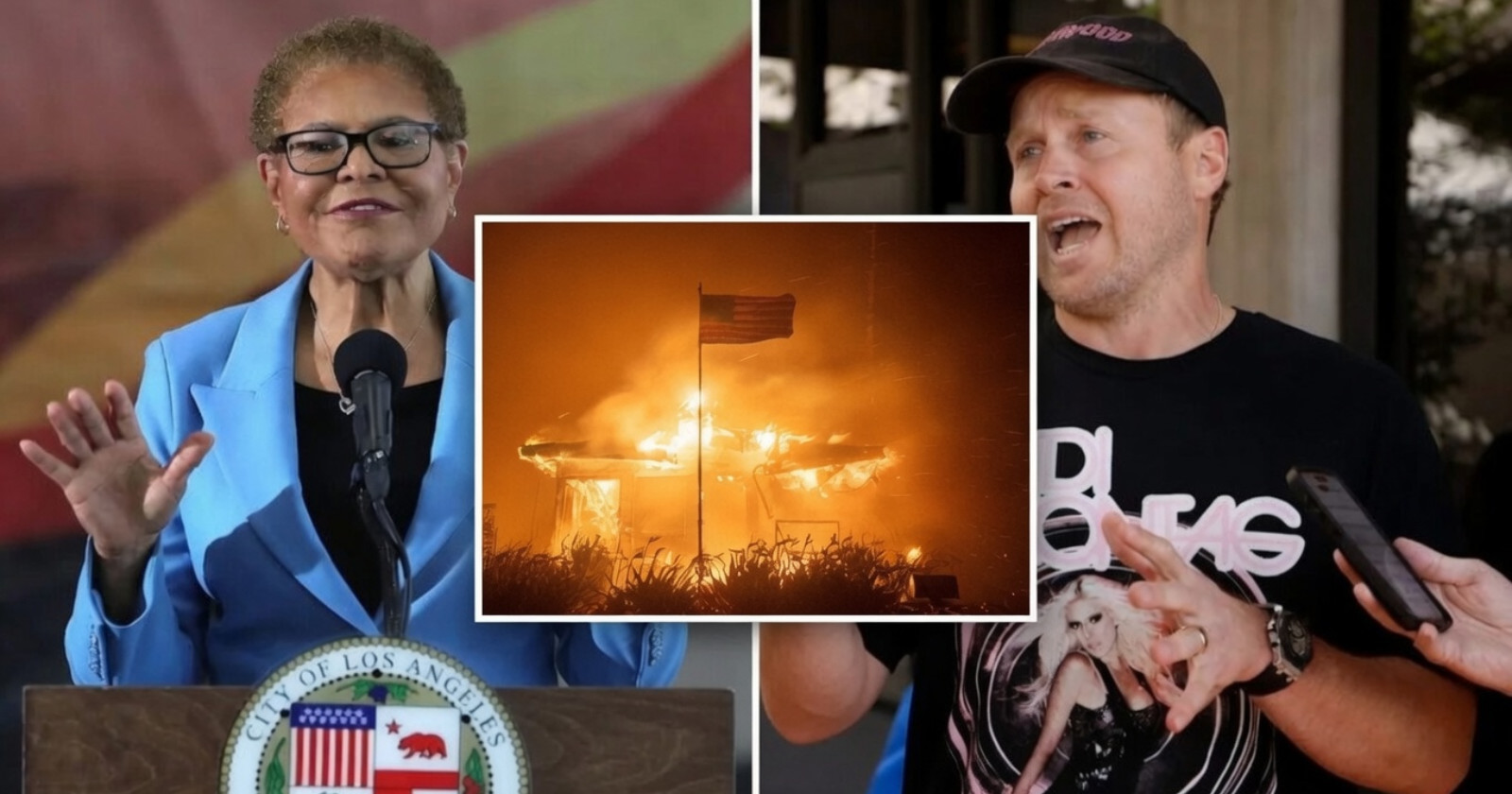
Reality TV star Spencer Pratt, whose own Pacific Palisades home and his parents’ residence were destroyed in the blaze, has been one of the most vocal critics.
Pratt, who later ran for mayor on a platform of accountability, repeatedly blamed Los Angeles Mayor Karen Bass and California Gov. Gavin Newsom for inaction and negligence.
“For those of us who actually grew up in LA, we’re all having flashbacks to Northridge. Nithya Raman isn’t though, because she grew up in India. She’s only lived here a few years, so she’s never been through this. God help LA when the next quake hits, if she’s in charge…yikes,” he wrote on X in response to the ruling on Friday.
Pratt has escalated his attacks, producing videos and joining lawsuits against the city and state alongside, notably, Bass’s own brother, Kenneth Bass, who also lost property.
“I’m not sure if Karen Bass forgot she let my house burn down and my parents’ house burn down and I had actual neighbors burn alive across the street from my childhood home,” Pratt fired back after Bass accused him of exploiting grief.
He called her response “the most insane, psycho, diabolical thing” he’d heard.
He has teased “shocking details” of mismanagement, including claims of empty reservoirs, diverted resources, and politicians prioritizing photo-ops over firefighting.
In one documented instance, Newsom and Bass were seen holding a news conference while buildings burned nearby, with firefighters reportedly accompanying them instead of battling the flames.
“This was no act of God. This was an act of idiocy. This was gross negligence,” Pratt has said, channeling the anger of countless victims who feel abandoned by Democratic leadership in Sacramento and City Hall.
WATCH:
🚨 JUST IN: Judge declares a MISTRIAL in the Pacific Palisades arson case in California
FA US Attorney Bill Essayli has VOWED to file to retry the case, as the fire turned THOUSANDS of homes into ash and kiIIed 12 last year.
The jury became DEADLOCKED, with 10 jurors stuck on… pic.twitter.com/SB1RlPE1NC
— Nick Sortor (@nicksortor) June 26, 2026
The Palisades Fire, which erupted from an initial ignition known as the Lachman Fire on New Year’s Day 2025, quickly became one of the deadliest and most destructive in Los Angeles history.
It scorched over 23,000 acres, destroyed approximately 6,800 structures, and left a trail of devastation in the affluent Pacific Palisades neighborhood.
Strong winds later reignited the smoldering blaze on January 7, turning it into a firestorm that overwhelmed firefighters and trapped residents.
Prosecutors built a detailed circumstantial case against Rinderknecht over six days of testimony from more than 30 witnesses.
Cell phone location data and video evidence allegedly placed him at the fire’s origin point—just 13 seconds after it started—in a remote clearing known as Skull Rock or Hidden Buddha overlooking the Palisades.
An Uber passenger who rode with Rinderknecht that night described his erratic behavior, including rants against capitalism and fixation on figures like Luigi Mangione.
Phone searches revealed a fascination with fire, while interviews showed defensive responses from the suspect.
Perhaps most damning, prosecutors highlighted ChatGPT prompts in which Rinderknecht allegedly discussed using fire to hold “wealthy people” accountable for “enslaving” others, painting a picture of a vengeful individual motivated by personal grievances and resentment toward society’s elites.
Rinderknecht pleaded not guilty to three federal charges: destruction of property by fire, arson affecting interstate commerce, and timber set afire.
The trial highlighted broader frustrations in California over wildfire management.
This article may contain commentary which reflects the author's opinion.
