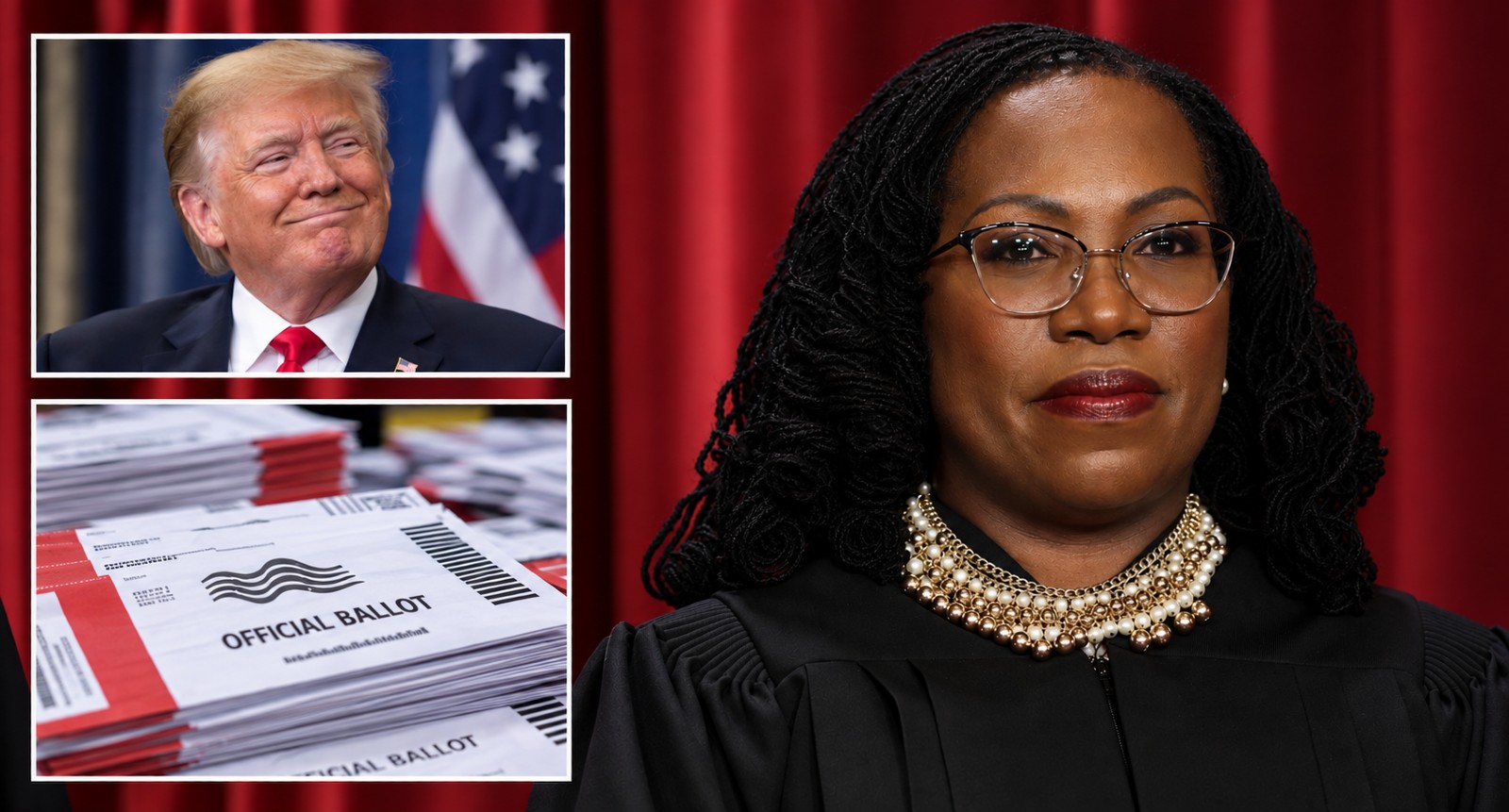
The Supreme Court delivered another victory to Republicans Wednesday in a closely watched dispute, blocking a lower court deadline that could have forced a decision on discounted political advertising rates before the November midterm elections.
The justices allowed the Federal Communications Commission to continue reviewing a Democratic challenge to guidance extending favorable television and radio advertising rates to political parties and certain joint fundraising committees.
“Our system of separation of powers does not allow the Judiciary to meddle in ‘the workings of a coordinate branch of the Government’ in this manner,” the majority wrote.
The decision preserves the policy while litigation continues, allowing qualifying organizations to purchase broadcast advertising at rates traditionally guaranteed to candidates during the final weeks of campaigns.
Republican committees have significant resources available for coordinated advertising this cycle, making the dispute consequential for campaigns seeking to reach voters before November 3.
Justices Sonia Sotomayor and Ketanji Brown Jackson indicated they would have denied the request, while the majority issued an order criticizing the lower court’s intervention.
The Supreme Court said the judiciary should not interfere prematurely with the FCC’s internal decision making process, rejecting an appeals court directive requiring the agency to act within 48 hours.
The dispute began in March when the FCC’s Media Bureau issued guidance interpreting federal rules governing the lowest prices broadcasters must offer for political advertisements.
Federal law guarantees legally qualified candidates access to a broadcaster’s lowest unit charge for comparable advertising time during the 60 days preceding a general election and 45 days before a primary.
The agency’s guidance extended that treatment to authorized joint fundraising committees and advertisements purchased by parties in coordination with candidates, a change Democrats argued exceeded the statute.
Democratic candidates including Georgia Senator Jon Ossoff, former Ohio Senator Sherrod Brown and former North Carolina Governor Roy Cooper challenged the guidance through FCC proceedings in April.
When the commission did not promptly resolve their objections, the candidates sought relief from the Court of Appeals for the Fourth Circuit.
A divided appellate panel initially sided with the Democrats, but the Supreme Court intervened in September, concluding that the challengers needed to await commission action before seeking judicial review.
That earlier ruling restored access to discounted advertising rates for eligible party committees, with Justice Jackson the lone dissenter.
The appellate court subsequently ordered the FCC to decide the Democrats’ administrative challenge by October 9, citing delays and the election.
Chief Justice John Roberts temporarily halted that deadline before the Supreme Court acted Wednesday, leaving the agency free to continue its review without the imposed timetable.
In its order, the court emphasized that separation of powers limits judicial interference in an agency’s ongoing deliberations, although it did not finally decide whether the advertising guidance is lawful.
An FCC spokesperson welcomed the ruling, saying it avoided changing political advertising arrangements in the middle of an election campaign.
Democrats contend the agency’s interpretation improperly extends a statutory benefit beyond candidates and that delaying review effectively protects the policy until after voters go to the polls.
Republican committees counter that the appellate court attempted to bypass ordinary administrative procedures and risked disrupting advertising plans already negotiated with broadcasters, The Hill reported.
The National Republican Congressional Committee and National Republican Senatorial Committee previously told the justices that they had budgeted tens of millions of dollars for advertising under the disputed rates.
Campaign finance filings underscore the financial stakes, with the three principal national Republican committees reporting approximately $233 million in cash at the end of August.
Their Democratic counterparts reported $130 million in cash and nearly $18 million in debt, according to federal disclosures cited by Reuters.
The dispute also follows a June Supreme Court decision striking down federal limits on spending coordinated between political parties and candidates, further changing the rules for campaign advertising.
Supporters of the FCC guidance argue that coordinated political speech should not be disrupted by last minute judicial intervention, while critics say discounted rates should remain limited to candidates expressly covered by federal law.
This article may contain commentary which reflects the author's opinion.
