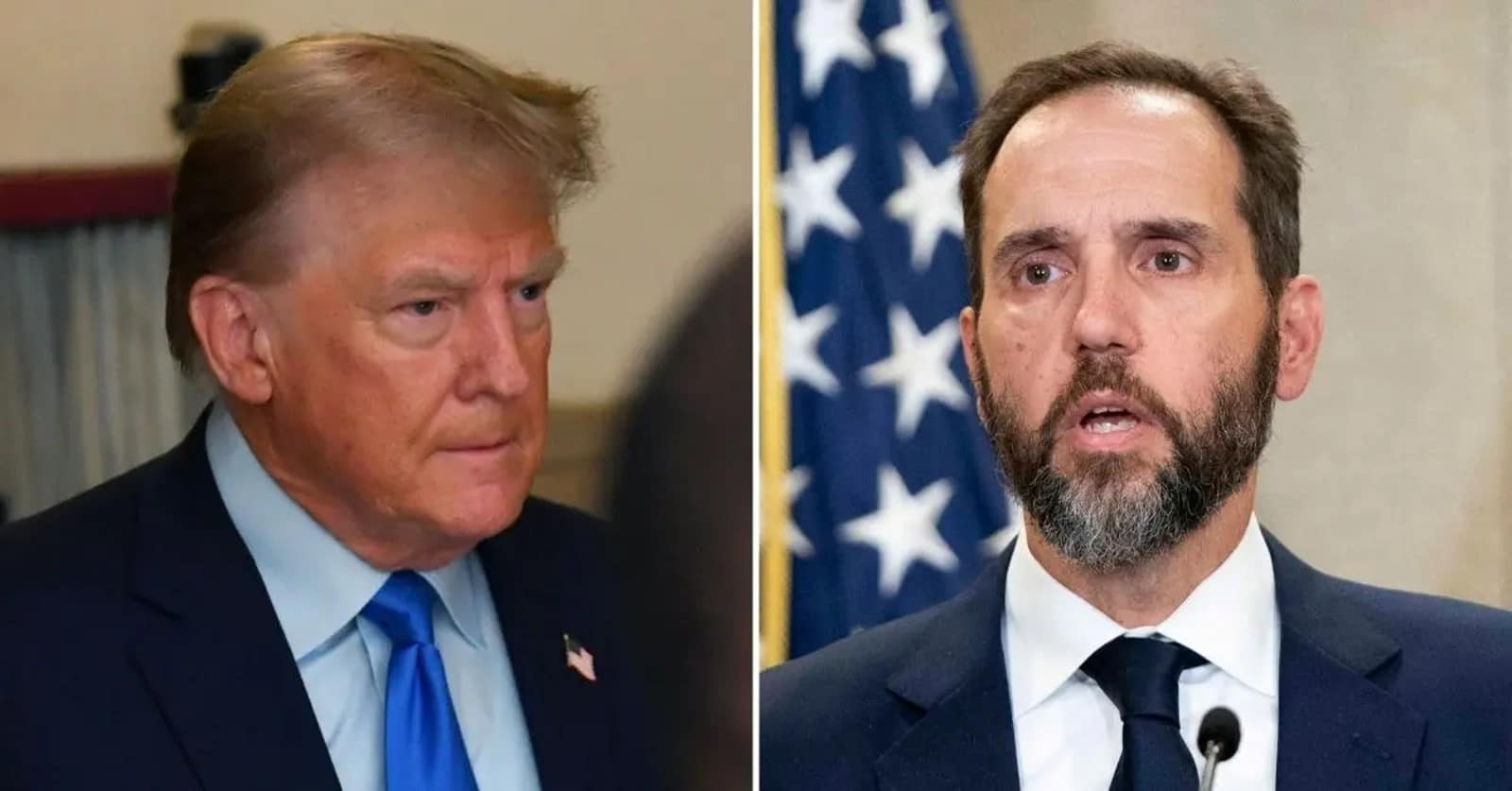
Jonathan Turley, a law professor at George Washington University, argued this week that the Supreme Court’s decision to consider former President Donald Trump’s presidential immunity was a “real victory.”
The Supreme Court declared on Wednesday that it would hear the case following Trump’s request for a stay of an appeals court decision that disregarded his claims of immunity from prosecution. Attorneys for Trump charged that Special Counsel Jack Smith was trying the case ahead of the 2024 presidential election with “a political motive.”
“The real victory here for Trump deals with the calendar,” Turley told “Special Report” host Bret Baier. “You know, the overriding push of Smith, the special counsel, has been to get a trial before the election. He is running out of runway. If this opinion doesn’t come out until June, perhaps, you have to remember that even if Smith wins, the mandate goes back to the district court, which has to handle all the pre-trial motions. That could take months.”
Oral arguments before the Supreme Court are scheduled for the week of April 22, which coincides with the court’s hearing on the application of a charge levied by the Justice Department against numerous individuals detained and accused of involvement in the Capitol building riot on January 6, 2021.
In August, Smith was able to get an indictment on four counts against Trump, which had to do with his attempts to contest the 2020 election results.
“They didn’t great the stay, but they created effectively or constructively a stay by setting it for argument,” Turley said.
Turley added: “Trump has gotten what he has wanted and that this is not going to be heard until the end of April, and then all bets are off when they might issue a decision. They could issue it before June, but there’s obviously some justices here who have a lot … to talk about on this issue.”
WATCH:
Trump released a lengthy statement on his Truth Social platform.
“Legal Scholars are extremely thankful for the Supreme Court’s Decision today to take up Presidential Immunity. Without Presidential Immunity, a President will not be able to properly function, or make decisions, in the best interest of the United States of America. Presidents will always be concerned, and even paralyzed, by the prospect of wrongful prosecution and retaliation after they leave office,” Trump began.
“This could actually lead to the extortion and blackmail of a President. The other side would say, ‘If you don’t do something, just the way we want it, we are going to go after you when you leave office, or perhaps even sooner,’” he added.
“Page 2: A President has to be free to determine what is right for our Country without undue pressure. If there is no Immunity, the Presidency, as we know it, will “no longer exist.” Many actions for the benefit of our Country will not be taken. This is in no way what the Founders had in mind. Legal Experts and Scholars have stated that the President must have Full Presidential Immunity. A President must be free to make proper decisions. His mind must be clear, and he must not be guided by the fear of retribution!” Trump concluded.
Earlier this month, Trump’s attorneys submitted several motions seeking the dismissal of the federal case against him.
In response to accusations that he unlawfully kept classified materials after leaving office in January 2021 and thwarted efforts by the federal government to obtain them, the former president entered a not-guilty plea to 40 charges.
The contested claim that Trump can invoke absolute immunity is one of the arguments made by his attorneys.
Additionally, Trump’s legal team argues that since he designated the materials as his records during his presidency, the Presidential Records Act permits him to retain them after leaving the White House.
According to one of the filings, Attorney General Merrick Garland’s appointment of Smith in November 2022 was illegal because the Senate had not given its approval beforehand.
The filing also mentioned that a prior argument had brought up the “serious problem,” which is why the Appointments and Appropriations clauses require this.
This article may contain commentary which reflects the author's opinion.
