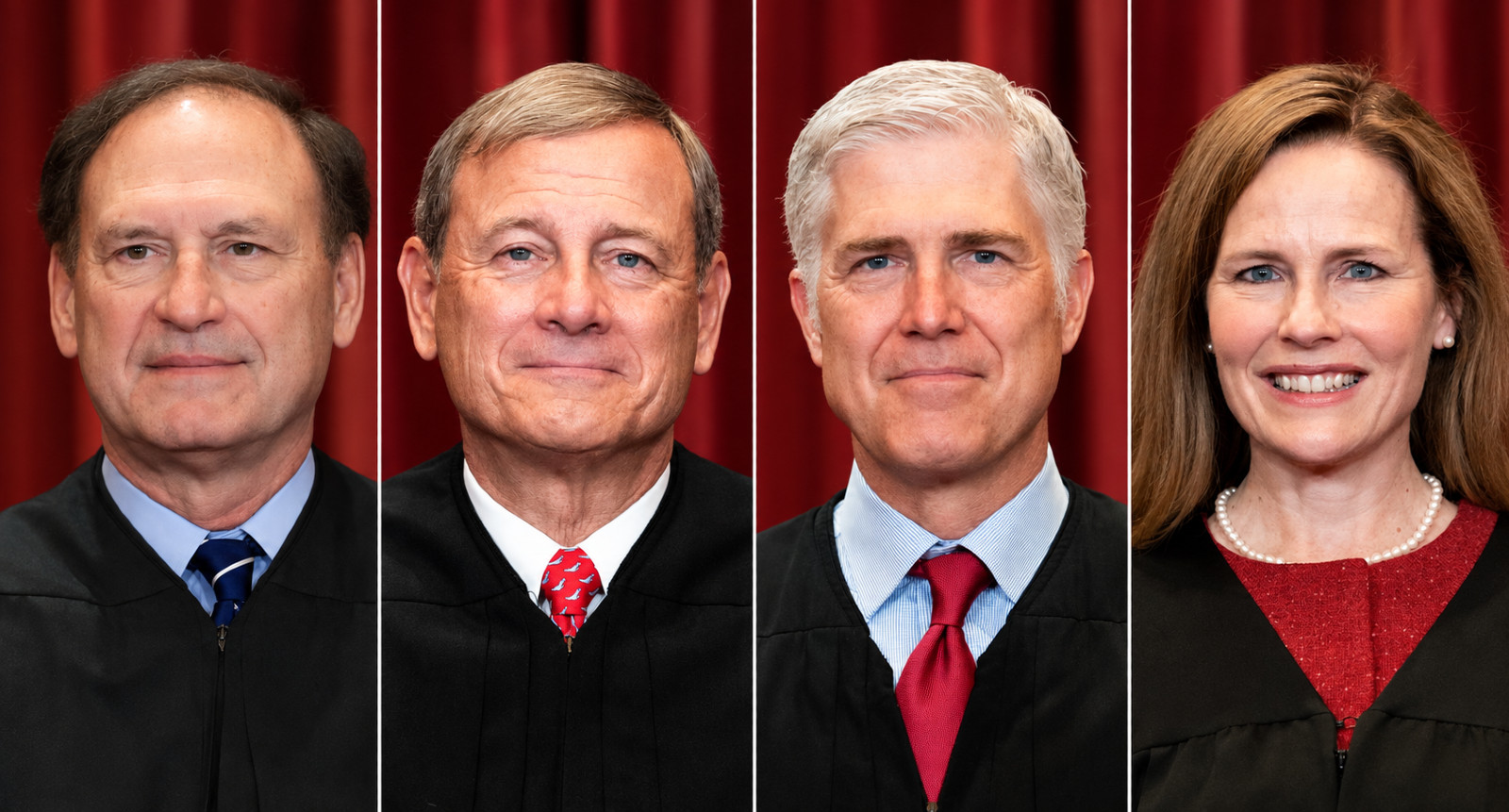
A decision that could reshape the Supreme Court had been hovering over Washington as November’s election approached.
Now one of the justices at the center of that speculation has given a direct answer.
Justice Samuel Alito says he will stay on the Supreme Court through this term, even if Democrats win the Senate.
The 76-year-old justice made the statement in an interview with Bloomberg Law as the court opened its new term.
“I intend to stick around through this term,” Alito said, placing his timetable beyond the coming election.
He said he made the decision months ago, before the latest speculation about a possible vacancy.
The current court term is expected to run through next June, after the newly elected Senate takes office.
That timing matters because senators must confirm a president’s nominee to fill a Supreme Court vacancy.
If Democrats win Senate control, they could block President Donald Trump’s choice for any opening.
Republicans would have only the period before the new Senate convenes to confirm a replacement under their current majority.
Alito’s comments therefore undercut talk of a quick retirement designed to preserve the court’s conservative majority.
They do not amount to a promise about how long he will serve after this term.
Supreme Court Justice Samuel Alito says in a new book that he believes the court’s landmark decision extending marriage rights to same-sex couples was “perhaps the decisive point in our nation’s turn against religious liberty.”
Read more: https://t.co/pnpHfYn0EY
— ABC News (@ABC) October 6, 2026
“They want the Constitution to mean whatever they want it to mean.”
Supreme Court Justice Samuel Alito discusses originalism on “Life, Liberty & Levin,” explaining his view that the Constitution should be interpreted according to the meaning of its words when they were adopted.
Alito contrasts that approach with interpretations that allow the Constitution’s meaning to change over time.
@marklevinshow
— Fox News (@FoxNews) October 5, 2026
For now, though, he has publicly ruled out the immediate departure some political observers expected.
The question had intensified as Democrats sought to capture the Senate in the November 3 midterm elections.
Alito and Justice Clarence Thomas, 78, are the court’s two oldest members.
Neither has announced plans to leave the bench, according to the Bloomberg Law report.
A retirement after the election but before the new Senate takes office would be unusual.
Such a move could also reignite accusations that confirmation politics are driving decisions about the court’s membership.
Senate Majority Leader John Thune said in July that a confirmation during that interval could be done.
Alito’s stated plan makes that hypothetical scenario less relevant to his own seat.
The stakes extend beyond one nomination because the court currently has six conservative justices and three liberals.
Alito has been a leading member of that conservative majority during two decades on the bench.
President George W. Bush appointed him to the Supreme Court in 2006.
His opinions have shaped disputes involving abortion, religious liberty, voting rules, firearms, unions, and federal power.
He wrote the 2022 ruling that overturned the constitutional abortion right recognized in Roe v Wade.
Conservatives often praise his focus on the Constitution’s original meaning, while liberals challenge the consequences of that approach.
In the interview, Alito discussed originalism and his new book about constitutional interpretation.
He maintained that judges should begin with the law’s text and its meaning when adopted.
He also rejected the idea that a desired political outcome should dictate a ruling.
That argument goes to the heart of public concerns about an independent judiciary.
Justices do not face regular elections, and their decisions can shape law long after a president leaves office.
Their retirement decisions can nevertheless alter the direction of constitutional law for decades.
The Senate’s power to confirm a successor gives elections an indirect but consequential role.
That explains why a single justice’s answer about timing has drawn attention before November.
Alito also acknowledged that he has considered retirement, without announcing a date for leaving.
“I don’t feel mentally or physically decrepit,” he said during the interview.
An erroneous report in June had briefly claimed he was retiring before being retracted.
His new statement offers a clearer indication of his immediate plans.
He also addressed proposals to change the court, including ideas floated by critics of its conservative majority.
Alito declined to give a direct verdict on those proposals but raised questions about the court’s institutional standing, Bloomberg News reported.
His concern centered on how changes adopted now might affect public confidence in judicial independence.
This article may contain commentary which reflects the author's opinion.
