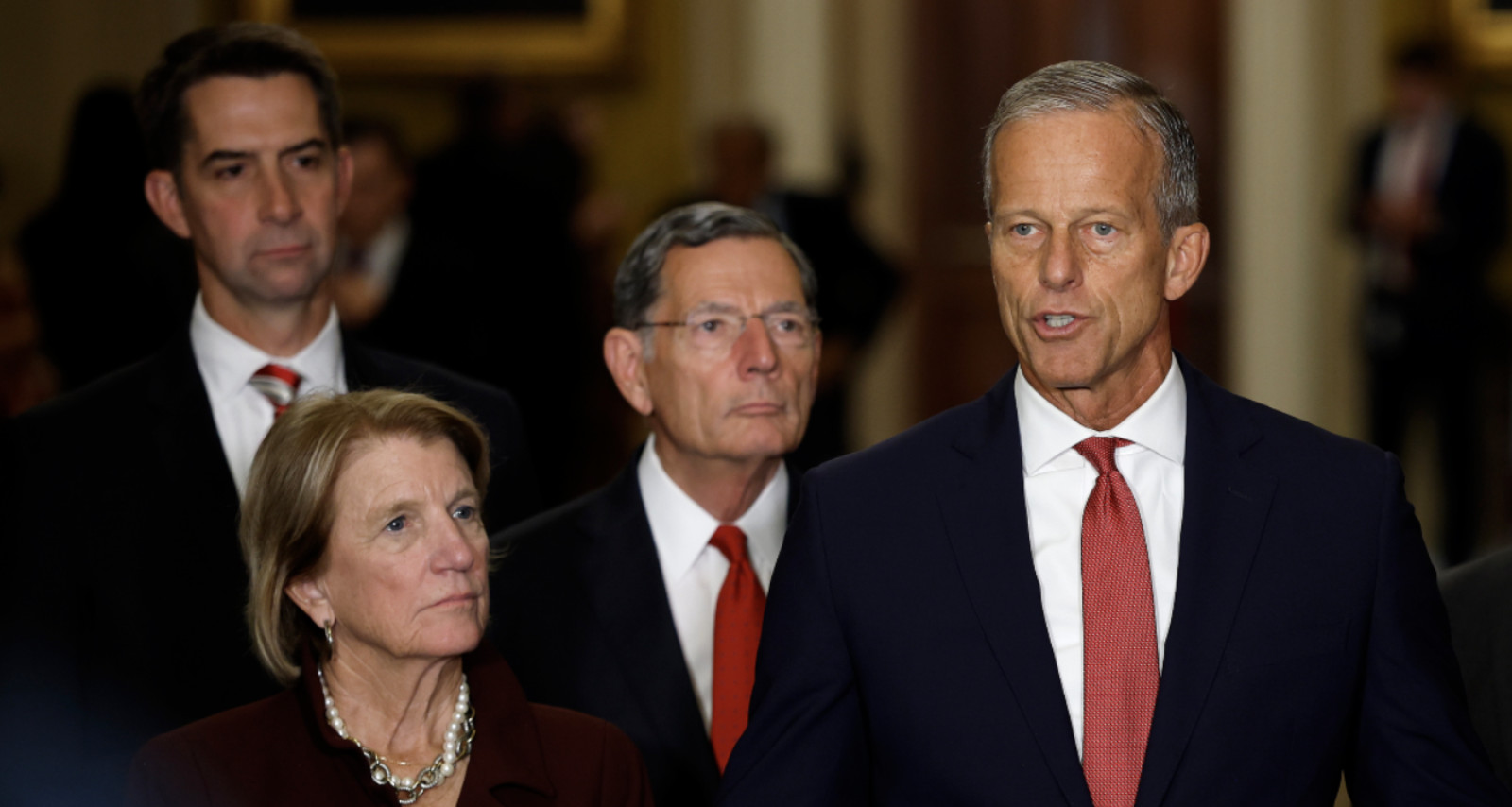
Republican Senator Tom Cotton holds an eleven-point lead in Arkansas, according to polling circulated ahead of November’s midterm elections.
An Election Time post on X reported Cotton receiving 50 percent support against Democratic challenger Hallie Shoffner’s 39 percent.
The figures were drawn from a GrayHouse survey of 550 likely Arkansas voters conducted between September 30 and October 4.
That eleven-point margin offers Republicans encouraging news as both parties battle for control of the United States Senate.
Cotton, a two-term incumbent, is seeking a third term representing a state that has become reliably Republican.
Shoffner, a farmer and Democratic nominee, hopes to challenge the political dominance Republicans have established across Arkansas.
The latest numbers nevertheless suggest Cotton enters the campaign’s closing weeks with a substantial advantage over his opponent.
Importantly, the numbers represent voter preferences measured during polling, not ballots counted or an official election result.
The reported survey also leaves room for voters backing third-party candidates or remaining uncertain about their choice.
A separate polling compilation lists GrayHouse results as Cotton 51 percent, Shoffner 40 percent, and Wadlin four percent.
Those figures differ slightly from the viral post, although both versions show precisely the same eleven-point margin.
Neither presentation establishes that Cotton has won, and the underlying survey’s methodological details remain important when interpreting results.
An August J.L. Partners survey provided additional encouraging evidence for Republicans, showing Cotton ahead by sixteen percentage points.
That poll placed Cotton at 51 percent, Shoffner at 35 percent, and Wadlin at four percent.
🚨BREAKING: Tom Cotton DOMINATES Halie Shoffner in race for Arkansas Senate.
Arkansas – 2026 Senate
🟥Tom Cotton* 50% (+11)
🟦Hallie Shoffner 39%See all AK polls @Pollsmax.
Senator Cotton is running for a third term and faces farmer Hallie Shoffner. He won re-election by 33 points in 2020, and given Arkansas‘s ruby red leanings, he is ASSURED VICTORY.
GrayHouse (R) | October 9, 2026 | 550 LV
— Election Time (@ElectionTime_) October 11, 2026
Cotton’s political strength also rests on a formidable electoral history in a state increasingly aligned with national Republicans.
He first won election to the Senate in 2014, defeating Democratic incumbent Mark Pryor in a decisive contest.
Cotton secured another six-year term in 2020, winning reelection by approximately 33 percentage points over his opponent.
That previous victory illustrates the steep historical challenge confronting Democrats seeking to unseat the incumbent this November.
Cotton previously served in the United States House of Representatives before winning his Senate seat twelve years ago.
His Senate career has included prominent advocacy for a strong military and a tougher approach toward American adversaries.
Shoffner offers Arkansas voters a different political choice, presenting a Democratic alternative to the state’s established Republican leadership.
The election also carries national significance because Republicans currently hold a 53-to-47 advantage in the Senate.
Democrats are targeting Republican seats around the country while defending their own incumbents in several fiercely contested states.
Republican victories in states such as Arkansas would help protect the party’s existing majority against Democratic gains elsewhere.
That makes holding traditionally conservative territory an essential component of the Republican strategy for maintaining Senate control.
Each race has distinct candidates and conditions, making statewide polling more informative than broad assumptions about national momentum.
For Arkansas Republicans, Cotton’s reported lead offers reassurance amid a politically consequential election season nationwide.
For Democrats, the same numbers highlight the difficulty of competing in a state with a strong Republican voting history.
With weeks remaining, the eleven-point advantage is politically meaningful but does not eliminate uncertainty surrounding the final result.
The central takeaway remains unmistakable: the circulated survey places the Republican incumbent comfortably ahead in Arkansas today.
Whether that lead survives Election Day will ultimately be decided by Arkansas voters, not campaign messaging or online headlines.
This article may contain commentary which reflects the author's opinion.
