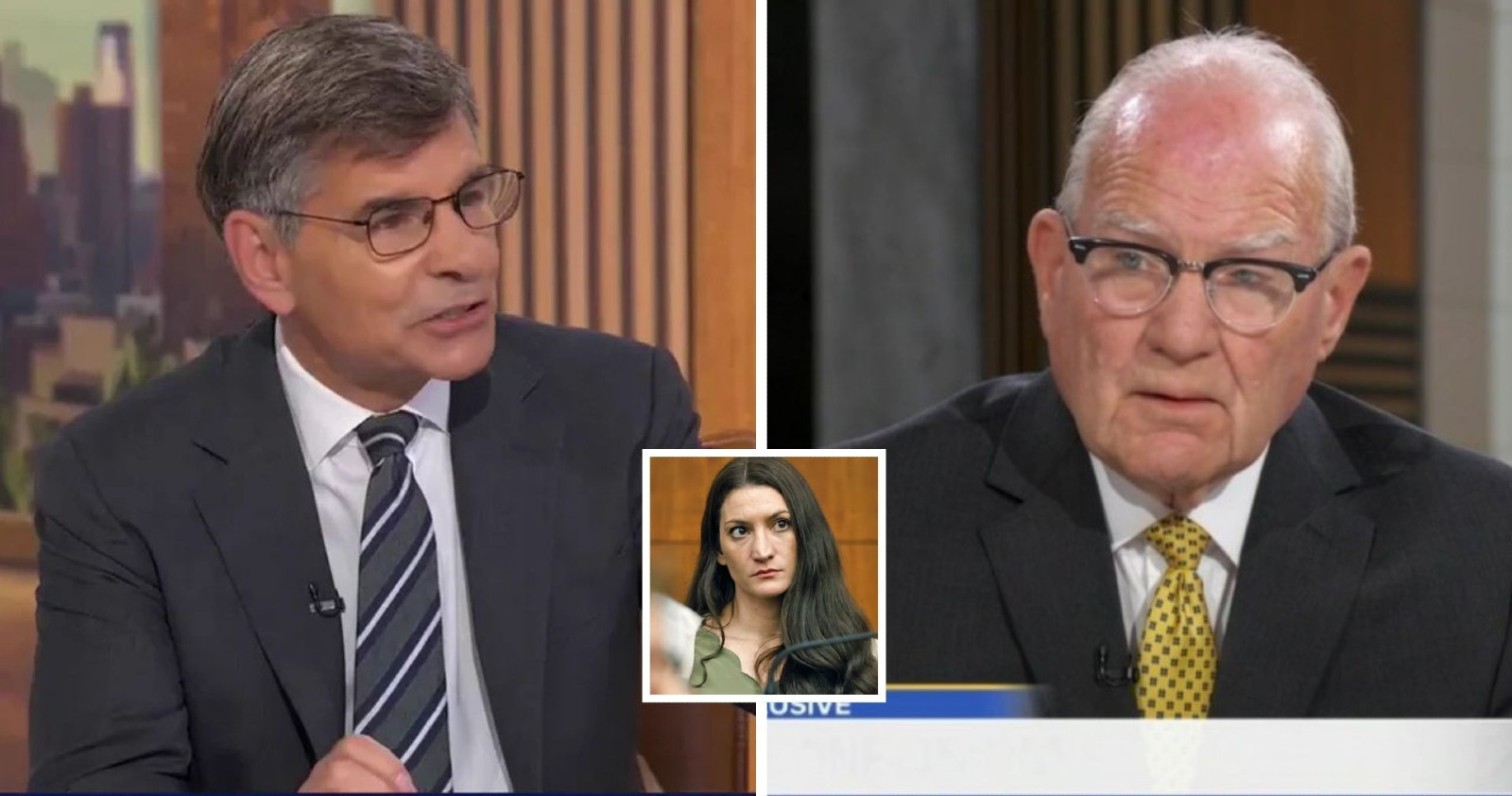
Lindsay Clancy’s defense attorney is distancing himself from a wave of online conspiracy theories accusing her former husband, Patrick Clancy, of involvement in the deaths of their three children following the mistrial in her closely watched Massachusetts murder case.
Attorney Kevin Reddington addressed the speculation outside Plymouth Superior Court on Friday, shortly after Judge William Sullivan declared a mistrial because jurors could not reach a unanimous verdict following seven days of deliberations.
“I think Patrick, you heard the 911 call; I think you can judge his credibility by that 911 call,” Kevin Reddington told reporters after a deadlocked 11-1 jury failed to reach a unanimous decision.
“I don’t know what is in Patrick’s mind. He testified, and the jury was able to evaluate it,” Reddington added.
Reddington offered a pointed response when asked about social media users who have accused Patrick Clancy of killing the children.
“Not by me,” he said.
Patrick was a major witness during the nearly six-week trial, testifying about his former wife’s deteriorating mental health, the events leading up to the killings, and his discovery of their children after returning to the family’s Duxbury home on Jan. 24, 2023.
Lindsay Clancy, now 36, was charged with three counts of first-degree murder in the deaths of 5-year-old Cora, 3-year-old Dawson, and 8-month-old Callan.
The central issue at trial was not whether Lindsay killed the children. Her attorneys acknowledged that she strangled them with exercise bands before attempting to take her own life by jumping from a second-story window.
Instead, her defense argued that she should be found not criminally responsible because severe mental illness prevented her from appreciating the wrongfulness of what she was doing.
Reddington and his witnesses presented evidence concerning postpartum mental illness, psychosis, depression, bipolar disorder, and the numerous psychiatric medications Clancy had been prescribed as she repeatedly sought treatment before the killings.
WATCH:
The defense maintained that she was experiencing postpartum psychosis at the time.
Prosecutors sharply disputed that interpretation.
They acknowledged Clancy had struggled with significant mental-health problems but argued that she was not psychotic when she killed the children and remained capable of understanding that her actions were wrong.
Prosecutors portrayed the killings as deliberate, pointing to Clancy’s actions before and after the deaths as evidence that she was thinking rationally enough to be held criminally responsible.
Patrick testified for the prosecution but provided substantial testimony about Lindsay’s mental-health decline.
He described her as a devoted mother before her condition worsened and detailed her struggles with anxiety, depression, medications and repeated attempts to obtain psychiatric treatment.
Patrick was away from the home running errands when his then-wife killed their children.
Jurors were shown surveillance footage of him inside a CVS in Kingston, where he had gone to pick up medication requested by Lindsay. He also testified about a brief telephone conversation with her while he was at the store.
Despite that evidence, Patrick became the target of an increasingly aggressive collection of social-media theories during the trial.
Users on TikTok, Instagram and other platforms dissected his testimony, facial expressions, timeline and personal life, with some making unsupported claims that he had played a role in the children’s deaths.
Some of the theories became increasingly elaborate. No evidence presented at trial established that Patrick participated in the killings, and he has never been charged in connection with the deaths.
Reddington acknowledged the extraordinary amount of amateur investigation surrounding the case but stopped well short of validating accusations against Patrick.
On Tuesday, Patrick’s attorney, Howard Cooper, issued a statement accusing influencers and conspiracy theorists of conducting what he called an escalating “defamation campaign” against Patrick and his family.
Cooper said online claims suggesting Patrick was involved in his children’s deaths were “blatant and baseless falsehoods” and warned that legal action could follow.
“Enough is enough,” Cooper said, adding that law enforcement had been notified about threats stemming from the allegations.
According to Cooper, the online accusations have gone beyond internet speculation and produced “real life threats” affecting Patrick’s reputation, livelihood and personal safety.
This article may contain commentary which reflects the author's opinion.
