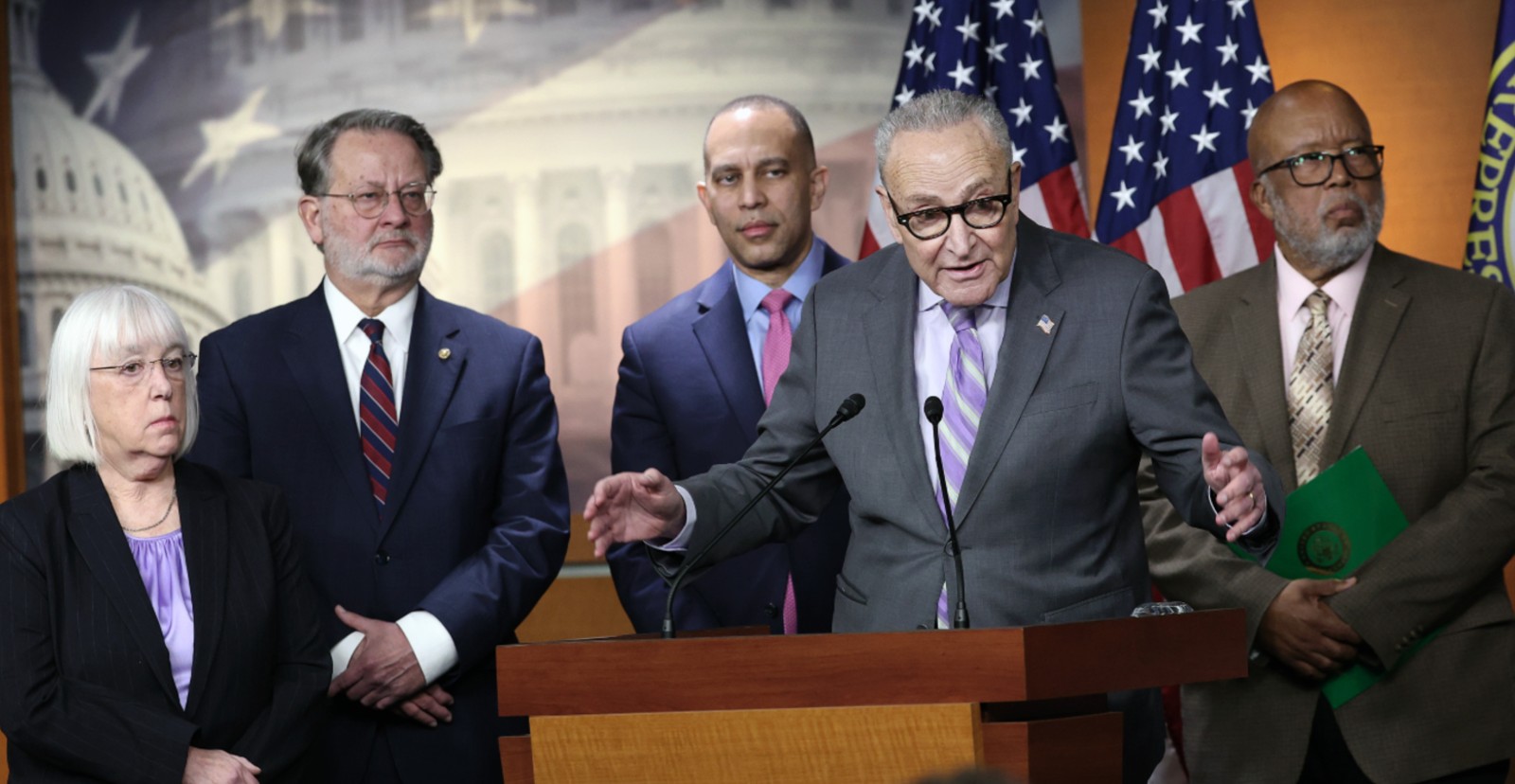
Longtime Democratic Sen. Gary Peters will return to academia after leaving Congress, joining the University of Southern California in January.
The Michigan Democrat will become director of USC Dornsife’s Center for the Political Future after completing his second Senate term.
Peters will also hold the Carmen H. and Louis Warschaw Endowed Chair in Practical Politics at the university.
He will serve alongside Republican strategist Mike Murphy, who remains co-director of the bipartisan political center.
USC says the center may be the country’s only university political institute jointly led by a Democrat and Republican.
The appointment gives Peters a new platform after nearly two decades representing Michigan in the House and Senate.
Peters announced in January 2025 that he would not seek a third Senate term in 2026.
His retirement created an open Michigan seat now contested by Democrat Abdul El-Sayed and Republican Mike Rogers.
USC announced Peters’ appointment Monday, describing his legislative record as unusually effective and frequently bipartisan.
“I look at this as a capstone of my years in public service,” Peters said about the appointment.
He said working with students offers an opportunity to encourage younger Americans to become more engaged in civic life.
“It’s never been more important to bring people together,” Peters said while explaining his return to higher education.
Retiring Dem Sen. Gary Peters’ next job: head of USC’s Center for the Political Futurehttps://t.co/F3qhKw6DmW
— Andrew Desiderio (@AndrewDesiderio) September 21, 2026
Peters said students should learn that political disagreement does not prevent lawmakers from finding practical solutions.
USC Dornsife Dean James Bullock praised Peters’ government experience, legislative achievement and bipartisan cooperation.
Murphy described Peters as “a principled politician who also knows how to get things done.”
The center was founded in 2018 to expose students to political leaders, strategists, campaigns, government and public policy.
Peters plans to expand the center’s presence in Washington using USC’s Capital Campus as an additional base.
He will divide his time between Washington and Los Angeles while teaching courses at both USC locations.
The senator wants students interacting directly with policymakers while learning how federal institutions operate in practice.
Peters served three House terms before winning election to the Senate in 2014.
He began Senate service in 2015 and won reelection in 2020 before deciding against another campaign.
During the 119th Congress, Peters serves as ranking Democrat on the Senate Homeland Security and Governmental Affairs Committee.
Peters previously chaired Homeland Security when Democrats controlled the Senate, overseeing federal agencies and government operations.
His legislative record includes cybersecurity, border security, postal policy, emergency management and federal government reform.
The nonpartisan Center for Effective Lawmaking ranked Peters the Senate’s most effective lawmaker in three consecutive Congresses.
He first earned that distinction while Democrats were the minority, an uncommon achievement in the organization’s historical data.
During the 117th Congress, Peters introduced 102 bills, with 30 passing the Senate and 19 becoming law.
USC says those 19 bipartisan standalone laws were the most by any senator in one Congress for decades.
Peters also chaired the Democratic Senatorial Campaign Committee during the 2022 and 2024 election cycles.
Before Congress, Peters served on the Rochester Hills City Council and later spent eight years in Michigan’s state Senate.
Peters worked more than two decades in financial services, including positions at Merrill Lynch and UBS/PaineWebber.
He taught strategic management and finance at Oakland University and Wayne State University before entering federal politics.
Peters later held Central Michigan University’s Robert and Marjorie Griffin Endowed Chair in American Government.
His new USC job therefore represents a return to teaching rather than an entirely new career direction.
Peters also served in the U.S. Navy Reserve, eventually reaching the rank of lieutenant commander.
After the September 11 attacks, he returned to drilling status and later served overseas during Reserve duty.
“But I expect to learn from them, too,” Peters said about the students he will teach.
This article may contain commentary which reflects the author's opinion.
