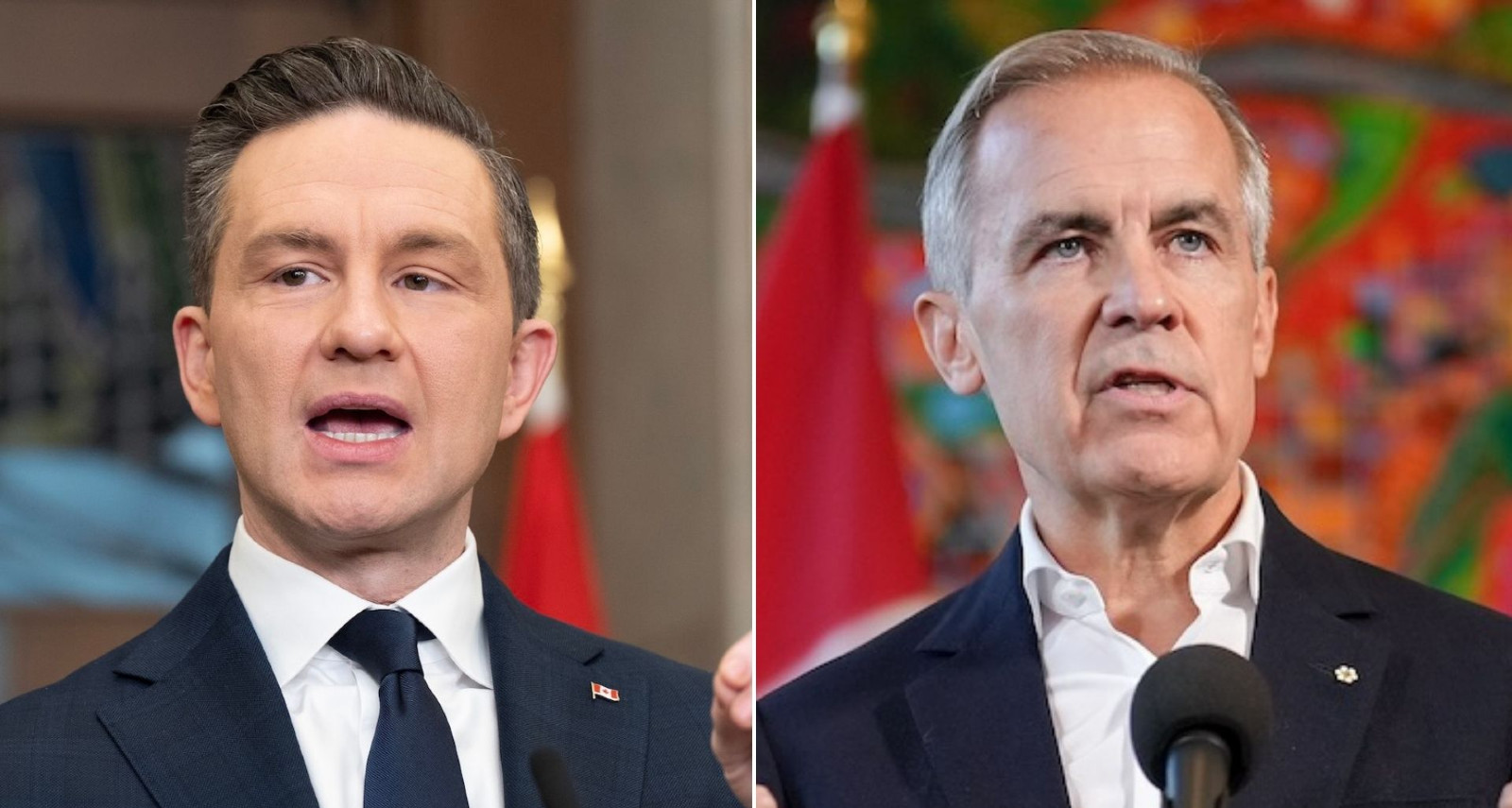
Canadian Prime Minister Mark Carney secured a majority government after special election wins, allowing his Liberal Party to pass legislation without relying on opposition support. The outcome strengthens the party’s hold on power and gives Carney greater control over his legislative agenda.
Voters cast ballots for three vacant seats among the 343 districts represented in Parliament. In Toronto, Liberal candidates Danielle Martin and Doly Begum won in the districts of University-Rosedale and Scarborough-Southwest, respectively, the Associated Press reported.
The result for a district in Quebec was still pending as of Monday night. If confirmed, the Liberals could further expand their margin in Parliament.
The Liberal Party’s position means it could remain in power until 2029 without needing support from other parties. The majority status removes the need for coalition-building or reliance on smaller parties to advance legislation.
Carney first won national office last year amid heightened tensions with the United States under President Donald Trump. His campaign was fueled in part by public reaction to Trump’s annexation threats and a push to reduce Canada’s reliance on its southern neighbor.
Since that election, a series of defections from opposition parties helped bring the Liberals closer to a majority. Five lawmakers crossed party lines, including four from the main opposition Conservative Party of Canada.
The Liberal Party of Canada wins a majority government following a couple of by-elections.
First time Canada has had a majority government since 2019 pic.twitter.com/Wp9BulD3pK
— OSZ (@OpenSourceZone) April 14, 2026
One of those defectors cited Carney’s speech at the World Economic Forum in Davos, Switzerland, as influencing the decision. In that address, Carney criticized economic pressure by major powers against smaller nations and received broad attention for his remarks.
Carney, who previously served as governor of both the Bank of England and Canada’s central bank, replaced Justin Trudeau as prime minister in 2025. Since taking office, he has moved the Liberal Party toward a more centrist, center-right economic position.
The prime minister acknowledged the election wins in social media posts but did not directly address the majority outcome. He instead focused on congratulating the winning candidates and highlighting the party’s broader goals.
“As of tonight, Mark Carney and our entire incredible Liberal team have earned an even more powerful mandate to continue building a better Canada,” Martin said. Her comments reflected the party’s view that the results strengthen its governing authority.
Political analysts said the outcome reflects broader shifts in Canadian public opinion.
Daniel Béland, a political science professor at McGill University, said tensions with the United States have influenced voter behavior.
“Mark Carney entered the political arena about 15 months ago, but he is proving himself to be an astute politician,” Béland said. “He remains popular nearly a year after leading his party to victory in late April 2025 and, with the help of a series of floor-crossings, he is now at the helm of a majority government that provides more stability and greater capacity to move forward with his economic and policy agenda,” he said.
The results mark another setback for opposition leader Pierre Poilievre. Poilievre’s Conservative Party lost the previous national election, and he also lost his own seat before later returning to Parliament.
Poilievre secured a leadership review victory earlier this year, maintaining his position at the head of the party. However, he has faced ongoing challenges in maintaining unity among his lawmakers.
In a social media post Monday night, Poilievre said he would continue to oppose the government’s agenda. “I will continue to lead that fight every day and in every way in Parliament, across the country and in the next election, when Canadians will reclaim the country we know and love,” he said.
The Liberal majority gives Carney a clearer path to implement economic and policy initiatives without procedural delays. It also sets the stage for a more stable governing period as Canada navigates domestic and international challenges.
This article may contain commentary which reflects the author's opinion.
