Baja California Governor Marina del Pilar Ávila Olmeda announced plans by the Mexican government to open 25 new shelters to accommodate deported migrants, according to a report this week.
Speaking to reporters on Monday in Tijuana, Ávila Olmeda emphasized the government’s commitment to addressing potential mass deportations, referencing threats from President-elect Donald Trump, Border Report said.
She noted that six of the shelters will be established in Tijuana, with an additional two planned for Mexicali, the capital of Baja California, the report added.
“This is a strategic plan to accommodate exclusively people who get deported after January 20,” she said.
Ávila Olmeda said she believes that Trump will, in fact, follow through and deport thousands of migrants who are in the U.S. illegally.
“What we do know, throughout his campaign, he threatened to do this, and since he was already president of the United States, we believe this time he will be stricter and tougher when it comes to deportations,” she said. “We are working to get ready and receive our migrants.”
Ávila Olmeda explained that the shelters will temporarily house Mexican migrants for a few days before facilitating their return to their hometowns in Mexico’s interior.
“These shelters that are being planned are for those being repatriated who are coming from north to south, but no foreigners, only Mexicans, this must be made clear — Mexicans will be welcomed back to their country and their human rights will be respected.”
The governor added that the shelters will be able to hold 500 migrants at a time. “Some will board single men, while others will house only women, unaccompanied minors and entire family units,” Border Report added.
Last month, Trump announced that he would sign an executive order upon assuming office to impose a 25% tariff on all goods imported from Mexico and Canada. He also pledged to implement further tariff increases on China, citing concerns over the influx of illegal immigrants and the trafficking of illicit drugs.
In a Truth Social post, Trump, who takes office on Jan. 20, 2025, noted that thousands of people were “pouring through” Mexico and Canada “at levels never seen before.”
“Right now a Caravan coming from Mexico, composed of thousands of people, seems to be unstoppable in its quest to come through our currently Open Border,” he wrote. “On January 20th, as one of my many first Executive Orders, I will sign all necessary documents to charge Mexico and Canada a 25% Tariff on ALL products coming into the United States, and its ridiculous Open Borders.”
“This Tariff will remain in effect until such time as Drugs, in particular Fentanyl, and all Illegal Aliens stop this Invasion of our Country!” he added. “Both Mexico and Canada have the absolute right and power to easily solve this long simmering problem.”
“And until such time that they do, it is time for them to pay a very big price!” he added.
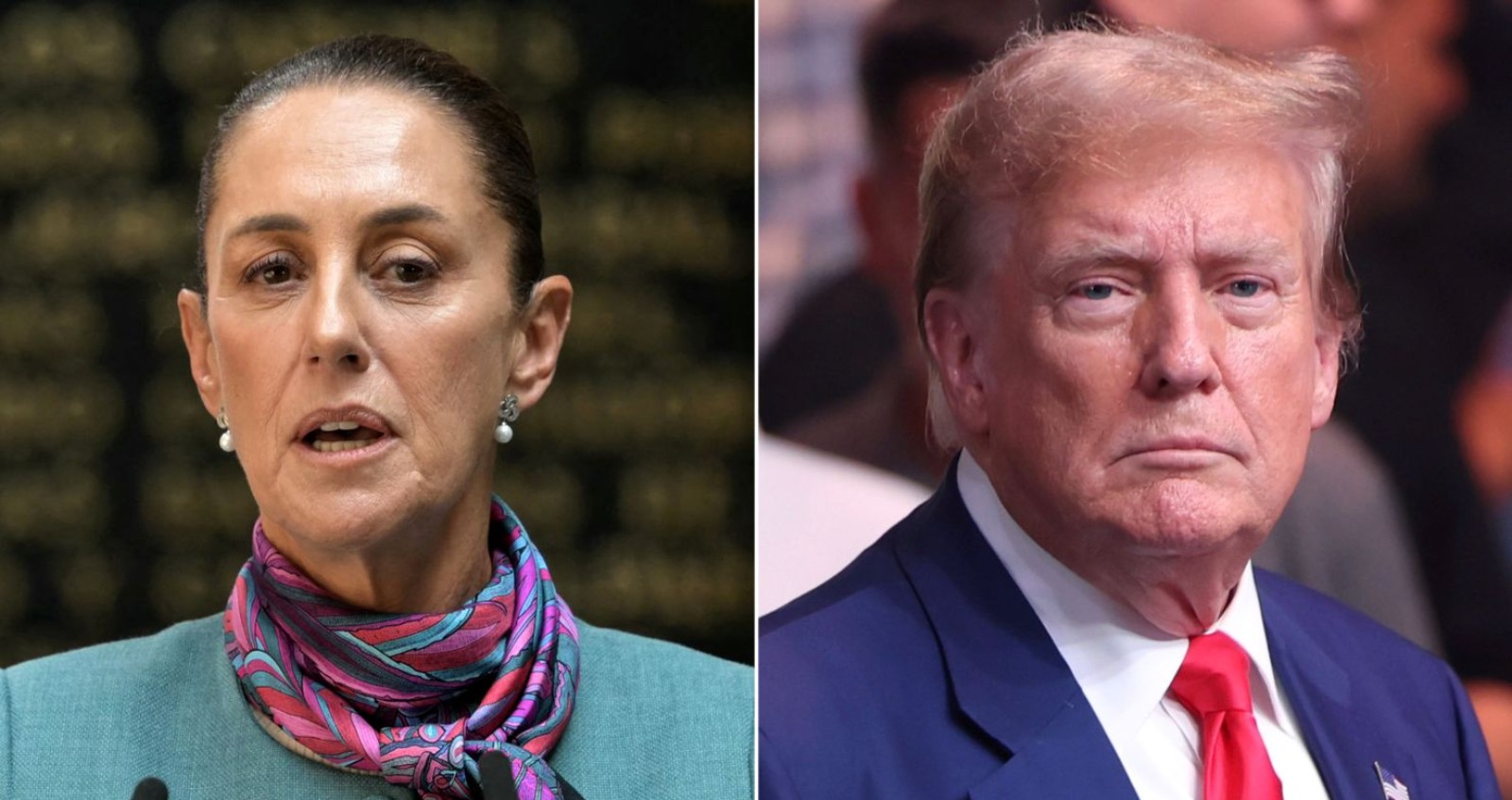
Mexican President Claudia Sheinbaum responded by saying she was confident a trade war would be avoided after she spoke on the phone to the president-elect following his post. “There will be no potential tariff war,” Sheinbaum said flatly when asked about the issue at her daily morning news briefing.
Canadian officials have also since responded, including Prime Minister Justin Trudeau’s visit to see the president-elect at his Mar-a-Lago estate in Florida.
In a joint statement, Canada’s Deputy Prime Minister, Chrystia Freeland, and Public Safety Minister Dominic LeBlanc said America’s northern neighbor and the U.S. have “one of the strongest and closest relationships–particularly when it comes to trade and border security.”
“Canada places the highest priority on border security and the integrity of our shared border. Our relationship today is balanced and mutually beneficial, particularly for American workers,” they said. “Today, Canada buys more from the United States than China, Japan, France, and the UK combined. Canada is essential to US domestic energy supply, and last year 60 percent of US crude oil imports originated in Canada.”
This article may contain commentary which reflects the author's opinion.
