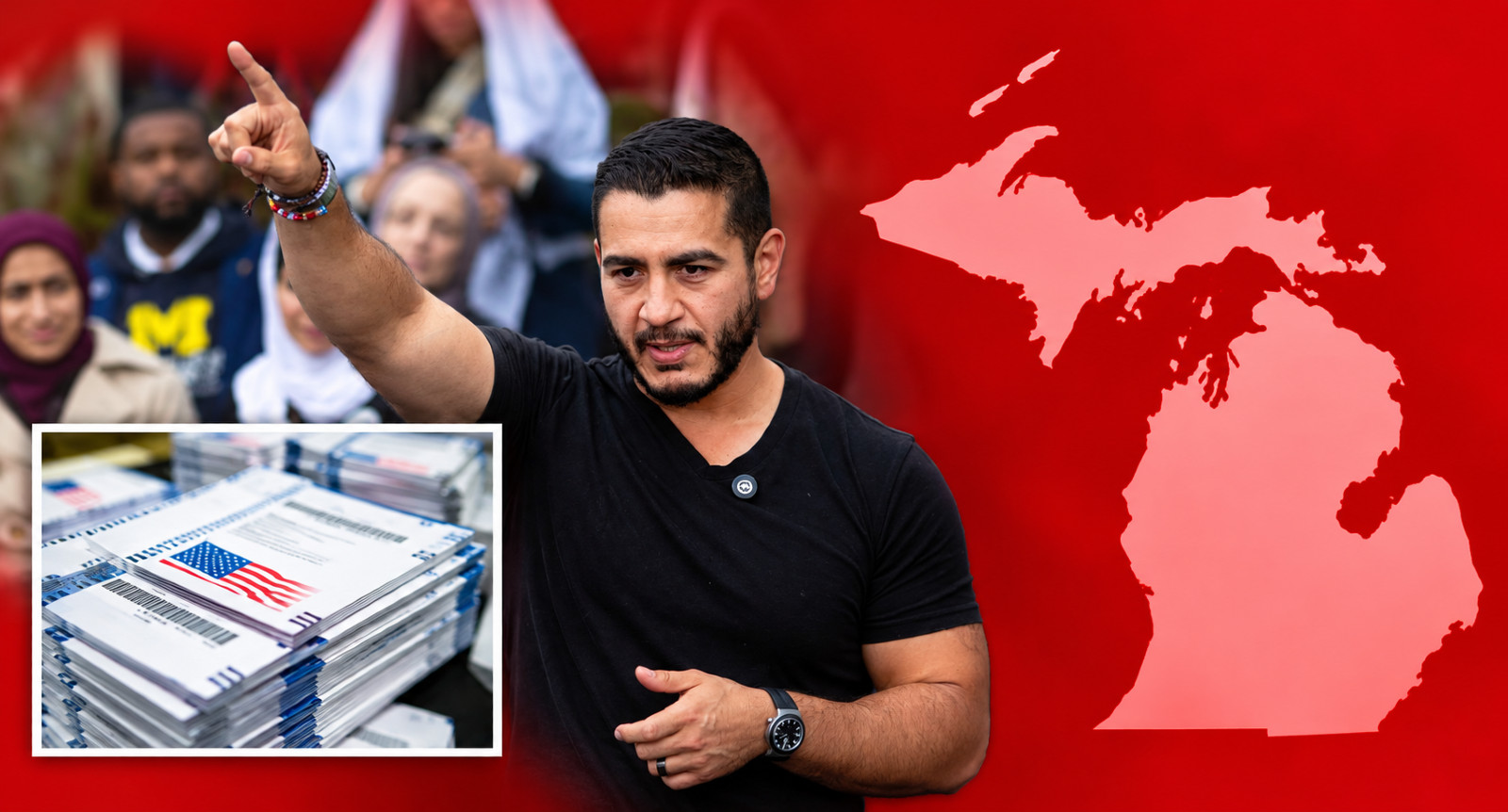
Michigan’s closely watched United States Senate contest is drawing fresh attention after an election data analyst reported more than half a million early and absentee votes, with his model describing the race as a tossup.
An October 14 graphic published by the account E_DataGuy listed 520,541 early and mail votes and a narrow 3,650-vote advantage, which the analyst called a “firewall.”
The graphic attributed 256,859 of those votes to Democrats, 253,209 to Republicans and 10,471 to another category, producing the reported 3,650 difference between the two major party groups.
Those numbers describe the analyst’s classification of ballots or voters, not verified votes for either Senate candidate, because Michigan does not publicly disclose how individual voters marked their ballots.
The analyst labeled the contest “TOSSUP” and gave both parties identical modeled vote ranges of 46 percent to 52 percent, underscoring uncertainty rather than establishing an election result.
His graphic also showed a 52 percent final turnout estimate, but the screenshot did not explain the model’s methodology, assumptions, or the source of each partisan classification.
Republican Mike Rogers, a former congressman and chairman of the House Intelligence Committee, is competing against Democrat Abdul El-Sayed for the seat being vacated by retiring Democratic Senator Gary Peters.
The race gives Republicans a chance to contest a seat currently held by Democrats, as both parties focus on Michigan’s economically diverse and politically competitive electorate.
Rogers has emphasized national security, border enforcement, and economic issues, drawing on his congressional experience and intelligence background as he seeks to return to Washington.
El-Sayed, a physician and former Detroit health director, has promoted an agenda that includes expanded health coverage and economic policies aimed at lowering costs for working families.
Recent public polling provides important context for the early vote figures and does not establish that either candidate has secured a lead in ballots actually cast.
MICHIGAN – 10.14.26
🗳️ 520,541 votes in
🔴 Firewall of 3,650
❓Race is a tossup https://t.co/fNl8StvBjP
— E_DataGuy (@E_DataGuy) October 14, 2026
The RealClearPolitics average covering surveys through October 10 showed El-Sayed at 48.4 percent and Rogers at 45.7 percent, a difference of 2.7 percentage points.
An InsiderAdvantage survey conducted October 9 and 10 placed El-Sayed at 48 percent and Rogers at 46 percent, while a Quantus Insights survey showed a one point difference.
A Fox News survey conducted September 24 through 28 found El-Sayed at 50 percent and Rogers at 49 percent, illustrating the close margins reported in several polls.
Polls measure the preferences of sampled respondents and carry sampling and other uncertainties, while ballot return figures measure participation and cannot establish candidate support before votes are counted.
Michigan’s official election information offers another perspective on the scale of voting already underway, particularly the number of residents requesting and returning absentee ballots.
According to figures reported October 13, more than 2.08 million voters had requested absentee ballots, including nearly 1.99 million people on the state’s permanent absentee ballot list.
By that morning, 440,677 absentee ballots had been returned, representing approximately six percent of Michigan’s nearly 7.4 million active registered voters.
That official snapshot preceded the analyst’s October 14 graphic, so its lower total does not automatically contradict his later figure, but the two figures have not been independently reconciled.
Michigan voters have been able to cast absentee ballots since September 24, and in person early voting in Detroit is scheduled to begin October 24.
The statewide general election takes place November 3, giving campaigns additional time to contact undecided voters, encourage participation and communicate their policy differences.
For Republicans, the graphic’s nearly even partisan classifications may provide an encouraging talking point, but treating them as confirmed votes for Rogers would overstate what the available data proves.
For Democrats, the polling averages provide a separate measure of public opinion, but they likewise cannot guarantee how remaining voters will participate or how ballots will ultimately be counted.
But the main takeaway is that the race still remains closely watched, with early participation increasing and important questions about turnout, voter preferences and the analyst’s assumptions unresolved.
This article may contain commentary which reflects the author's opinion.
