A new corporate disclosure requirement arrived with an unusual signing ceremony and an immediate fight over its possible consequences.
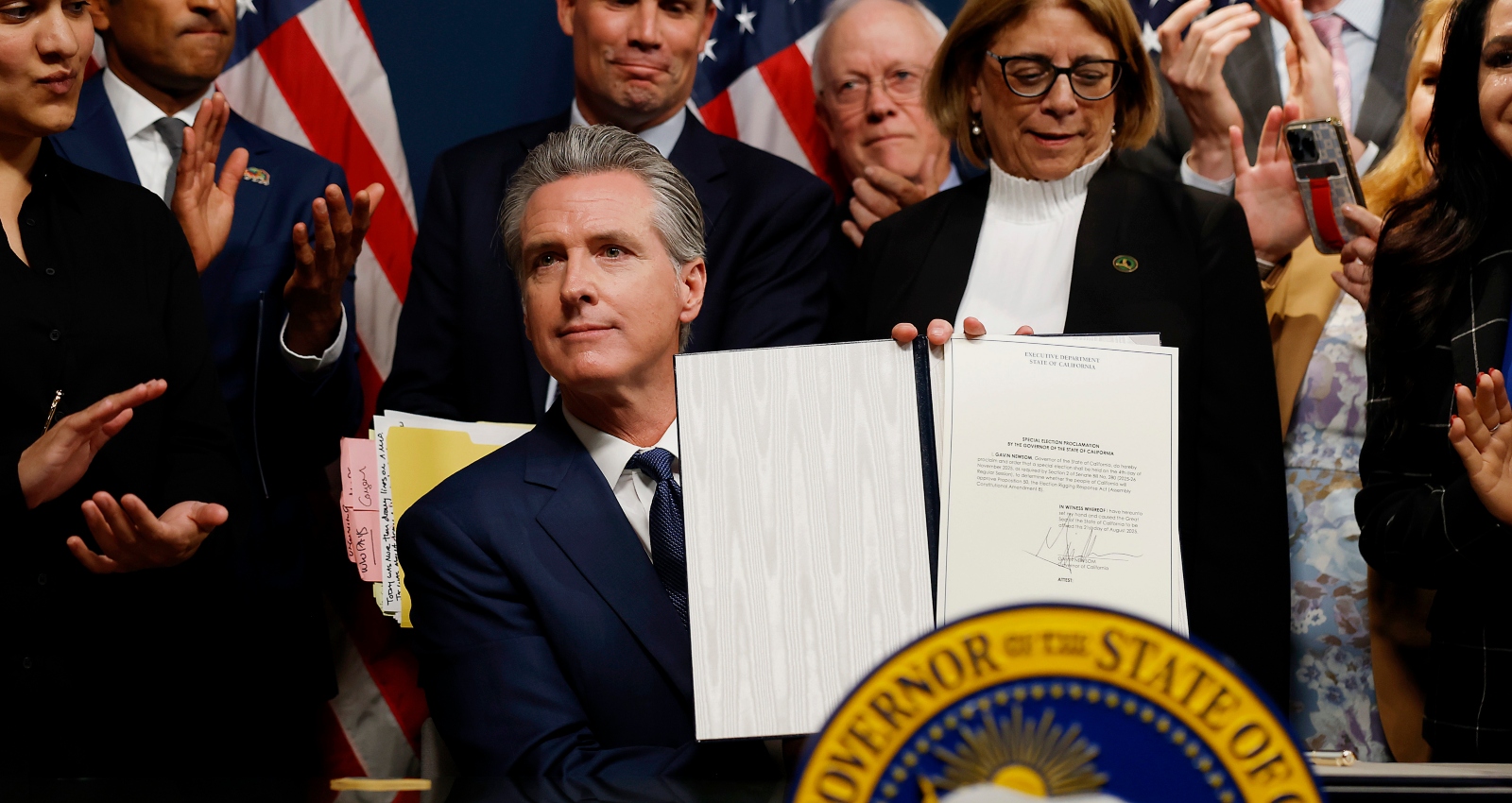
California Governor Gavin Newsom (D) opened his podcast on Thursday and signed a bill requiring large companies to investigate and disclose historical ties to slavery.
The measure reaches deep into historical records, leaving businesses to put forth the expense to determine what they can still uncover.
He announced the signing at the start of his podcast episode featuring Bryan Stevenson, founder of the Equal Justice Initiative.
Gavin Newsom uses the open of his podcast to sign a bill forcing companies to dig for slavery ties — and make them public.
“This is a bill that requires large companies that operated before 1965 to search their records for ties to slavery, going back to 1849.”
“And then we… pic.twitter.com/n4PETOE5t9
— Western Lensman (@WesternLensman) October 2, 2026
Gavin Newsom giving the last remaining companies in California new reasons to leave every day.
Just so he can try and get a few more black votes in South Carolina. https://t.co/RkhdTqaZHY
— Matt Whitlock (@MattWhitlock) October 2, 2026
Newsom said the requirement applies to large companies that operated before 1965.
Those companies must search for connections to slavery dating back to 1849, he explained.
The findings would then be made public under the measure as Newsom described it.
The governor cited insurance policies on enslaved people and records treating human beings as collateral for loans.
His examples point to specific historical transactions that companies may need to locate in their archives.
Newsom said his conversation with Stevenson had prompted reflection on the subject.
He described the bill signing as news connected to the interview before the discussion began.
“Accountability … starts with truth,” Newsom said, linking disclosure to a broader conversation about repair.
That language immediately prompted questions about whether the measure is a precursor to financial reparations.
Townhall writer Amy Curtis argued that Newsom could use the issue in a potential 2028 presidential campaign.
She also predicted that disclosures might lead to demands for large payments from corporations, otherwise known as reparations. She also said the new law would add another expensive layer of regulations onto businesses, potentially driving even more of them out of the state.
The immediate requirement Newsom announced is a search for historical ties followed by public disclosure.
The lack of those details matters when separating the signed bill from arguments about what could follow.
Businesses still face a substantial practical question: how far back can their surviving records take them?
Records from the nineteenth century may be incomplete, lost, or held in difficult-to-search formats.
Tracing a company’s predecessors could also be complicated when ownership and names have changed over generations.
The article does not provide a cost estimate for complying with the new search requirement.
Nevertheless, requiring staff or outside researchers to examine old records could consume time and money.
Companies will need clear guidance on what constitutes an adequate search and how uncertain findings should be reported.
Those standards affect whether disclosures are consistent and whether the public can understand what they show.
A historical connection can take different forms, from an insurance policy to a loan involving enslaved people.
Newsom’s examples explain the kinds of records he wants brought into public view.
They do not, by themselves, establish what responsibility a present-day company bears for a predecessor’s actions.
That question lies at the heart of the political debate sparked by the signing.
Curtis contended that the requirement pressures businesses to prove the absence of historical wrongdoing.
The article, however, does not describe a specific penalty for a company that finds no relevant records.
Without such details, claims about inevitable punishment remain arguments rather than established consequences.
Another criticism raised in the article concerns compelled disclosure of politically charged information.
One social-media commenter called the requirement unconstitutional, but any legal challenge would turn on the law’s actual requirements and a court’s assessment of them.
This article may contain commentary which reflects the author's opinion.
