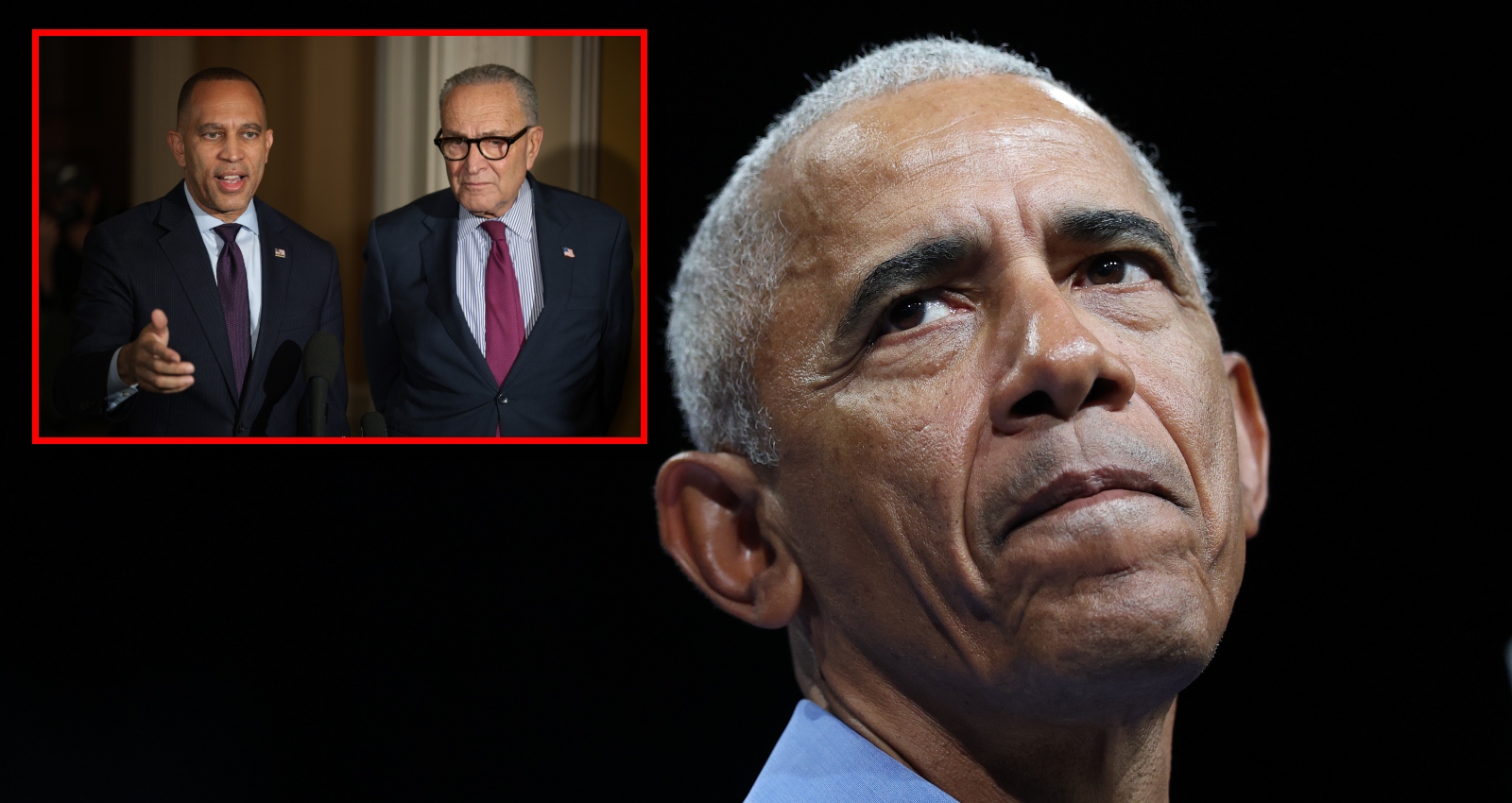
A polling lead can disappear on Election Day, and Democrats should be especially leery of that, one of the party’s elders said during a closed-door meeting this week.
Former President Barack Obama told Democratic donors that their candidates could lose races where current surveys show narrow leads.
Obama spoke Wednesday at a Northern Virginia fundraiser for the Democratic Senatorial Campaign Committee.
The event raised about $3.6 million, according to the party’s Senate campaign arm.
His caution came as Democrats compete in states once viewed as difficult ground for the party.
Obama said he was surprised by polling that places Democratic Senate candidates in contention in several states.
He specifically cited Texas, where Democrat James Talarico has polled ahead of Republican Ken Paxton.
That matchup was one he suggested he would not have expected to be so competitive.
He also mentioned Kansas and Georgia as part of a broader Senate battleground. In Kansas, incumbent Republican Senator Roger Marshall faces Democrat Adam Hamilton. In Georgia, incumbent Democratic Senator Jon Ossoff is running against Republican Mike Collins.
Obama’s point was that a competitive map does not guarantee a favorable result. Small leads in individual states can disappear if turnout or late voter choices break differently.
“We could end up losing all of them by two points,” he said of tight races.
The warning was grounded in the difference between a polling estimate and an actual vote count.
A candidate ahead by two or three points may still be within a survey’s margin of error.
Polls also depend on which voters ultimately participate, a question campaigns cannot settle in advance.
That uncertainty cuts across party lines and applies even when one side appears to have momentum.
For Democrats, Obama’s remarks temper talk of sweeping gains before voters cast their ballots.
For Republicans, they underscore that competitive races remain competitive even when surveys show the GOP trailing.
The former president was joined in the discussion by Delaware Senator Lisa Blunt Rochester.
The fundraiser’s purpose was to support the committee working to elect Democrats to the Senate.
That political setting is relevant: Obama was addressing donors while describing the stakes as he sees them.
He argued that Senate control would affect the direction of federal judicial appointments.
Obama warned that another two years of President Donald Trump with additional judicial appointments could threaten democratic institutions.
That was Obama’s political assessment, rather than a finding established by the polling he discussed.
He also described the judiciary as strained but still functioning in some important areas.
His criticism was sharper toward the Supreme Court, whose decisions he suggested have not always checked presidential power.
Those remarks put constitutional questions at the center of his pitch for Senate control.
The Senate confirms federal judges, so its membership directly affects the president’s ability to fill vacancies.
That institutional power lasts beyond a single election cycle because federal judges can serve for decades.
Obama also addressed differences within his own party amid disputes between progressives and establishment Democrats.
He said he expected Democrats to share a commitment to dignity and respect despite disagreements.
His call for unity comes as candidates in different states navigate distinct electorates and policy debates.
Michigan offers one example, with Democrat Abdul El-Sayed facing Republican Mike Rogers in a closely watched Senate race.
Obama is scheduled to campaign with El-Sayed in Detroit later this month.
That appearance shows the former president becoming more active in races he considers consequential.
The Northern Virginia event placed money behind that activity as well as a public warning against overconfidence.
Fundraising totals can help campaigns reach voters, but money cannot turn a polling lead into counted ballots, Breitbart News reported.
Nor does a favorable survey settle whether candidates have answered voters’ concerns on spending, safety, and accountability.
This article may contain commentary which reflects the author's opinion.
