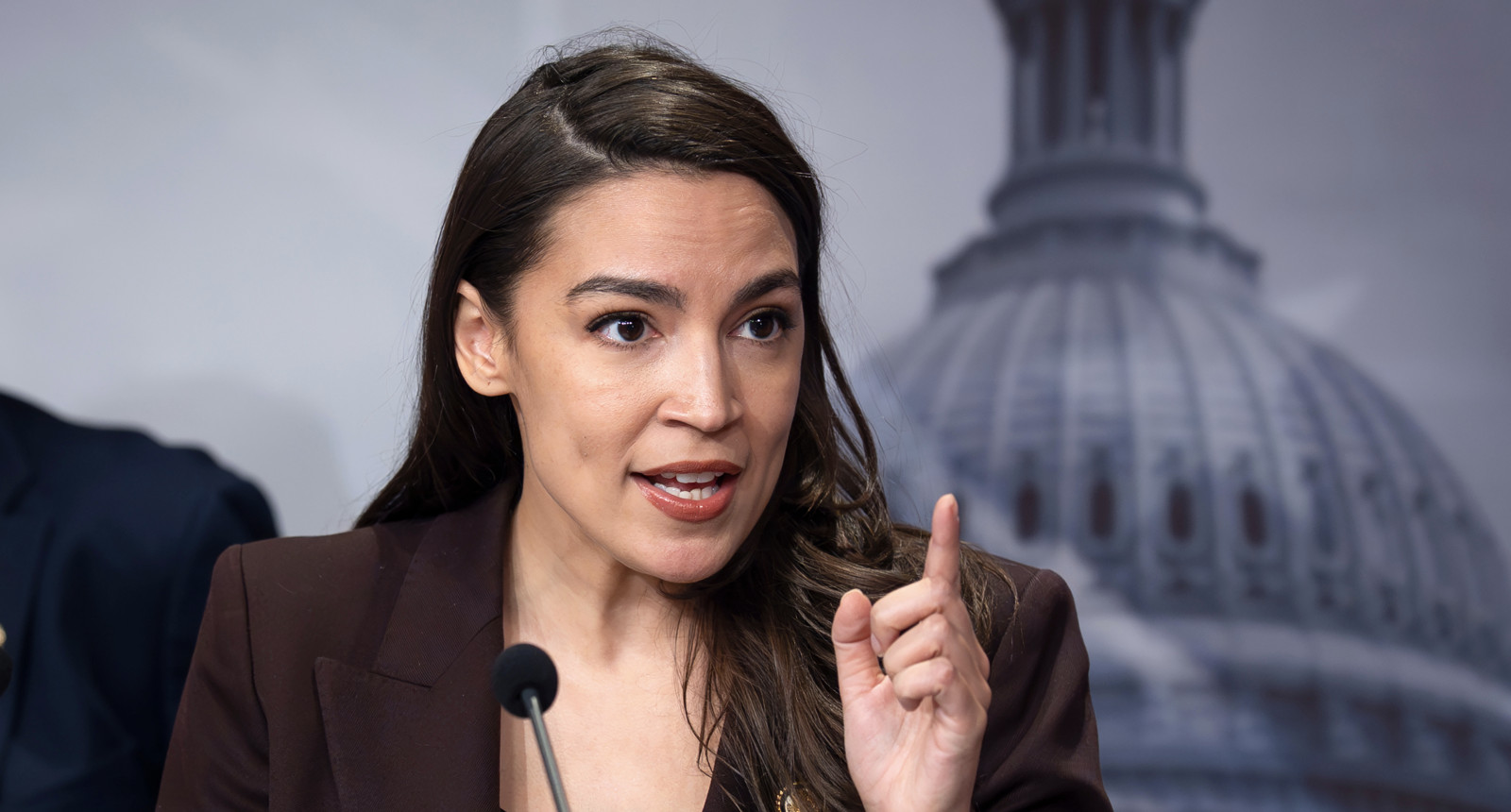
New York Socialist Rep. Alexandria Ocasio-Cortez is openly confronting a political reality that could define both her future and the Democratic Party’s direction.
The New York democratic socialist is weighing a 2028 presidential campaign, a Senate run, or another bid for her House seat.
But Ocasio-Cortez now acknowledges her next campaign could become the final election of her political career if she loses.
“It’s very all or nothing,” Ocasio-Cortez told The New York Times while discussing her rapidly approaching 2028 decision.
“If I were to run in this cycle, and not win, I would be done.”
“And I am not opposed to that,” she added.
“That, in and of itself, does not exclude the decision.”
“But it has to make it worth it.”
The extraordinary admission raises the stakes as Ocasio-Cortez considers abandoning her safe congressional seat for a far riskier national campaign.
Her possibilities include challenging Senate Minority Leader Chuck Schumer or entering what could become a sprawling Democratic presidential primary.
She says no decision will come until after the November midterms, when Democrats will receive another verdict from American voters.
“We will learn a lot in November,” Ocasio-Cortez recently said while discussing the political landscape.
Her decision ultimately centers on one question she posed during her Times interview: “Where can I do the most good?”
Ocasio-Cortez enters those deliberations with undeniable advantages, including enormous fundraising power, national recognition and an intensely loyal progressive following.
A University of New Hampshire survey released this summer placed Ocasio-Cortez first among prospective Democratic presidential candidates with 22% support.
Pete Buttigieg followed at 21%, while former Vice President Kamala Harris registered only 5% in that survey.
Yet attracting progressive activists and winning a nationwide general election represent two dramatically different political challenges.
Recent polling exposes potentially serious weaknesses among independents and voters skeptical of socialism, precisely the constituencies presidential nominees must capture.
A September New York Times/Siena poll found 51% of likely voters viewed socialism unfavorably, while only 31% viewed it favorably.
Nationwide voters were also more than twice as likely to oppose supporting a democratic socialist than to favor one.
Thirty percent preferred not supporting a democratic socialist candidate, compared with only 13% who specifically preferred such a candidate.
That ideological obstacle could prove especially significant for Ocasio-Cortez, one of America’s most recognizable democratic socialists.
The same Times/Siena polling found 41% viewed Ocasio-Cortez unfavorably, compared with only 30% viewing her favorably.
Other surveys reveal additional warning signs among independent voters, a crucial bloc in any presidential election.
A Washington Post-Ipsos survey previously found only 24% of independents held a favorable opinion of Ocasio-Cortez.
Swing-state Democrats have also demonstrated caution about embracing Ocasio-Cortez during the current midterm campaign.
Axios reported several competitive Democratic campaigns have avoided inviting her, fearing her progressive image could alienate moderate or conservative voters.
That hesitation offers an early glimpse at the problem Ocasio-Cortez could face trying to take her political brand nationwide.
Ocasio-Cortez has acknowledged that electability is a major concern as she considers a run for the presidency after Congress.
“Pretty candidly, I think about my identity,” she told the Times while discussing her political future.
“I’m not naïve to the fact that we are living under a very regressive administration,” Ocasio-Cortez said.
“This country has never elected a female president. Why are we pretending that this is not a factor?” she asked.
A successful gamble could place the democratic socialist inside the White House or propel her into another powerful national office.
A failed one, by Ocasio-Cortez’s own account, could send her out of elected politics altogether.
“If I were to run in this cycle, and not win, I would be done,” she said.
This article may contain commentary which reflects the author's opinion.
