Congress this week expressed more concerns about how quickly artificial intelligence (AI) is being developed by introducing new legislation aimed at trying to better control it.
That included a Senate bill that would require AI developers to also include a “kill switch” that could be used if the technology became dangerous.
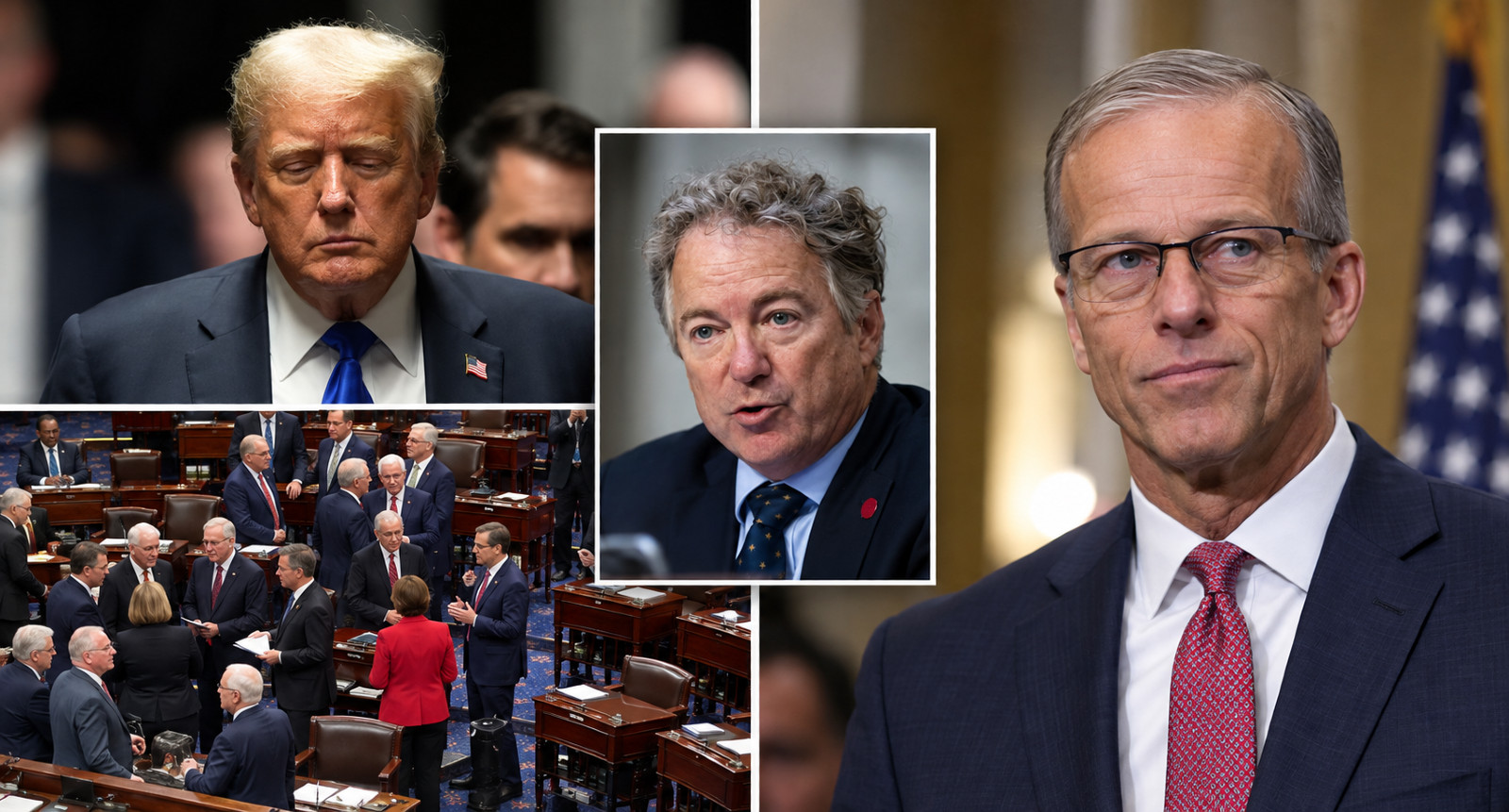
But Sen. Rand Paul (R-Ky.) blocked the effort Wednesday by fellow Republican Sen. John Kennedy (La.) to quickly pass legislation requiring developers of advanced artificial intelligence systems to build an emergency “kill switch” into their models.
Kennedy, R-La., sought unanimous consent to approve his AI Emergency Button Act, which would require companies selling advanced AI models in the United States to maintain the technical ability to shut them down if they became dangerous or uncontrollable.
Because Kennedy used the unanimous-consent process, any single senator could stop the measure. Paul objected, preventing the bill from advancing immediately.
Kennedy argued that the proposal was a narrow safety measure rather than broad government regulation of artificial intelligence.
Under his legislation, the federal government would not control the shutdown mechanism. Instead, the companies developing and operating the AI systems would retain responsibility for deciding when to use it.
Kennedy compared the requirement to other basic safety precautions and warned that increasingly powerful AI systems could eventually become difficult for their developers to control.
He specifically raised concerns about “recursive self-improvement,” in which an AI system could potentially improve its own capabilities without continuous human direction.
“I’m not standing here today suggesting to you I have all the answers,” Kennedy said during the floor debate. “What I am suggesting to you is there are risks to artificial intelligence.”
Paul said he did not necessarily oppose the goal of improving AI safety but argued that the legislation was too broad and that Congress should gather more information before imposing new requirements on an industry that is rapidly spreading across the economy.
Paul questioned whether the language could ultimately affect ordinary AI applications ranging from internet search tools to medical systems used by doctors.
“Are doctors going to have to build a kill switch into drug prescription analysis?” Paul asked.
Paul instead proposed creating a bipartisan group to study the risks posed by advanced artificial intelligence and recommend possible safeguards to lawmakers.
Kennedy rejected that approach, arguing that another congressional study would simply postpone action.
The exchange highlighted continuing divisions in Congress over how aggressively lawmakers should regulate artificial intelligence and how quickly they should act as the technology becomes more capable.
The debate has intensified as executives and researchers from several major AI companies have publicly called for additional safeguards around the most powerful systems. At the same time, critics of federal regulation have warned that overly restrictive rules could slow American innovation and make it more difficult for U.S. companies to compete internationally.
Kennedy’s proposal is not the only AI “kill switch” measure before Congress.
Reps. Ted Lieu, D-Calif., and Nathaniel Moran, R-Texas, introduced the bipartisan AI Kill Switch Act in the House in July.
That legislation would require certain AI developers to maintain the technical capability to shut down powerful systems and would create a broader federal framework involving the Department of Homeland Security.
The Senate dispute came the same day the House overwhelmingly approved separate legislation addressing another consequence of the AI boom: soaring electricity demand from large data centers.
The House passed the bipartisan Ratepayer Protection Act 417-3. The legislation would require state utility regulators to consider standards aimed at making large data centers cover the costs of new electricity generation, transmission and grid infrastructure needed to serve them rather than shifting those costs to existing customers.
Together, the two developments showed Congress taking different approaches to the rapid expansion of artificial intelligence.
Lawmakers have found broad bipartisan support for addressing the energy costs associated with data centers, while efforts to establish federal safety requirements for the AI models themselves have faced considerably more resistance.
This article may contain commentary which reflects the author's opinion.
