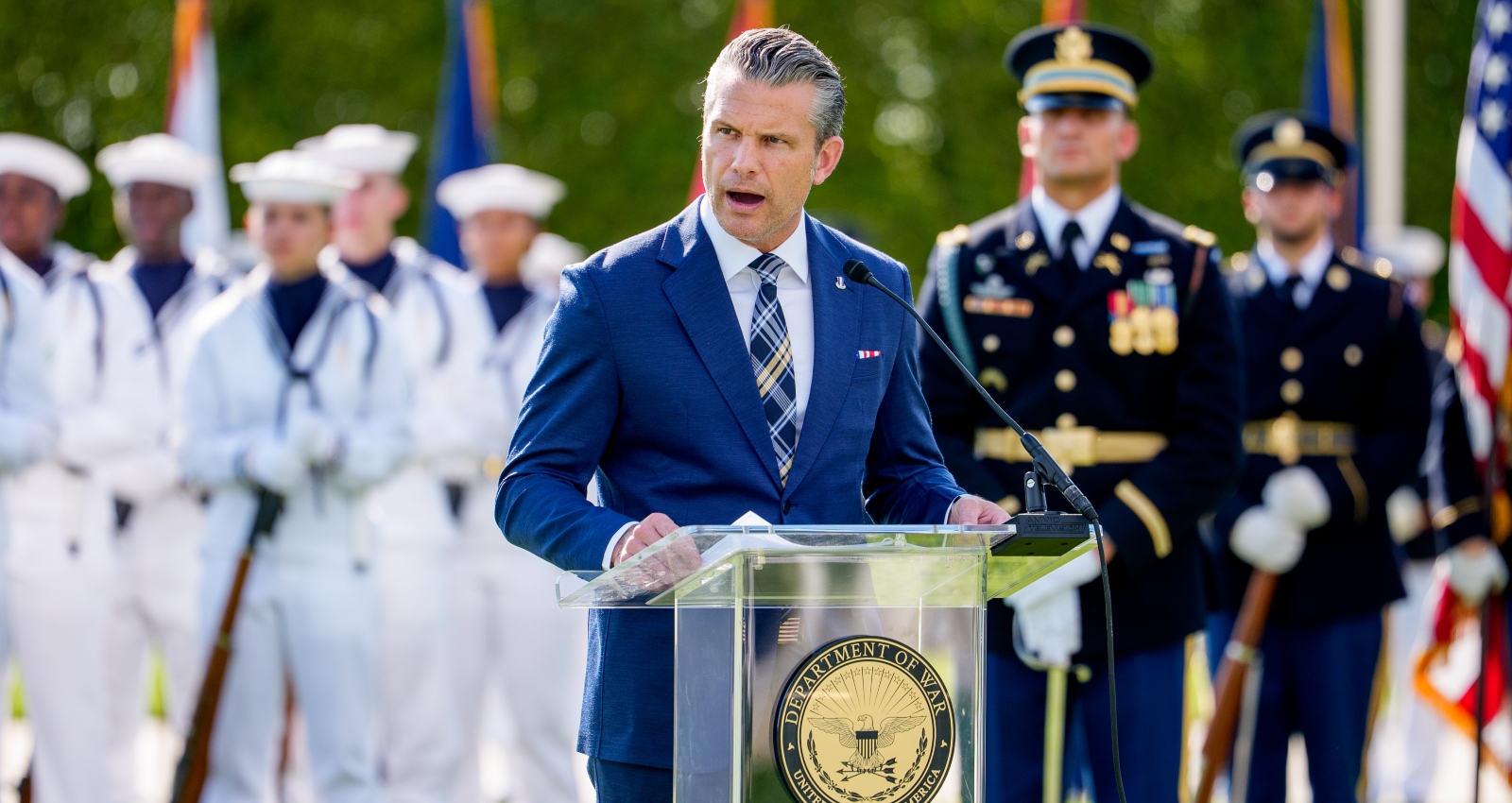
War Secretary Pete Hegseth sent an urgent warning to all service members ahead of what is expected to be a highly contested midterm election cycle.
Hegseth announced on Friday that he has urged all service members and their families to vote after citing a striking military registration gap.
In a Friday video, Hegseth said roughly 300,000 troops were not registered for the 2024 presidential election.
With November’s midterms approaching, he told commanders to help ensure personnel know how to cast their ballots.
Hegseth framed the appeal around a basic freedom military members serve to defend: choosing the nation’s leaders.
He stressed that commanders should encourage participation without telling anyone which candidate or party to support.
“You’re not telling them who to vote for, you’re just telling them to vote,” he said.
The message was directed at troops, military spouses and other eligible family members ahead of the congressional elections.
Hegseth said the number of unregistered troops exceeded the ballots cast in several American cities.
He named Detroit, Boston, Milwaukee and Seattle while emphasizing how much electoral participation could be lost.
WATCH:
🚨 NOW: SecWar Pete Hegseth is launching a MAJOR effort to get hundreds of thousands of US troops to VOTE in the 2026 midterms
YES! These patriots love America and likely lean RED 🇺🇸
"I'm urging all of our warfighters, their spouses, and eligible family members…commanders,…
— RattleTrap 1776 (@derekjonhsonn) September 25, 2026
His comparison underscored the scale of the figure, though he did not endorse candidates in the video.
The defense secretary urged military voters to take action regardless of their home state or current assignment.
He explained that a standardized federal postcard application can help service members register and request absentee ballots.
For those deployed overseas whose regular ballot arrives late, he pointed to a federal write-in absentee ballot.
Those options are designed to preserve voting access when military assignments place Americans far from their home precincts.
Hegseth described the procedures as straightforward and protected by law, encouraging personnel to use them promptly.
His video ended with a direct appeal to get registered and vote in the upcoming election.
The Pentagon chief also told commanders to promote turnout among those serving under them.
He drew an explicit line between helping troops vote and trying to influence their choices.
Service members retain the right to vote even when deployments and frequent moves complicate ordinary registration.
A missed registration deadline can prevent a soldier from voting just as surely as a missing ballot.
Hegseth’s warning focused attention on that problem before another election tests military voting systems.
The Federal Voting Assistance Program helps eligible service members and citizens overseas navigate registration and absentee voting.
Its tools include the federal postcard application Hegseth mentioned and the backup write-in ballot for eligible voters.
Those resources matter especially when troops cannot visit their home polling place on Election Day.
The secretary’s message did not say that 300,000 troops voted illegally or had ballots rejected.
His figure concerned personnel he said were unregistered during the 2024 election, an earlier and separate issue.
Likewise, his video did not establish how many of those individuals have registered since that election.
The immediate request was for eligible voters to check their status and prepare for November.
Hegseth’s intervention comes during election season in which control of Congress is at stake.
Every House seat and a portion of the Senate will be on the ballot in the midterms.
Military families often maintain voting ties to states far from where they currently live or serve.
That distance makes clear information about absentee voting particularly important for the people Hegseth addressed.
He said members should have confidence their ballots will be counted after they take the necessary steps.
His message to commanders was therefore practical: make sure personnel know they can register and request ballots.
He did not direct those commanders to identify favorable voters or advocate for any particular outcome.
Public discussion of the video quickly turned to the political implications of turnout among the armed forces.
Hegseth’s stated instruction, however, was to encourage voting while leaving the choice of candidates to each individual.
The 300,000 figure gives urgency to that appeal as the November election approaches, The New Republic reported.
If personnel miss registration or ballot deadlines, their service alone will not secure a vote in their home state.
This article may contain commentary which reflects the author's opinion.
