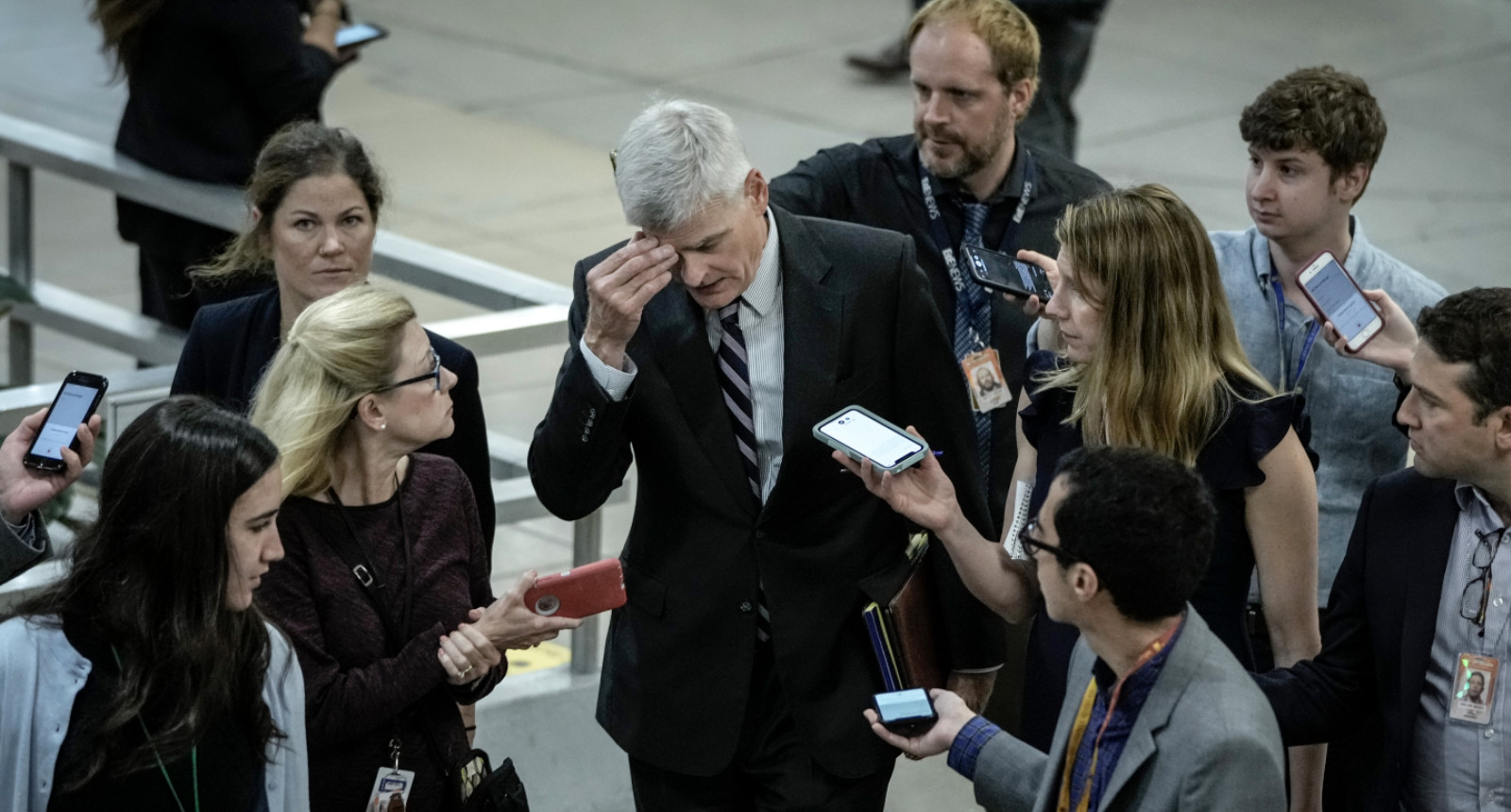
A leading Senate Republican delivered a stark warning to the Trump administration, arguing that its approach to vaccines is contributing to preventable measles deaths.
Sen. Bill Cassidy of Louisiana, a physician who chairs the Senate Health, Education, Labor, and Pensions Committee, said misinformation and misguided federal policies were leaving children and adults unnecessarily vulnerable.
Pennsylvania health officials have reported four measles-associated deaths during the state’s expanding outbreak, although federal officials have disputed how some of those deaths should be classified.
The Republican directed some of his toughest questioning toward Dr. Nicole Saphier, President Donald Trump’s nominee for surgeon general and a former Fox News contributor.
Cassidy asked Saphier what she would tell a mother concerned that the combined measles, mumps, and rubella vaccine could cause autism.
Saphier initially answered that she did not know what causes autism but had seen no reputable evidence suggesting that vaccines were responsible for the developmental condition.
Cassidy called that response an equivocation and pressed her for an unequivocal answer, citing previous administration officials who had used similar rhetorical flexibility after securing Senate confirmation.
“I do not believe childhood vaccines cause autism,” Saphier eventually stated before describing the MMR vaccine as the country’s most effective tool for fighting measles infections and establishing population immunity.
At Dr. Nicole Saphier’s Senate confirmation hearing to become US surgeon general, Sen. Bill Cassidy called the resurgence of measles a “terrible legacy” for the Trump administration and condemned scientifically unsupported claims about vaccines. Cassidy previously cast a pivotal pic.twitter.com/6ghIfmfkdf
— 41NBC / WMGT-DT (@41NBC) September 16, 2026
Separately, the president received massive praise from Republicans this week on another major issue.
President Trump announced a sweeping agreement this month that could dramatically expand American influence over one of the world’s largest collections of oil reserves.
The president is describing the arrangement as an historic energy deal that he says could eventually help bring down gasoline prices for Americans.
The deal is so historic that even NBC News is praising President Trump and his team for pulling off this landmark agreement.
Now, let’s turn to that major oil deal between the U.S. and Venezuela. President Trump touting the agreement, saying it will send tens of billions of barrels of oil to the US,” host Tom Llamas began.
“The Trump administration is diving deeper into the Venezuelan oil business. What President Trump calls the biggest oil deal in world history, with more American companies, including Chevron, signing agreements to expand operations here,” Llamas said.
The U.S., now in a joint venture with another private company, will gain 100-year rights over 17 oil fields that have proven reserves of over 65 billion barrels. Venezuela’s interim president, Delsi Rodriguez,” he added.
The United States is now partnering with another private company after American forces captured Nicolas Maduro earlier this year. A U.S. official said Venezuela and oil will hit the American market by November to help bring down U.S. gas prices,” he continued.
“Tonight, many we spoke with here say they’re supportive of this new oil deal with the U.S., but just hope some of the benefits trickle down to them,” the host added.
The agreement involves Venezuela and would give the United States majority control over a newly established oil venture with access to enormous reserves for decades.
However, substantial financial, infrastructure, and legal obstacles remain before those reserves could translate into significantly increased production.
Trump announced that the United States has secured majority control over more than 65 billion barrels of proven Venezuelan oil reserves, calling it “THE BIGGEST OIL DEAL IN WORLD HISTORY!”
Under the proposed structure, federal officials say the United States would become the majority owner of a new joint venture holding 100-year contracts covering Venezuelan oil fields.
The arrangement reportedly encompasses nearly one-quarter of Venezuela’s untapped oil reserves across 17 fields.
“At my direction, Secretary of State Marco Rubio, and Secretary of War Pete Hegseth, working closely with Highly Respected Interim President of Venezuela, Delcy Rodriguez, and, through a partnership with private business, have secured majority U.S. control of more than 65 BILLION BARRELS of proven Oil Reserves in Venezuela,” Trump announced.
Trump said the agreement “will substantially lower Gas Prices for all Americans” and maintained that taxpayers would not bear the cost of developing the reserves.
The potential impact could be enormous, but significantly increasing Venezuelan production would require overcoming formidable obstacles after years of deteriorating infrastructure and limited investment.
Some of the oil fields reportedly lack the infrastructure and transportation connections required to process and move crude, while equipment at other locations has suffered from years of neglect and theft.
Bringing those fields into substantial production could consequently require investments totaling tens of billions of dollars.
Rubio said the agreement is expected to generate nearly $100 billion in private investment, although he did not identify which companies have committed to providing that money.
One important private participant is expected to be North American Blue Energy Partners, or NABEP, which Alejandro Betancourt controls.
The Pentagon’s Office of Strategic Capital could also play a role by providing loans, loan guarantees, or technical assistance.
The arrangement would reportedly use an existing Venezuelan joint-venture structure allowing the United States access to develop the fields while guaranteeing Venezuela a portion of the resulting revenue.
Venezuela is also reportedly considering withdrawing from OPEC, potentially representing another dramatic realignment of the country’s energy policy toward Washington.
If the administration succeeds in attracting the massive private investment required and overcoming the legal and infrastructure barriers, however, the agreement could give the United States long-term influence over one of the world’s largest proven oil reserves.
This article may contain commentary which reflects the author's opinion.
