President Donald Trump may have an opportunity to affect his legacy by appointing another U.S. Supreme Court justice before his term ends.
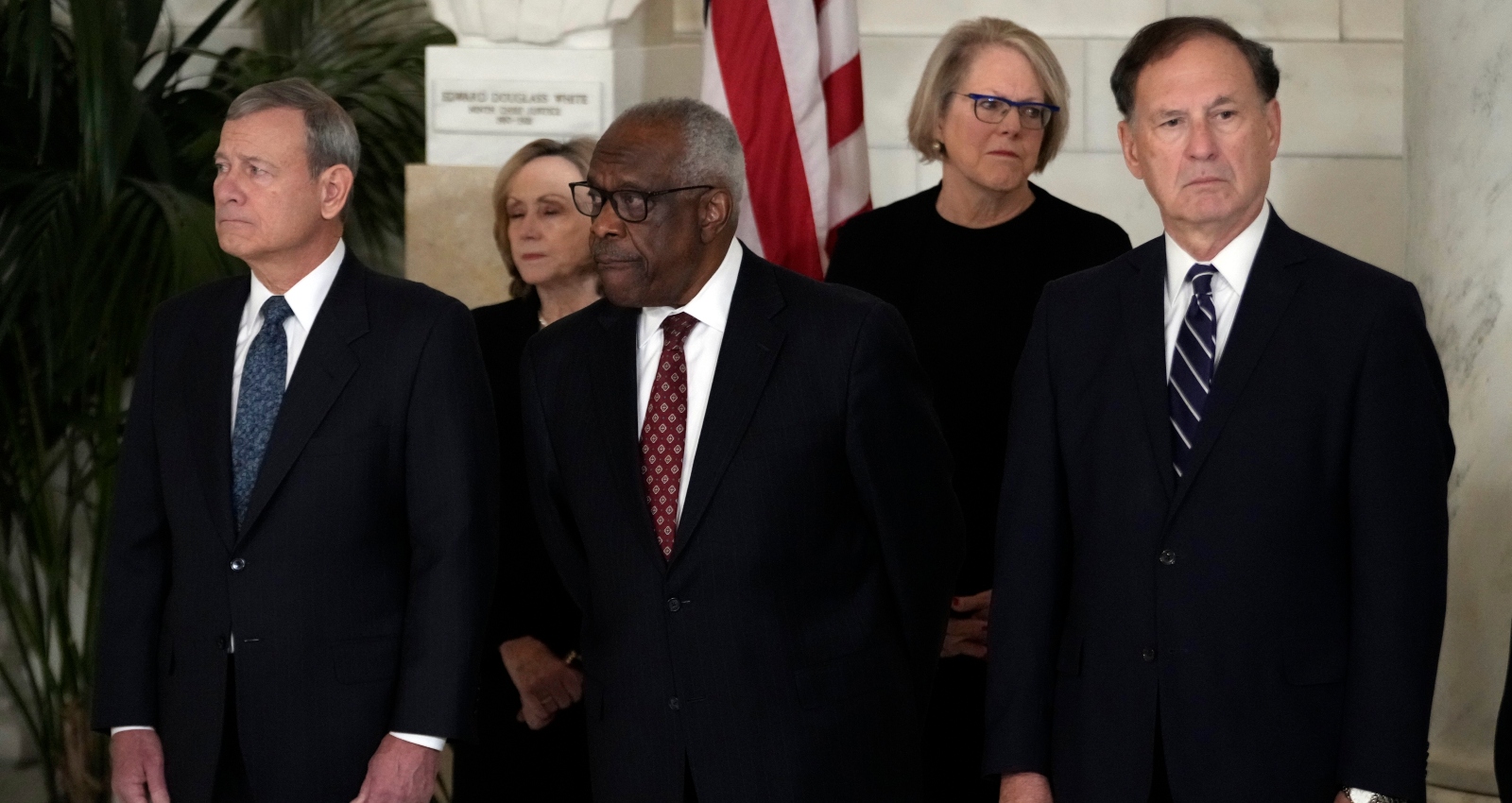
Samuel Alito has confirmed that he is considering retirement, leaving open the possibility that he may step down after next year’s term and allow Trump another opportunity to make a nomination.
In excerpts from a CBS News interview released on Friday, Alito stated that he contemplated retiring this year and will reconsider the decision again in 2027.
Alito, 76, discussed his future in excerpts of a CBS News interview released Friday and scheduled to air Monday.
“I thought about it,” he said when asked whether he had considered stepping down.
“It’s something that I think that somebody at my age has to think about every term,” Alito added.
He chose to remain because he believed he could “still make a valuable contribution” to the court.
That decision leaves the court’s current membership in place as a new term begins Monday.
It also leaves open the possibility of a future vacancy without announcing a retirement date or a successor.
The distinction matters: Alito has committed to another term, while any departure after that remains uncertain.
President George W. Bush nominated Alito in 2005, and he joined the high court the following year.
Trump appointed three justices during his first presidency, helping establish the court’s current six-to-three conservative majority.
A new nomination would require Senate confirmation, making the chamber’s control a consequential part of the discussion.
The CBS question noted pressure from Republicans to retire while their party controls the Senate.
Democrats taking the Senate in the midterm elections could complicate a Trump nominee’s path, Politico reported.
Alito declined to suggest that political timing should determine when he leaves the bench.
“It’s too hard to predict what the political situation will be,” he said in the interview.
He also said no one could reliably know whom a president would select as a replacement.
Those comments pushed back against the idea that a justice can guarantee the future of his own decisions.
The interview comes as Alito prepares to discuss a book about his judicial philosophy.
The appearances offer an unusually direct account of how he views his role and the demands of judging.
Alito wrote the majority opinion in the court’s 2022 decision overturning Roe v. Wade.
That ruling ended the federal constitutional protection for abortion recognized under Roe and returned major policy questions to states.
The opinion followed the leak of an earlier draft, putting extraordinary public attention on the justices before the ruling.
Alito said the court did not know the draft would leak when it first prepared the opinion.
“We didn’t know it when we produced the draft that was leaked,” he recalled.
He said moving ahead after the leak required courage because of the decision’s implications.
The ruling also carried personal consequences, according to Alito, who said he lost old friendships.
“That’s something you have to live with,” he said of the response to controversial decisions.
He described displeasing people as part of a judge’s work when cases divide the public.
For supporters of the ruling, Alito’s words speak to a justice prepared to defend a consequential constitutional decision.
For critics, that same decision remains central to their assessment of his tenure on the court.
Neither reaction answers the separate question of when he may retire.
Earlier this year, speculation intensified after an erroneous report said Alito was leaving, before the court corrected it.
Alito later confirmed he would stay for another term, and Friday’s remarks explain the thinking behind that choice.
He has not promised to step down in 2027 or ruled out serving beyond next year’s term.
The next decision will be his, even as politicians and court watchers scrutinize the potential consequences, Politico reported.
Trump’s chance to make another appointment depends first on an actual vacancy and then on Senate action.
This article may contain commentary which reflects the author's opinion.
