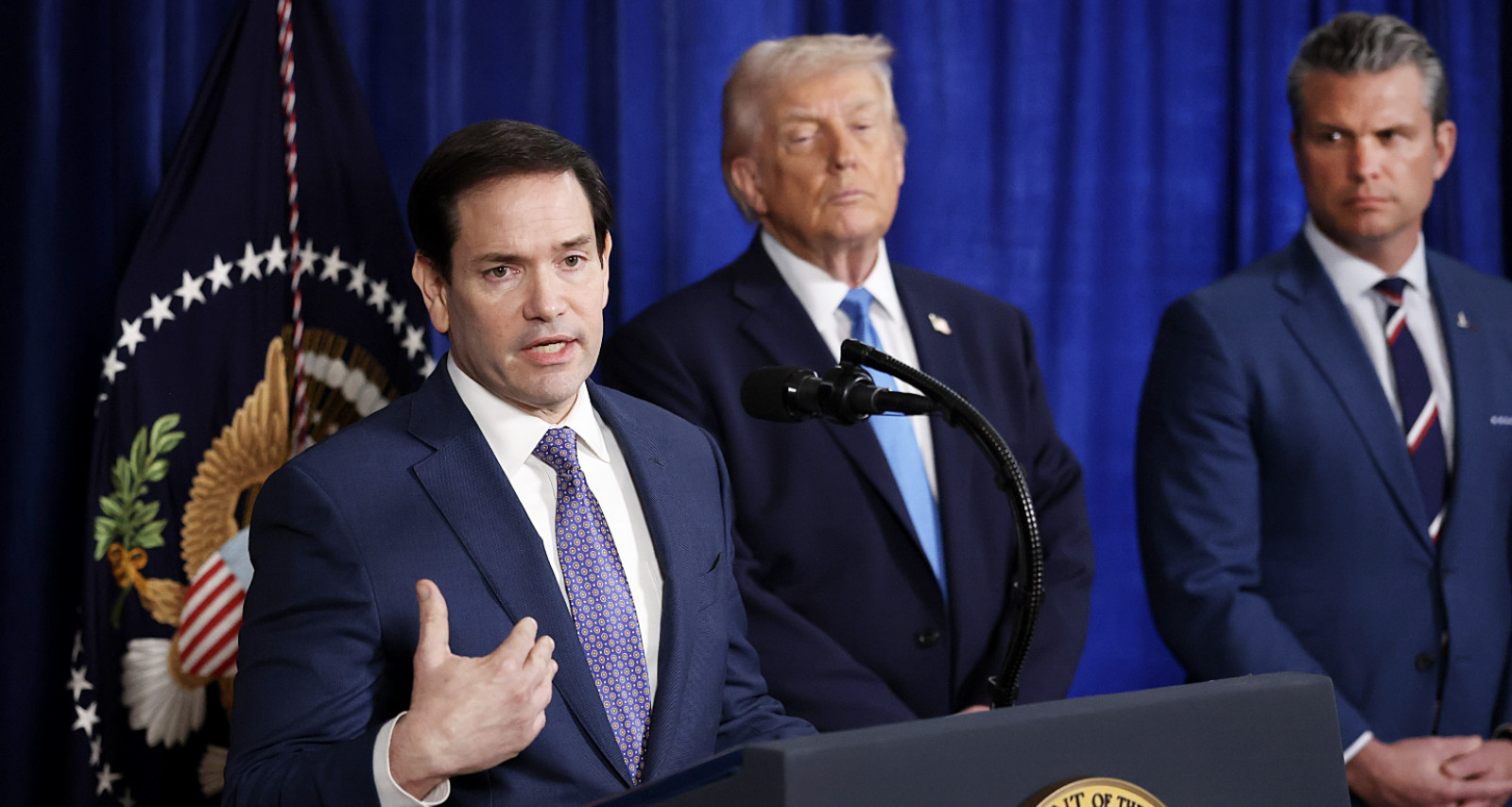
Secretary of State Marco Rubio declared Monday that Cuba has “already fallen,” describing the communist-led country as a failed state and urging its leaders to begin a political and economic transition as the Trump administration intensifies pressure on Havana.
Rubio made the remarks during an interview with Fox News host Sean Hannity, arguing that more than six decades of communist rule have left Cuba without a functioning economy and with a government incapable of meeting the basic needs of its population.
“Well, the truth is Cuba’s already fallen,” Rubio said. “It doesn’t have a functional economy and it’s governed by people who continue to preach about some revolution that has been dead for 20 years.”
“It has never worked,” he continued. “The problem that Cuba has basically right now is it is a failed state in every sense of the word. It’s not a functional government and it’s not a functional country. It just simply isn’t.”
Rubio pointed to the enormous wave of Cuban migration in recent years as evidence of the country’s deterioration, saying nearly 20% of the island’s population has left since 2021.
Cuba has experienced one of the largest migration waves in its modern history as residents contend with food and medicine shortages, inflation, deteriorating infrastructure and increasingly severe electricity outages.
Rubio argued that economic reforms alone will not resolve those problems.
“In fact, you cannot have economic freedom in Cuba if you don’t have political freedom first,” he said. “You have to have both happening at least at the same time. That will require a period of transition.”
The comments represent the latest warning from Rubio, the son of Cuban immigrants and a longtime critic of Havana’s communist government.
Rubio said the United States remains hopeful that Cuban leaders will recognize the severity of their situation and begin changing course.
“We’re hopeful that Cuba will choose a different path,” Rubio told Hannity.
But he warned officials who believe they can simply wait for President Donald Trump to leave office.
“Unfortunately, the people that continue there to chant revolutionary slogans, too many of them still believe that they could wait out this administration and make no changes or do nothing,” Rubio said.
“They are wrong and they will learn the lesson the hard way if they don’t correct.”
Rubio made a similar argument last week while attending the United Nations General Assembly in New York.
“The Cuban Revolution has failed,” he said Sept. 23. “It has failed for 60 something years. It is a failure now.”
Rubio said Washington would be willing to assist Cuba if its leaders began moving the country toward greater political and economic freedom.
“You don’t reverse 60 something years of mismanagement, corruption and incompetence in six months,” Rubio said, while arguing Cuba has a “golden opportunity” to begin a transition.
He acknowledged that such a transformation would not happen immediately and said there are Cuban officials with whom Washington would refuse to work because of their records, while suggesting other figures within the government might participate in a transition.
The administration’s campaign is unfolding as conditions inside Cuba deteriorate.
The country’s aging electrical grid collapsed again Sept. 18, leaving millions without electricity in at least the sixth major grid failure this year.
Even when the national grid is functioning, some Cubans have endured outages lasting more than a day.
Associated Press reporting from Havana this week found neighborhoods that had gone more than two weeks without running water, while basic foods including eggs, bread and cooking oil have become difficult to obtain. Roughly two-thirds of the country has recently been without electricity at night.
Washington and Havana sharply disagree over responsibility for the crisis.
Rubio and other Trump administration officials blame decades of communist economic policies, government mismanagement, corruption and a failure to invest in Cuba’s aging electrical infrastructure.
This article may contain commentary which reflects the author's opinion.
