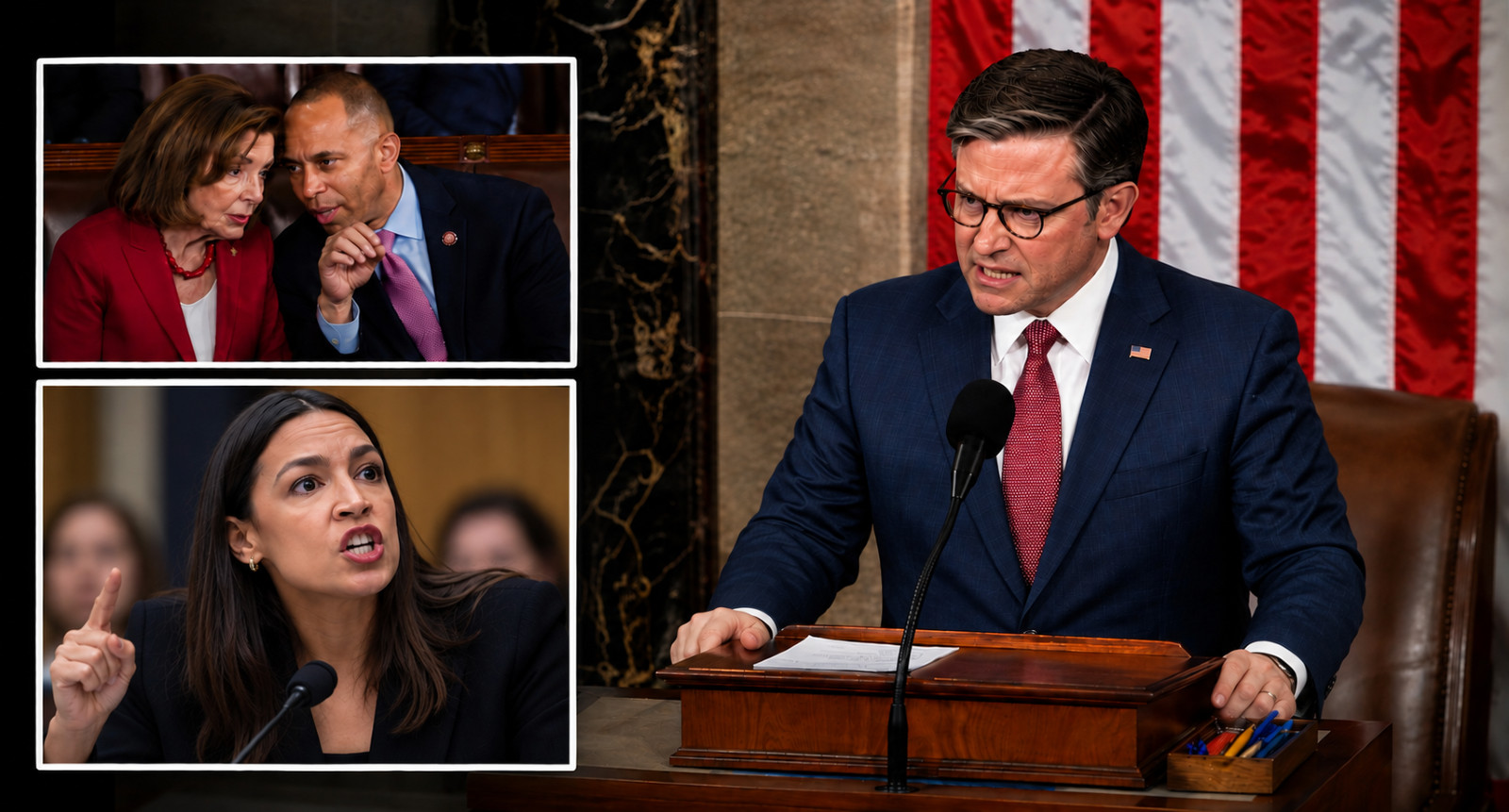
House Republican leaders sent lawmakers home a day earlier than planned Wednesday, postponing a potentially contentious vote on impeaching Defense Secretary Pete Hegseth until after the November midterm elections.
Votes that had been scheduled for Thursday were canceled as Speaker Mike Johnson, R-La., began the House’s pre-election recess.
Lawmakers are not scheduled to return to Washington until the post-election lame-duck session.
The schedule change means the House will not immediately consider eight articles of impeachment introduced Tuesday by Rep. Thomas Massie, R-Ky.
Massie filed the impeachment measure as a privileged resolution, a procedural designation that normally requires House leaders to address it within two legislative days.
A floor vote had therefore been expected Thursday before GOP leaders eliminated the final voting day.
Massie accuses Hegseth of committing “high crimes and misdemeanors” through a series of military and administrative actions, including the continuing U.S. conflict with Iran.
The first three articles center on the War Powers Resolution of 1973.
Massie argues that the administration has conducted hostilities against Iran without obtaining the congressional authorization he says is required under federal law.
Other articles accuse Hegseth of wrongdoing related to military strikes on suspected drug-trafficking vessels, Pentagon action involving Democratic Sen. Mark Kelly, the U.S. operation that captured Venezuelan leader Nicolás Maduro, and military operations in Yemen.
The allegations are Massie’s; the Pentagon has rejected his characterization and defended Hegseth’s leadership.
Johnson dismissed Massie’s impeachment effort as a “stunt” and said Wednesday that the House had completed its work before lawmakers left to campaign.
“The House has done its job,” Johnson said, while noting members could be recalled to Washington on 48 hours’ notice if necessary.
Massie strongly objected to the early departure, using an extended floor speech to accuse House leadership of abandoning unfinished business.
“We’re calling off Congress? And we’re in the majority?” Massie said. He argued lawmakers should remain in Washington to debate the impeachment resolution as well as other unresolved issues.
Johnson, however, pointed to the volume of legislation approved by the Republican-controlled House and has described the current Congress as among the most productive in decades.
Before leaving Washington Wednesday, the House completed several major votes, including passage of a broad sanctions package targeting Russia over its war in Ukraine.
Lawmakers also approved legislation addressing the growing electricity demands associated with large data centers.
The Hegseth resolution arrives as disagreements over the Iran conflict have become increasingly visible in Congress.
The chamber also recently approved a War Powers Resolution directing President Donald Trump to end U.S. participation in hostilities with Iran unless Congress authorizes continued military action. Seven Republicans joined Democrats in passing that measure 220-204.
Massie has been among the most outspoken Republican critics of the Iran conflict and has argued that Congress must assert its constitutional authority over decisions involving war.
His confrontation with Johnson comes during Massie’s final months in Congress.
The Kentucky Republican lost his primary election after Trump backed an effort to defeat him. Massie has nevertheless continued pursuing measures that put him at odds with the administration and Republican leadership, including the Hegseth impeachment resolution and efforts related to the Epstein investigation.
House Democratic Leader Hakeem Jeffries also criticized the decision to recess, arguing that Congress had not sufficiently addressed affordability and other domestic concerns.
Johnson rejected those criticisms, pointing to legislation passed during the current Congress and saying Republicans were leaving Washington confident in their record.
The House is now expected to remain away from Washington through the final stretch of the midterm campaign unless Johnson recalls lawmakers under the 48-hour notice arrangement.
This article may contain commentary which reflects the author's opinion.
