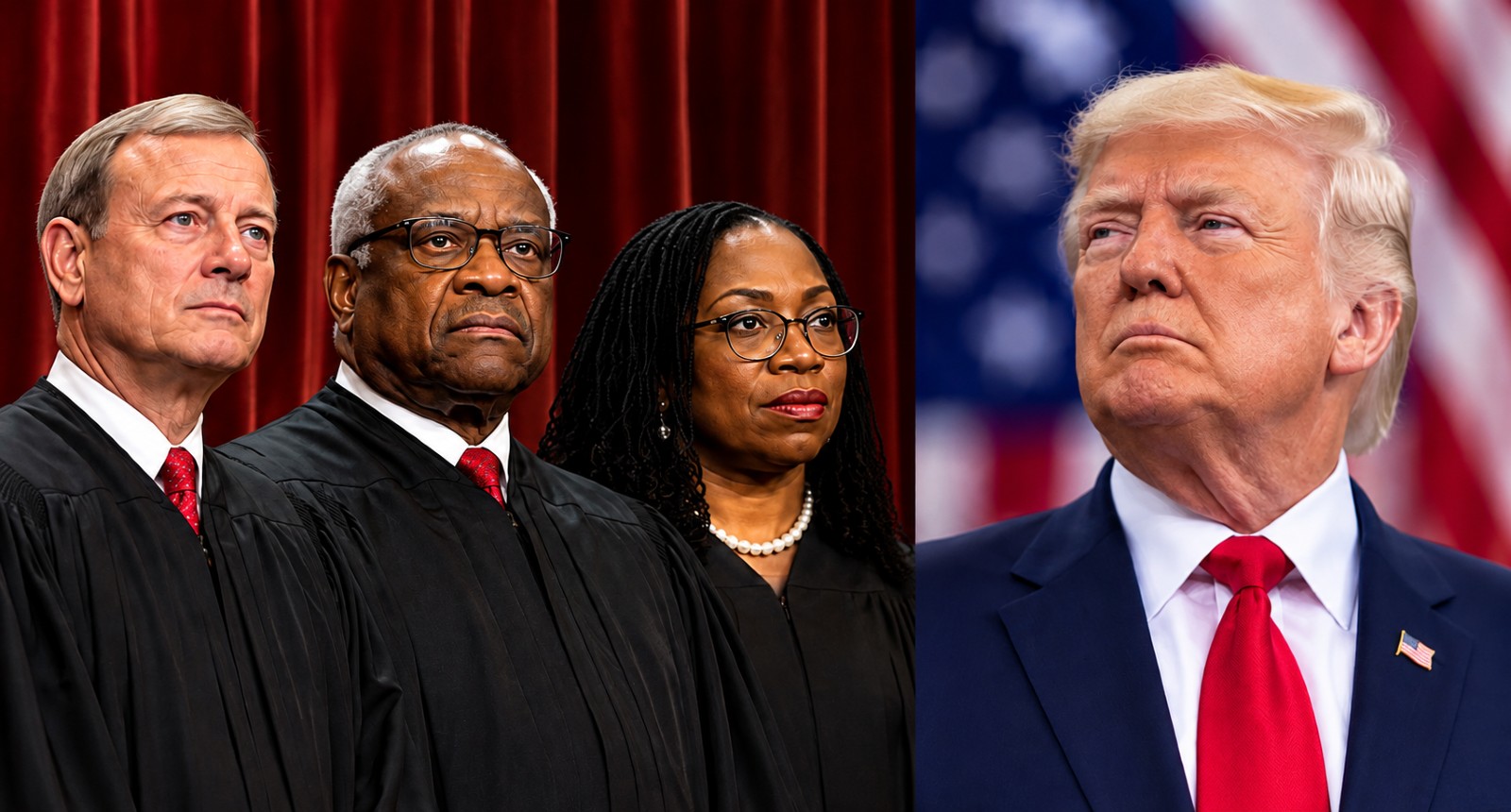
The Supreme Court agreed Tuesday to hear a Trump administration appeal in a legal battle over access to government records involving Elon Musk’s Department of Government Efficiency (DOGE), setting up a major decision concerning presidential authority and federal transparency requirements.
The justices will consider whether the government must disclose documents requested by Citizens for Responsibility and Ethics in Washington (CREW), a watchdog organization seeking information about DOGE’s activities during the early months of President Donald Trump’s second term.
The administration asked the high court to intervene after lower courts sided with CREW, which argues that DOGE operated as a federal agency and therefore must comply with the Freedom of Information Act (FOIA).
Justice Department attorneys maintain that DOGE functioned as a presidential advisory body and is exempt from the law’s disclosure requirements.
The dispute centers on whether the organization exercised independent government authority or merely provided recommendations to the president.
The distinction is significant because federal agencies generally must respond to public records requests, while certain offices that exclusively advise the president are exempt.
DOGE was established through an executive order signed by Trump on January 20, 2025, as part of his administration’s effort to reduce federal spending, eliminate waste and restructure government operations.
Musk, the billionaire entrepreneur who initially led the initiative, oversaw efforts to reduce the federal workforce, cancel government contracts and eliminate programs the administration considered unnecessary.
The organization claimed to have generated tens of billions of dollars in savings, although outside analysts questioned some of its calculations.
A Government Accountability Office review subsequently identified problems with certain reported savings, including unsupported figures and contract terminations that had already been planned before DOGE became involved.
Still, DOGE’s efforts were popular with most Americans and was a key campaign issue for the president.
CREW filed its lawsuit in 2025, seeking records that could clarify the organization’s structure, decision-making authority and involvement in federal agency operations, reports noted.
U.S. District Judge Christopher Cooper ruled in April 2025 that DOGE likely qualified as a federal agency subject to FOIA and ordered the government to expedite its response to the watchdog’s requests.
The administration challenged that decision, arguing that forcing presidential advisers to disclose internal communications could interfere with the executive branch’s constitutional responsibilities.
The Supreme Court previously intervened in June 2025, concluding that the lower court’s discovery requirements were too broad.
The justices instructed the U.S. Court of Appeals for the District of Columbia Circuit to reconsider the scope of the information sought and account for separation-of-powers concerns.
However, an appeals court panel subsequently allowed portions of the litigation to proceed, prompting another request for Supreme Court intervention.
The administration contends that the lower courts failed to adequately protect confidential presidential communications.
Justice Department attorneys also objected to a ruling permitting CREW to question DOGE acting administrator Amy Gleason under oath.
Government lawyers argued that compelling testimony from senior presidential advisers could establish a precedent allowing outside organizations to intrude into internal White House deliberations.
“Subjecting advisory bodies to intrusive discovery triggers the very concerns that Congress sought to avoid by excluding presidential advisory bodies from FOIA’s reach,” the administration argued in court filings.
CREW disputes that characterization, maintaining that DOGE exercised substantial independent authority over federal agencies and government personnel.
The organization argues that records concerning those activities are necessary to determine whether DOGE falls within the federal transparency law.
In a statement Tuesday, CREW attorney Nikhel Sus defended the lower court rulings and pledged to continue pursuing the case.
“We will continue to pursue transparency for the American people, who deserve to know the details of the Trump Administration’s efforts to unilaterally remake the federal government,” Sus said.
The legal fight comes after Musk stepped away from his government role in 2025 following several months overseeing the cost-cutting initiative.
DOGE subsequently announced that its formal mission had concluded in July 2025, although questions about its operations and access to federal information have continued.
This article may contain commentary which reflects the author's opinion.
