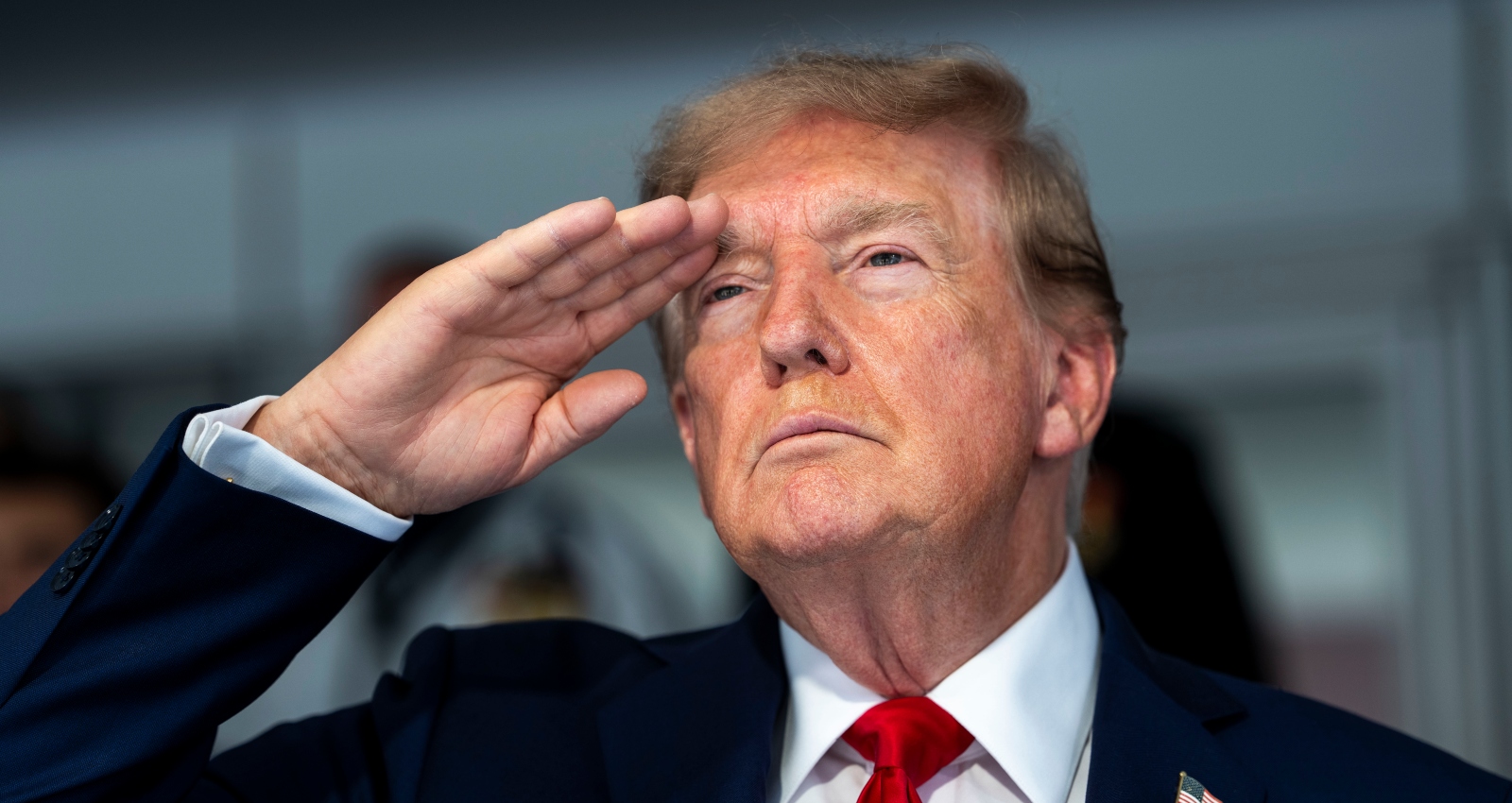
President Donald Trump made presidential history Friday during a visit to NASA’s Johnson Space Center in Houston that combined recognition for America’s astronauts with a major announcement about the future of the U.S. military in space.
The president also shared a lighthearted admission about whether he would ever personally consider making the journey beyond Earth.
Trump became the first sitting U.S. president to speak directly with astronauts aboard the International Space Station from NASA’s Mission Control Center in Houston.
Trump had traveled to Houston to honor members of the Artemis II crew and establish a new institution dedicated to preparing future Space Force leaders. But another moment from the visit placed Trump in the history books for an entirely different reason.
The president opened the conversation with a joke about the fascination many Americans have with the possibility of traveling into space.
“I wouldn’t do it,” Trump admitted.
“I hate to admit it. I would not want to do it. But some people love it more than anything,” he added.
The astronauts told Trump they were “thrilled” to have the opportunity to speak with him while describing some of the work they were conducting aboard the orbiting laboratory.
They explained that they were “in the middle of several spacewalks” and had another spacewalk scheduled for the following week.
Trump praised the astronauts for their work and described the crew members as “pioneers” helping advance American space exploration.
The president also invited other officials accompanying him at Johnson Space Center to participate in the conversation with the astronauts.
Before concluding the call, Trump told the crew that he wanted to see them after they returned safely to Earth and extended an invitation to visit him at the White House.
“We’re going to see you when you get back,” Trump said.
“In fact, if you want Oval Office time, right?” the president added.
The historic conversation was only one component of a consequential presidential visit focused heavily on America’s space program.
Shortly before speaking with the International Space Station, Trump honored the Artemis II crew with the Congressional Space Medal of Honor.
Artemis II represents a critical component of NASA’s effort to return astronauts to the vicinity of the moon and eventually establish a sustained American presence there.
Trump then turned his attention from NASA’s exploration mission to the military’s expanding role in space.
The president signed an executive order establishing the United States Space Force Academy, creating a dedicated service academy for the military branch established during his first administration.
Trump said the new academy would eventually stand alongside America’s other prestigious military institutions.
“It will be at that same level when you serve West Point, Air Force, Coast Guard, Navy, Annapolis,” Trump said while discussing his vision for the academy.
“It’s going to be at that level,” he added.
A historic phone call with great patriots who are ~250 miles away from Earth. 🌎🚀
President Trump speaks on the phone with astronauts aboard the International Space Station! pic.twitter.com/whl0b9GJlO
— The White House (@WhiteHouse) August 28, 2026
The move represents another significant expansion of the Space Force, which Trump established in 2019 as the first new branch of the U.S. Armed Forces since the creation of the Air Force in 1947.
Friday’s visit therefore connected several elements of Trump’s space legacy, from the military branch created during his first presidency to NASA’s latest generation of human exploration missions.
But the most unusual moment came from Mission Control as Trump communicated directly with Americans orbiting hundreds of miles above Earth, Fox News reported.
Trump may have readily admitted that traveling into space himself is not on his bucket list, but his conversation with the International Space Station nevertheless gave him a place in presidential history.
This article may contain commentary which reflects the author's opinion.
