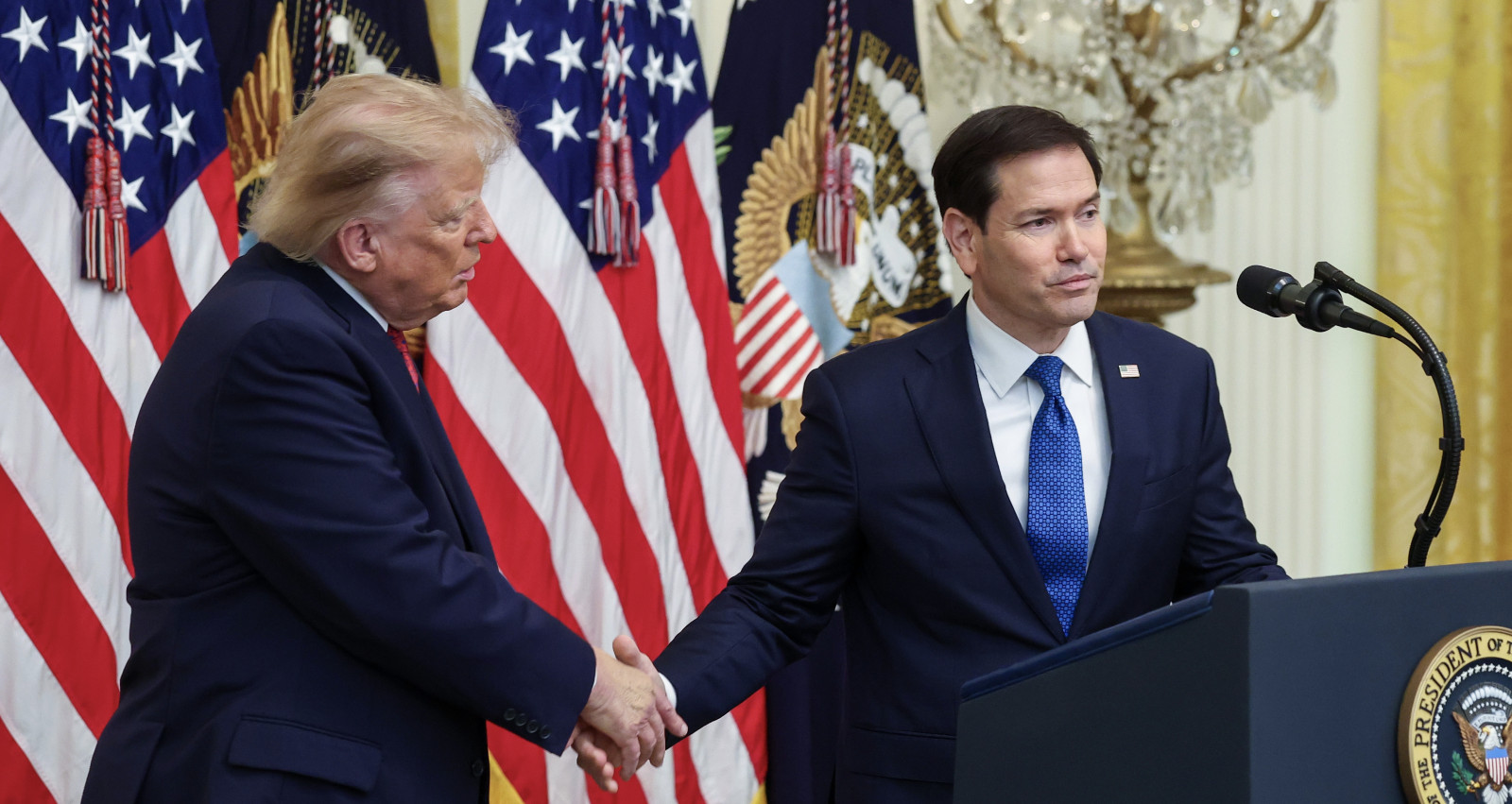
President Donald Trump and Secretary of State Marco Rubio are continuing their effort to disentangle the United States from foreign alliances and organizations that have, in the past, worked to undermine American governance.
The Trump administration will withdraw from a major European anti-corruption watchdog, continuing its broader effort to reduce American participation in international organizations it says provide insufficient benefits to the country.
The U.S. formally notified the Council of Europe on Monday that it would leave the Group of States against Corruption, commonly known as GRECO.
The U.S. has participated in the organization since 2000 but will officially cease being a member on Dec. 31, according to the Council of Europe. Only two countries have previously withdrawn from GRECO: Russia and Belarus.
The State Department said the decision followed a review that concluded continued membership was not sufficiently advancing American interests.
“The U.S. Department of State’s primary responsibility is to protect the American people,” a department spokesperson said.
The department said GRECO membership requires an annual financial contribution but “does not provide tangible benefits to U.S. national security.”
“The era of writing blank checks to international bureaucracies is over,” the State Department, led by Secretary of State Marco Rubio, added.
Rather than relying on multilateral monitoring organizations, the administration said it intends to concentrate on anti-corruption tools that directly advance U.S. security and economic interests.
Those measures include sanctions, visa restrictions and targeted foreign assistance designed to strengthen investigations into corruption overseas.
The State Department described those approaches as “higher-impact tools” for combating corruption that threatens American security and prosperity.
GRECO was established by the Council of Europe in 1999 to monitor whether participating countries comply with the organization’s anti-corruption standards.
Despite its European origins, membership is not limited to European countries or members of the European Union.
The United States joined in 2000 and, along with Kazakhstan, has been one of GRECO’s non-European participants.
GRECO does not prosecute corruption cases or impose criminal or financial penalties on governments.
Instead, countries undergo peer reviews examining their laws, institutions and practices. The organization then issues recommendations and conducts follow-up reviews to determine whether governments have implemented them.
Its evaluations have examined areas including conflicts of interest, financial disclosures, ethics rules, law enforcement, judicial integrity and corruption prevention among senior government officials.
The United States has undergone multiple rounds of evaluations during its more than two decades of participation.
GRECO’s fifth evaluation of the United States focused on preventing corruption and promoting integrity among top executive branch officials and federal law enforcement agencies.
An earlier GRECO report said the United States had fully implemented all recommendations from its first evaluation round, 87% from the second, 44% from the third and 75% from the fourth.
The Council of Europe expressed disappointment over Washington’s decision but left open the possibility of renewed cooperation.
“The United States has participated in GRECO since 2000 and has been a valuable contributor to its work and to the exchange of experience and good practice in preventing and combating corruption,” the organization said.
“GRECO remains open to resuming cooperation with the United States in the future in support of shared efforts to prevent corruption, strengthen integrity and uphold the rule of law.”
The decision is part of a much broader reassessment of American participation in international institutions under President Trump.
The administration has argued that some organizations consume U.S. taxpayer money while advancing policies that do not sufficiently serve American interests or have expanded beyond their original missions.
The United States has already withdrawn from organizations including the World Health Organization and the United Nations Human Rights Council.
In January, Washington also withdrew from the Venice Commission, another Council of Europe body that advises governments on constitutional law, democratic institutions and legal reforms.
The GRECO withdrawal also comes shortly after the Organization for Security and Cooperation in Europe said Washington had not invited its election observers to monitor the Nov. 3 congressional midterm elections, departing from a practice followed during previous U.S. elections.
This article may contain commentary which reflects the author's opinion.
