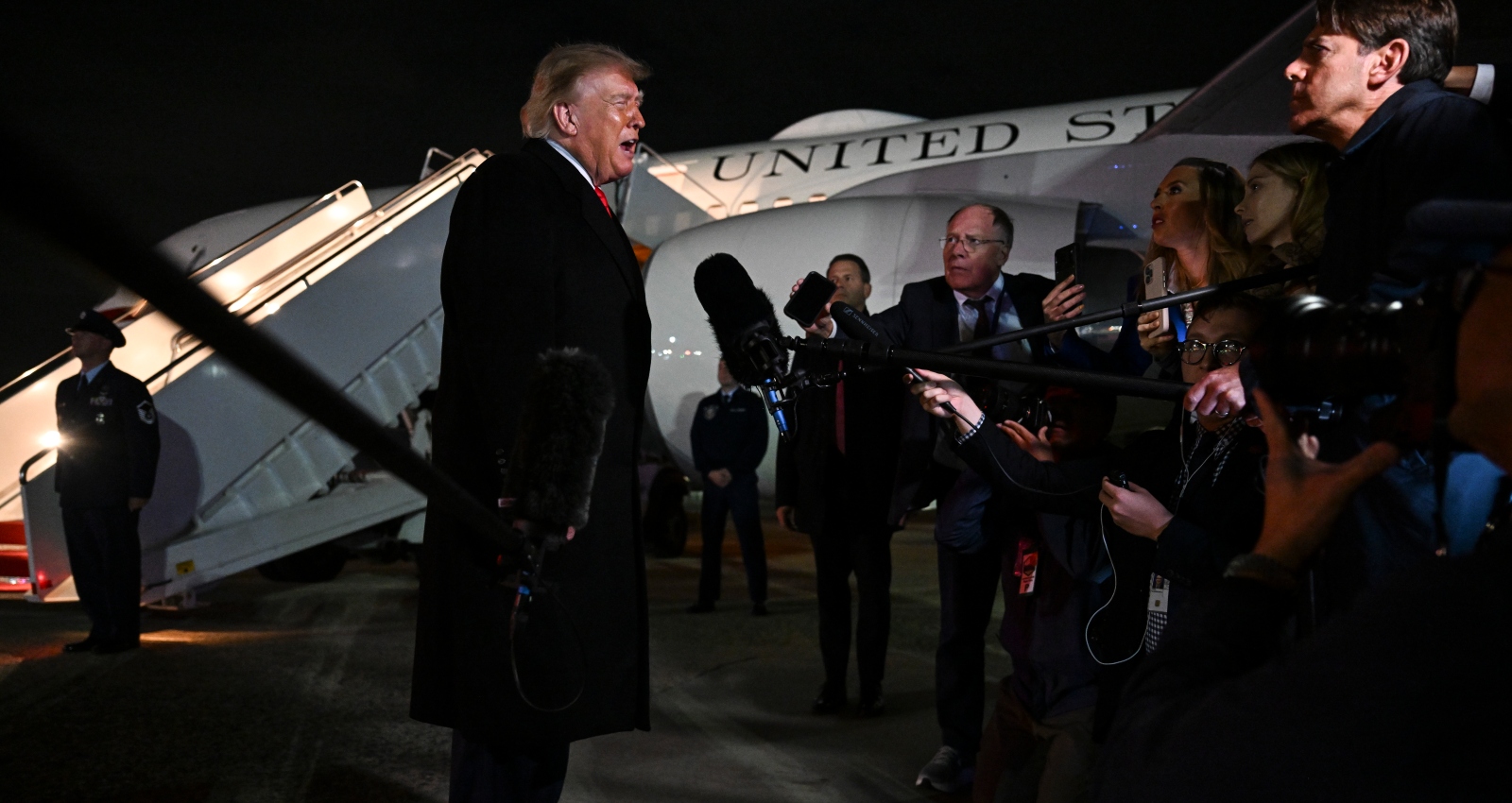
President Donald Trump called for Ukraine to replace President Volodymyr Zelenskyy on Saturday, escalating a dispute between Washington and Kyiv after the Ukrainian leader sharply criticized a new American agreement to purchase diesel fuel from Russia.
Trump suggested that Ukraine should elect a new president willing to negotiate an end to the war with Russia, accusing Zelenskyy of repeatedly rejecting opportunities to reach a peace agreement.
The president’s comments came one day after he announced a major energy arrangement with Russian President Vladimir Putin designed to increase diesel supplies and reduce fuel prices for American consumers.
“I suggest they get a new leader who can make a deal because he could have made many deals and for some reason he never does,” Trump told reporters.
Trump also criticized Zelenskyy for continuing to authorize Ukrainian attacks against Russian oil refineries, arguing that the strikes were contributing to higher fuel prices worldwide.
The remarks marked another deterioration in relations between the two leaders as the nearly five-year war in Ukraine continues without a negotiated settlement.
Trump argued that Zelenskyy has become an obstacle to reaching an agreement with Moscow.
The president said he believes Putin wants to negotiate an end to the conflict but accused Ukraine’s leadership of refusing to make necessary compromises.
“Russia would like to make a deal,” Trump told reporters. “President Putin would like to see a settlement, strongly.”
Trump also questioned why Ukraine has not held another presidential election since Russia launched its full-scale invasion in February 2022.
“I think he should have an election and he could have settled this thing many times,” the president said.
Ukraine’s presidential election, originally scheduled for 2024, was postponed because the country remains under martial law during the Russian invasion.
Ukrainian officials have maintained that conducting a nationwide election during the war would present serious logistical and security challenges.
Millions of Ukrainians have been displaced, substantial portions of the country remain under Russian occupation, and military personnel are deployed across the front lines.
Ukrainian law also restricts national elections during martial law.
Trump’s comments nevertheless underscored his growing frustration with Zelenskyy and his administration’s efforts to negotiate a settlement.
The confrontation followed Trump’s announcement Friday that he had reached an agreement with Putin to release millions of tons of Russian diesel fuel onto global markets.
According to the president, Russia agreed to provide 300,000 metric tons immediately, followed by another 500,000 tons in November.
An additional 1 million tons would be supplied afterward, with another 3 million tons expected within a relatively short period.
The commitments total approximately 4.8 million metric tons.
The Treasury Department subsequently announced a temporary sanctions waiver permitting certain transactions involving Russian diesel.
The move represents a significant shift from previous American efforts to restrict Russia’s energy revenues following its invasion of Ukraine.
Trump defended the decision as necessary to reduce diesel prices, particularly for American farmers, ranchers and trucking companies.
Diesel prices have climbed sharply amid disruptions to global energy markets caused by the ongoing conflict involving Iran.
The national average diesel price recently exceeded $6 per gallon, placing additional financial pressure on businesses dependent on transportation and heavy equipment.
Trump argued that increasing available fuel supplies would help ease those costs.
However, energy analysts have cautioned that the agreement’s effect on prices remains uncertain because much of the Russian diesel could simply be redirected from existing customers rather than represent additional global production.
Zelenskyy responded angrily to the agreement, arguing that allowing Russia to increase petroleum exports would provide Moscow with additional money to finance its military operations. Zelenskyy also criticized the timing of the announcement.
Trump disclosed the agreement while American and Ukrainian representatives were participating in diplomatic discussions in Miami aimed at developing a possible peace settlement.
The Ukrainian president suggested that those negotiations had been undermined by Washington’s separate discussions with Moscow.
This article may contain commentary which reflects the author's opinion.
