The Trump administration returned to the Supreme Court on Thursday, filing an emergency request seeking permission to continue rapidly deporting migrants to countries other than their own while a major legal battle over the policy continues.
The Justice Department asked the justices to halt lower-court rulings requiring the Department of Homeland Security to provide migrants with effective notice and a meaningful opportunity to raise concerns that they could face persecution or torture in the country where the government intends to send them.
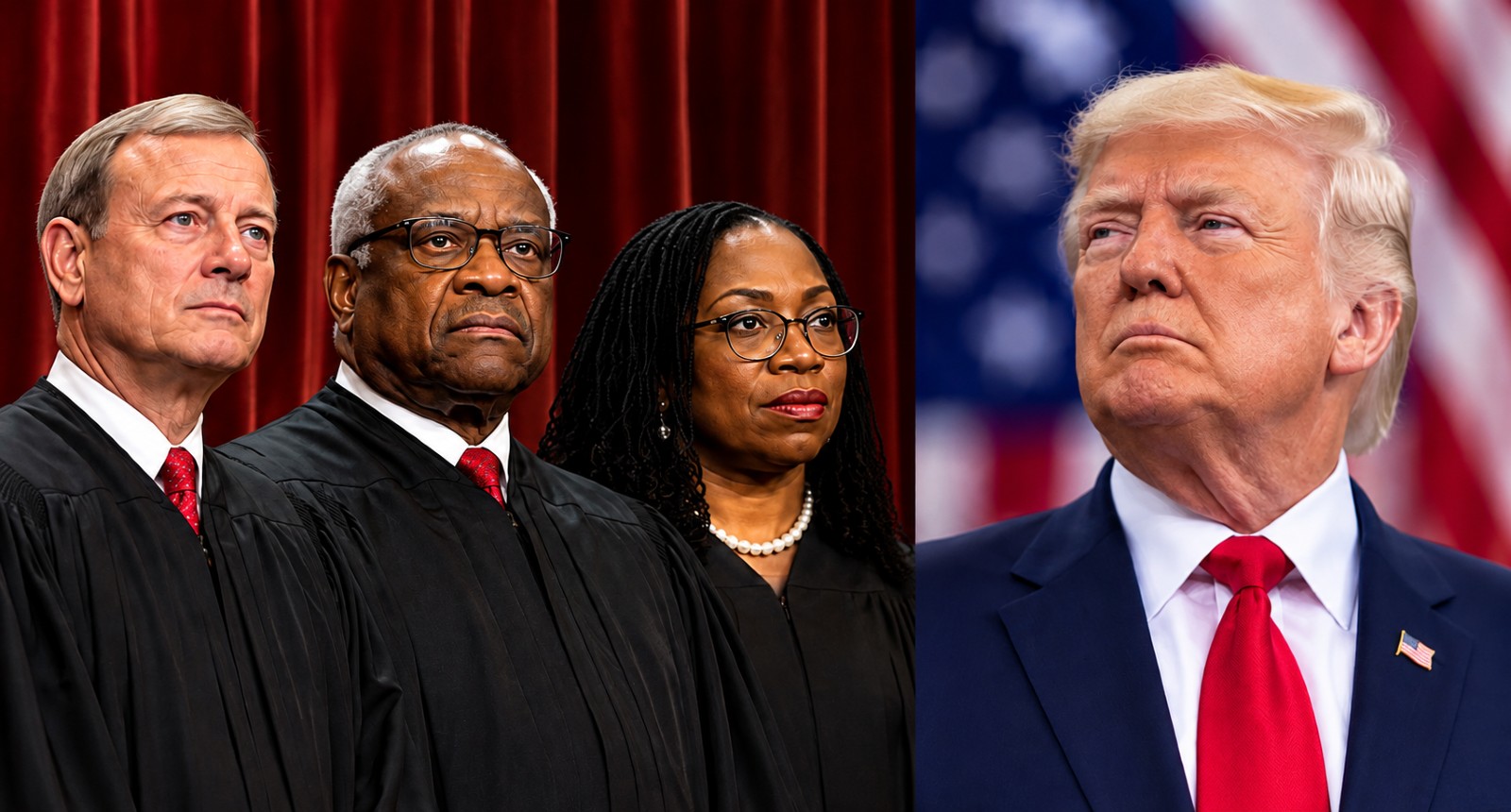
The Supreme Court docket shows that the application, Department of Homeland Security v. D.V.D., was filed Thursday and submitted to Justice Ketanji Brown Jackson, who handles emergency matters originating from the 1st U.S. Circuit Court of Appeals.
Jackson ordered the migrants challenging the policy to respond by 4 p.m. Monday, Sept. 28.
The emergency appeal is the latest development in a long-running dispute over one of President Donald Trump’s major immigration enforcement strategies.
The administration has increasingly used so-called third-country removals when migrants have final deportation orders but cannot readily be returned to their countries of origin.
That can occur when a person’s home government refuses to accept the individual or when an immigration court has determined that the person cannot legally be returned there because of the threat of persecution or torture.
The Trump administration has reached agreements allowing migrants to be sent to numerous other countries.
DHS General Counsel James Percival said this week that approximately 25,000 people have already been removed to third countries and described the practice as an “essential public safety tool.”
The administration maintains that thousands more migrants with final removal orders are eligible for such deportations.
The legal dispute does not center on whether the federal government ever has authority to deport someone to a third country.
Instead, it focuses largely on what procedures the government must follow before carrying out such a removal.
In March 2025, DHS adopted guidance allowing immigration officials to send migrants to third countries under certain circumstances.
If the State Department had received what the administration considered credible diplomatic assurances that a receiving country would not persecute or torture deportees, DHS maintained that additional procedures were unnecessary.
For countries where such assurances had not been received, the administration’s policy generally called for at least 24 hours’ notice before removal.
Migrants challenging the policy argued that those protections were inadequate, particularly for people facing deportation to countries never mentioned during their original immigration proceedings.
U.S. District Judge Brian Murphy in Massachusetts ultimately ruled that DHS’s policy violated federal law by failing to guarantee migrants effective notice and a meaningful opportunity to raise claims that they could be persecuted or tortured in the destination country.
The Boston-based 1st Circuit largely upheld Murphy’s decision on Sept. 18.
Writing for a unanimous three-judge panel, Judge Seth Aframe concluded that federal law requires a meaningful opportunity for migrants to raise such concerns before they are sent to a third country.
The appeals court rejected the government’s interpretation because it could deny those protections to people sent to countries without advance notice of their destination.
The panel did hand the administration a partial victory.
It overturned, on standing grounds, portions of Murphy’s ruling requiring DHS to first attempt to deport migrants to countries they had designated or countries where they were citizens or nationals before considering other destinations.
But the appeals court left intact the central requirement that migrants receive notice and an opportunity to raise fear-based objections.
The administration argues that those requirements interfere with its ability to execute valid final deportation orders.
Solicitor General D. John Sauer told the Supreme Court that the lower-court decision had already caused significant disruption to immigration enforcement.
“The government has been able to remove thousands of aliens to third countries in recent months, and thousands more are eligible for such removal,” Sauer wrote in the emergency application.
This article may contain commentary which reflects the author's opinion.
