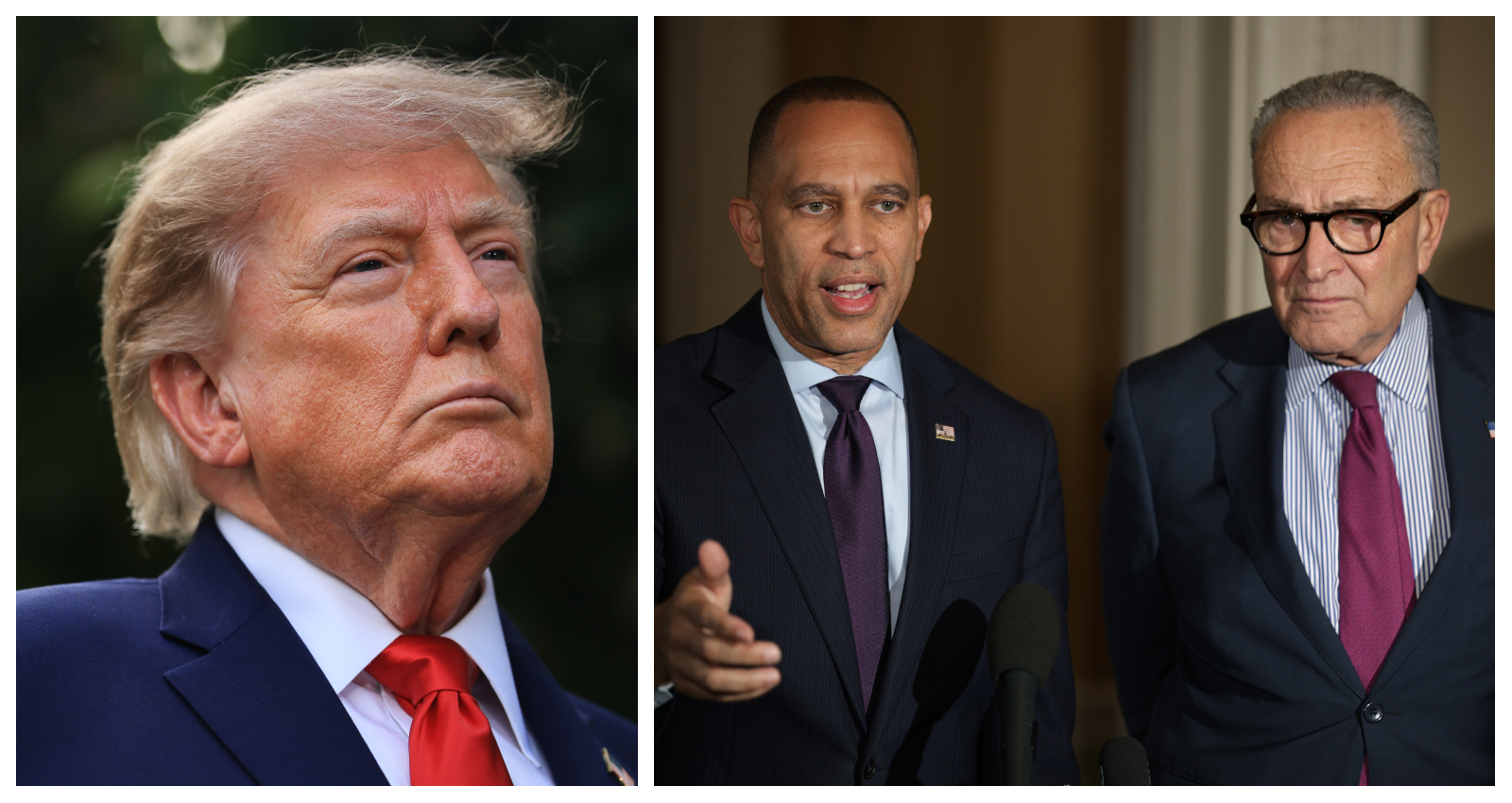
President Donald Trump moved Friday to cancel $810 million in congressionally approved spending, targeting federal programs involving migrants, refugees, minority-owned businesses, housing, education and other initiatives the administration says no longer serve the interests of American taxpayers.
The White House announced 11 proposed rescissions covering programs spread across six Cabinet departments and international assistance accounts.
The action marks Trump’s second use of a budget maneuver known as a “pocket rescission,” which had gone unused for nearly five decades before his administration revived it last year.
“In accordance with the Congressional Budget and Impoundment Control Act of 1974, I herewith report 11 rescissions of budget authority, totaling $810 million,” Trump wrote in his notice to Congress.
“The largest pot — $567 million appropriated for HHS to provide social services to illegal immigrants, including through grants to non-government organizations — was deemed to be no longer necessary because of the near-elimination of illegal border crossings in the past year,” the New York Post reported.
“Some of the organizations that had received funds through the program drew controversy over their political connections to Democrats and their alleged tolerance of child abuse,” The Post, which was the first to report the recission, added.
The White House argued that reduced illegal border crossings have diminished the need for the funding and accused some nongovernmental organizations receiving federal money of promoting policies that encouraged illegal immigration.
Another $10 million would be eliminated from Department of Homeland Security programs that provided legal and other assistance to illegal immigrants.
The administration specifically criticized grants awarded to organizations including the National Partnership for New Americans, Instituto del Progreso Latino, the Immigration Institute of the Bay Area and the Massachusetts Immigrant and Refugee Advocacy Coalition.
The package also targets $25 million from the Education Department’s Special Programs for Migrant Students.
The White House said previous grants under the program had supported initiatives including mental-health services for migrants and programs aimed at LGBTQ migrant students.
Another $70 million would be eliminated from international education grants and fellowship programs.
The Justice Department’s Community Relations Service would lose approximately $15 million.
The administration moved earlier this year to shut down the office, which was established under the Civil Rights Act of 1964 to help communities prevent and resolve conflicts involving race, religion, national origin, gender identity and other issues.
The White House accused the office of promoting what it characterized as divisive racial and gender policies.
Other proposed cuts affect Department of Housing and Urban Development housing-counseling programs, minority-business development initiatives at the Commerce Department, HHS research grants and international assistance programs.
The administration described the entire package as an effort to eliminate spending it considers unnecessary, ideological or inconsistent with Trump’s policies.
“President Trump is committed to utilizing all possible tools to cut wasteful and harmful government spending that does not benefit American citizens,” the White House said.
The method being used to eliminate the money, however, has reopened a major dispute between the executive branch and Congress over control of federal spending.
Under the Impoundment Control Act of 1974, a president can ask Congress to rescind money lawmakers have already appropriated.
Congress normally receives 45 legislative days to approve the request. If lawmakers do not agree to the rescission, the administration is generally expected to release the money.
A pocket rescission exploits the timing of that process.
Trump submitted the request Friday, only five days before the federal fiscal year ends Sept. 30.
Because the money would expire before Congress could complete the 45-day review period, the administration argues it can withhold the funds until they disappear at the end of the fiscal year.
The Government Accountability Office has taken the opposite position, concluding that the Impoundment Control Act does not permit presidents to use timing to effectively cancel congressionally appropriated money without congressional approval.
That disagreement could produce another legal battle over presidential spending authority.
Sen. Susan Collins, R-Maine, chairwoman of the Senate Appropriations Committee who frequently breaks with Trump, sharply criticized the administration Friday.
“Any effort to rescind appropriated funds without congressional approval is a clear violation of the law,” Collins said.
The White House maintains that its actions are authorized by the 1974 law, however.
This article may contain commentary which reflects the author's opinion.
