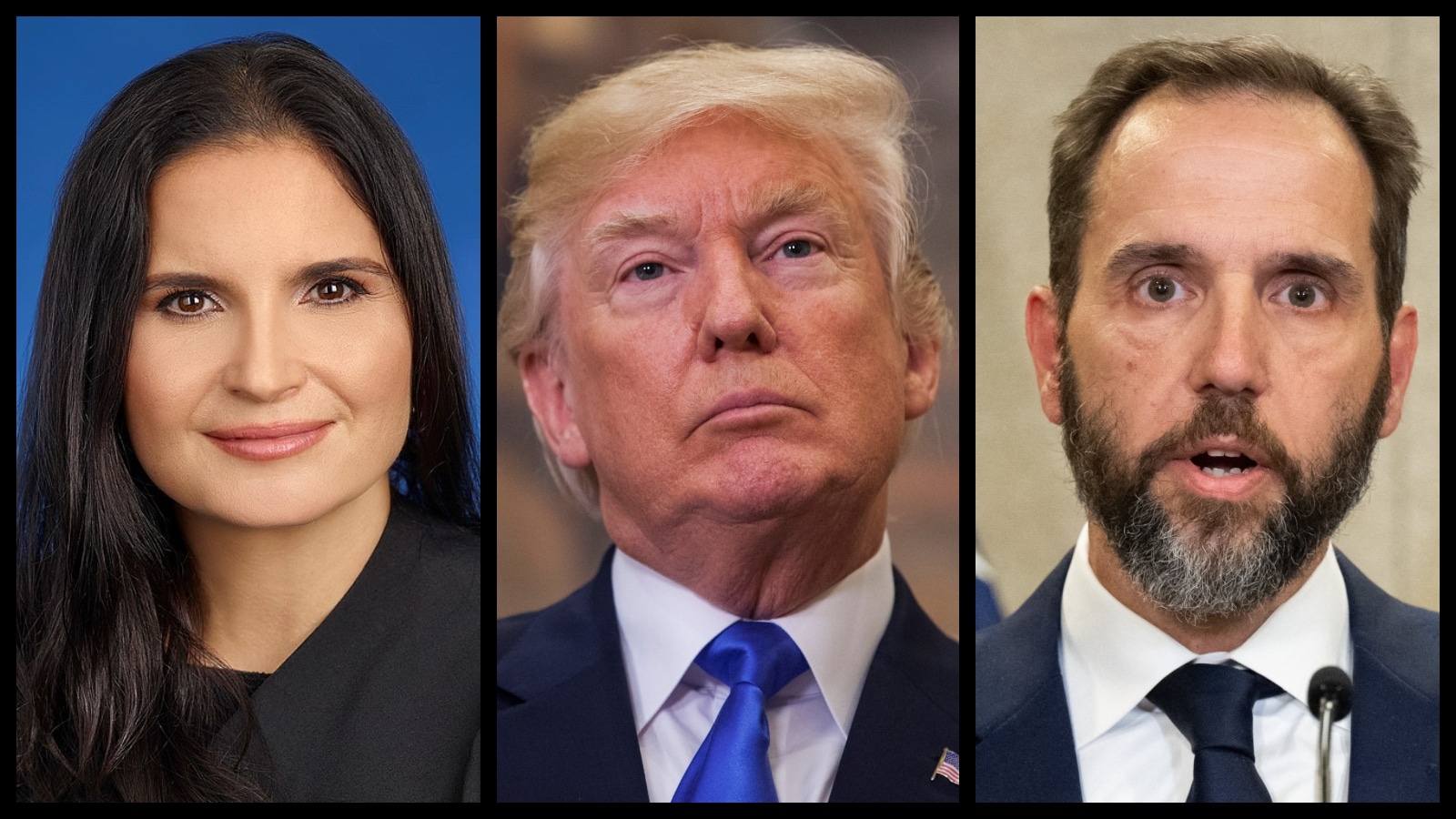
Former President Donald Trump hasn’t gotten many court wins in recent months, but his team managed a small victory earlier this week in special counsel Jack Smith’s case against him involving his alleged mishandling of classified documents.
But it could turn into a huge victory.
Late last week, Trump appointee and U.S. District Judge Aileen Cannon “temporarily delaying a previously set schedule of deadlines stretching from October through May for the Justice Department to make classified documents available to Trump’s lawyers and for the defense team to have time to review them,” Yahoo News reported, citing The Messenger.
In addition, Trump’s legal team asked Cannon to push back the start date of the trial from May 2024 until after the November election, but she has yet to rule on that request, the outlets noted. That said, some observers noted that her decision to move back the deadlines made it less likely that the trial would begin on May 20, as she previously ruled.
The reason that matters is because should Trump succeed “in pushing back the trial and also manages to win reelection in 2024, critics fear that he will simply attempt to pardon himself if found guilty of the felony charges Smith has brought against him,” Yahoo News noted.
This week, Cannon “postponed a hearing on whether one of Trump’s co-defendants understood that his lawyer might have conflicts of interest,” The New York Times reported, going on to say that she also admonished the prosecutorial team for “wasting” time.
The Times added: “At issue was a request by Mr. Smith’s team that Judge Cannon hold a hearing to make sure that Mr. Trump’s co-defendants — both of whom are employed by him — understood that their lawyers, who are being paid by a political action committee affiliated with the former president and who have represented witnesses in the case, had possible conflicts. In the case of one co-defendant, Carlos De Oliveira, the property manager at Mar-a-Lago, Mr. Trump’s private club and residence, the hearing proceeded largely without incident. Mr. De Oliveira’s lawyer, John Irving, had represented three witnesses in the case.”
Harbach argued before the court that Irving is under obligations of confidentiality and loyalty to former clients, and those may be challenged if he was to cross-examine them in his defense of De Oliveira “or question their credibility in summations to the jury,” the Time reported.
Cannon, during the proceedings, observed that those arguments had not been included in prosecutor filings before the hearing. Irving told the judge that he no longer represents those witnesses. De Oliveira, who was asked several questions by Cannon after he explained that English is not his native language, said he wished to retain Irving as his attorney, the outlet noted.
Trump’s lawyers claimed in a motion filed last week that the defense team would not be ready for trial on the current schedule because of delays in obtaining access to classified records cited in Smith’s indictment.
Trump is accused of illegally storing classified documents at his Mar-a-Lago estate in Florida.
In a court filing made last week, federal prosecutors acknowledged that the case had taken “a slightly longer than anticipated timeframe” and indicated their support for a brief extension. The pre-trial schedule was strongly opposed by Smith’s office.
Smith is not happy with the delay in his case.
The prosecutor said in a motion that Trump’s request “threatens to upend the entire schedule…and that amounts to a motion to postpone the trial until May 20, 2024.”
Smith was responding to Trump’s legal team’s claim that pre-trial hearing deadlines should be extended so that they could deal with legal issues that had arisen, such as an application for a protective order relating to Trump’s comments about witnesses and jurors.
Smith stated that, while he was open to a brief delay, Trump was asking for too much time.
“Instead, defendants argue for a schedule that would delay proceedings by over three months,” the motion stated.
This article may contain commentary which reflects the author's opinion.
