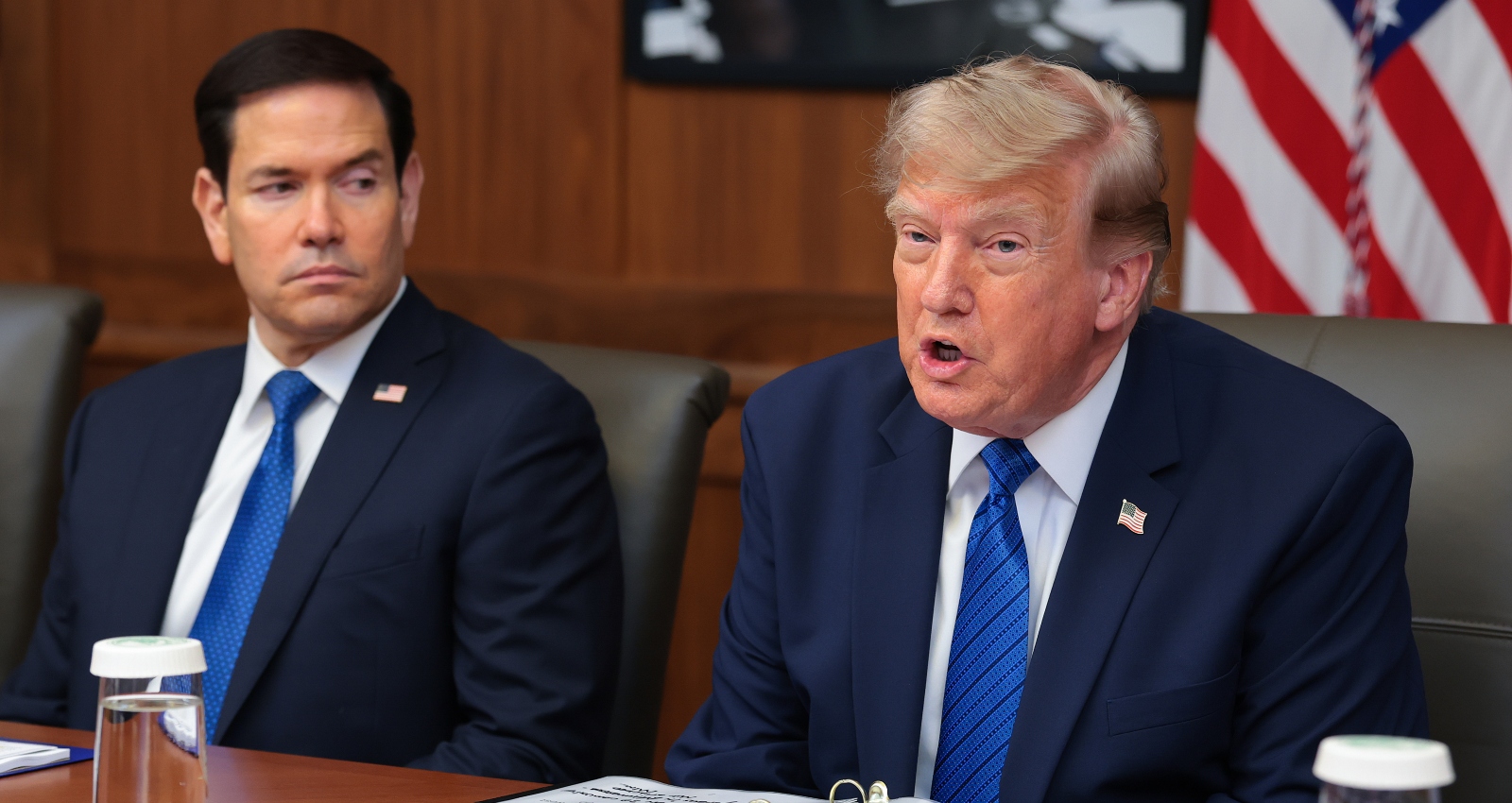
President Donald Trump is warning Iran that additional U.S. military strikes are possible after November’s midterm elections as negotiations between Washington and Tehran again ended without a breakthrough.
Secretary of State Marco Rubio abruptly ended the latest round of diplomacy and ordered Iranian Foreign Minister Abbas Araghchi and his delegation to leave the United States after talks stalled, according to a U.S. official.
The Iranian officials had traveled to New York for the United Nations General Assembly and remained after Iranian President Masoud Pezeshkian departed as Qatar attempted to mediate negotiations between Washington and Tehran.
But with the discussions producing no agreement, Rubio instructed the U.S. mission to inform the Iranian delegation that it was time to leave. “They overstayed their welcome,” a U.S. official told Fox News Digital.
The breakdown comes more than seven months into the conflict and amid continuing questions about whether Trump will authorize another escalation after the Nov. 3 midterm elections.
Asked during an interview with Fox News’ Peter Doocy whether he might “go harder” against Iran after the election, Trump left that possibility open. “It’s possible,” Trump said.
The president argued that the U.S. military is now in a stronger position to conduct additional operations because weapons and ammunition used earlier in the conflict have been substantially replenished.
“We’ve rebuilt our stockpiles at levels that nobody thought possible,” Trump said. He added that American weapons production has accelerated significantly in recent months.
Trump did not announce a decision to conduct new strikes or identify potential targets, and his comments leave the administration’s next military steps uncertain.
The president has repeatedly maintained that he prefers a negotiated settlement while warning that military options remain available if diplomacy fails.
The latest talks focused on several of the most difficult issues separating the two governments, including Iran’s nuclear program, sanctions, frozen Iranian assets and security surrounding the Strait of Hormuz.
Qatar has played a central role as an intermediary.
Iran’s delegation remained in New York after Pezeshkian returned home specifically because Qatari officials were attempting to facilitate additional discussions with the Trump administration.
Trump rejected an initial Iranian proposal but kept the door open to further negotiations.
Those discussions ultimately failed to produce sufficient progress for the administration to continue hosting the Iranian delegation.
Araghchi left New York early Tuesday and traveled to Doha.
Iran has disputed Washington’s description of the episode.
Iranian officials maintain that Araghchi departed according to a schedule communicated to U.S. authorities on Sept. 17 and rejected claims that Rubio effectively expelled the delegation after negotiations collapsed.
The State Department maintains that the administration made clear the Iranian officials’ continued presence was no longer welcome.
The dispute comes against the backdrop of a conflict that has placed enormous demands on American military stockpiles.
The United States has used significant quantities of precision-guided weapons, air-defense interceptors and other munitions during operations connected to Iran and the broader Middle East.
Trump said the Pentagon and American defense manufacturers have spent recent months rebuilding those inventories.
“We’re making missiles at a level that nobody has ever seen before,” Trump said.
The administration has pushed defense contractors to expand production capacity, particularly for missile-defense interceptors and precision weapons that would be critical during any renewed confrontation with Iran.
Trump also argued that Iran’s military capabilities have been substantially degraded during the conflict.
The president has repeatedly pointed to U.S. and allied strikes against Iranian military infrastructure as evidence that Tehran is negotiating from a weaker position.
Iranian officials dispute the extent of that damage and have continued warning that further American attacks would trigger retaliation.
This article may contain commentary which reflects the author's opinion.
