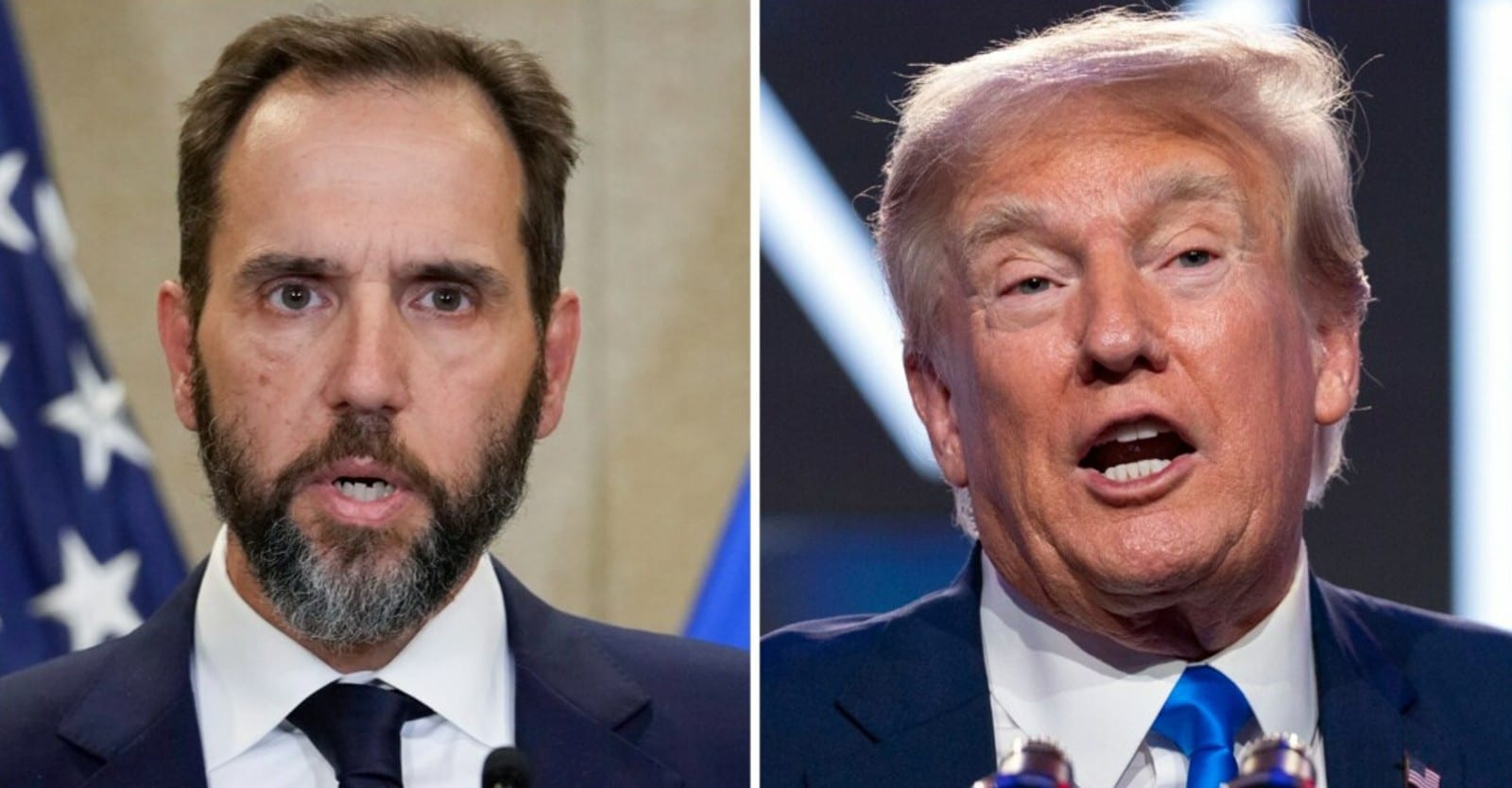
Former President Donald Trump’s attorneys filed their first motion to dismiss the federal election interference case against their client, arguing that Trump has “absolute immunity” from prosecution for actions taken while he was president.
“Breaking 234 years of precedent, the incumbent administration has charged President Trump for acts that lie not just within the ‘outer perimeter,’ but at the heart of his official responsibilities as President,” Trump’s attorneys say in their filing. “In doing so, the prosecution does not, and cannot, argue that President Trump’s efforts to ensure election integrity, and to advocate for the same, were outside the scope of his duties.”
This is the first of what are likely to be many motions to dismiss the case brought against Trump by Special Counsel Jack Smith, who has accused him of plotting to overturn the 2020 election, ABC News reported.
In August, Trump pleaded not guilty to charges that he had engaged in a “criminal scheme” to overturn the results of the 2020 election by enlisting a slate of so-called “fake electors,” using the Justice Department to conduct “sham election crime investigations,” trying to enlist the vice president to “alter the election results,” and promoting false claims of a stolen election as the
The ex-president has denied all allegations and called them “a persecution of a political opponent.”
Trump’s attorneys argued that Smith “falsely claims President Trump’s motives were impure” and that he “knew” reports of fraud in the election were untrue, despite the fact that Smith’s indictment specifically alleged Trump clearly acted outside the scope of his office while engaging in an unlawful conspiracy to obstruct the peaceful transfer of power.
“As the Constitution, the Supreme Court, and hundreds of years of history and tradition all make clear, the President’s motivations are not for the prosecution or this Court to decide,” they argue. “Rather, where, as here, the President’s actions are within the ambit of his office, he is absolutely immune from prosecution.”
The acquittal by the Senate after his impeachment in the wake of the attack on the Capitol on January 6 is central to the defense team’s argument that Trump is immune from prosecution.
“The Impeachment Clauses provide that the President may be charged by indictment only in cases where the President has been impeached and convicted by trial in the Senate,” they say. “Here, President Trump was acquitted by the Senate for the same course of conduct… The Special Counsel cannot second-guess the judgment of the duly elected United States Senate.”
Trump’s legal team argues that his alleged pressure campaign against state officials to overturn his election losses, his alleged efforts to recruit the Justice Department to falsely declare the election was rife with fraud, and his push for then-Vice President Mike Pence to reject electors did not fall within the “outer perimeter” of his duties, but rather at the “heart” of his presidency.
Briefing deadlines for the government’s response to the motion to dismiss will likely be set by Judge Tanya Chutkan.
Smith was thwarted again in his attempt to implicate another Republican as he widens his investigation into the Jan. 6, 2021, riot at the U.S. Capitol Building after filing charges against Trump in association with events that day.
The U.S. Court of Appeals for the District of Columbia Circuit ruled earlier this month that Smith cannot have access to the phone records of Rep. Scott Perry (R-Pa.) because allowing him to obtain that data amounts to a breach of the Republican lawmaker’s immunity under the Constitution’s “speech and debate” clause.
Smith was attempting to access Perry’s communications with colleagues and Trump administration officials. But the clause in question protects members of Congress from being dragged into legal proceedings while they are engaging in their elected official duties.
Late last week, Smith’s team again requested the federal judge overseeing Trump’s Jan. 6 case place a limited gag order be placed on the former president.
This article may contain commentary which reflects the author's opinion.
