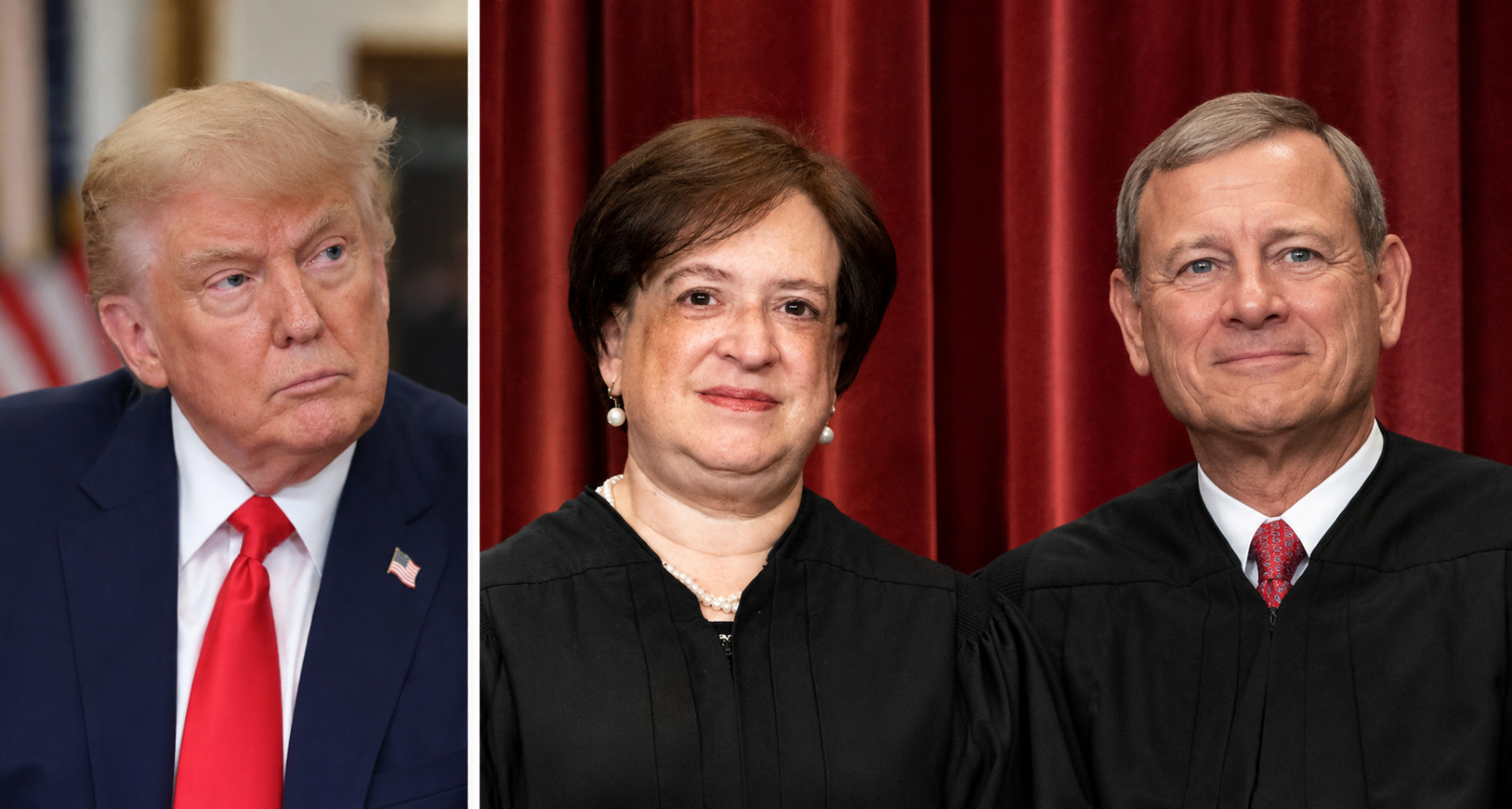
The Trump administration returned to the Supreme Court on Thursday, filing an emergency request to continue the rapid deportation of migrants to countries other than their own while a significant legal battle over the policy unfolds.
The Justice Department is asking the justices to suspend lower-court rulings that require the Department of Homeland Security (DHS) to provide migrants with effective notice and a meaningful opportunity to express concerns about potential persecution or torture in the countries to which they are being deported.
The Supreme Court’s docket indicates that the application, titled Department of Homeland Security v. D.V.D., was submitted on Thursday and assigned to Justice Ketanji Brown Jackson, who oversees emergency matters arising from the 1st U.S. Circuit Court of Appeals.
Justice Jackson has ordered the migrants challenging the policy to respond by 4 p.m. on Monday, September 28.
This emergency appeal marks the latest development in an ongoing dispute regarding one of President Donald Trump’s key immigration enforcement strategies.
The administration has increasingly utilized “third-country removals” for migrants with final deportation orders who cannot be returned to their countries of origin.
It’s unclear why lower courts continue to block the administration from deporting to third countries.
In May, the U.S. Supreme Court approved the Trump administration’s request to pause a lower court injunction that had blocked deportations of individuals to third countries without prior notice.
The decision marked a victory for the administration as it continued to implement its immigration crackdown swiftly.
The Court ruled 6-3 in favor of staying the injunction, with Justices Sonia Sotomayor, Elena Kagan, and Brown Jackson dissenting.
WATCH:
The case involved a group of migrants contesting their deportations to third countries—nations other than their countries of origin.
Earlier that month, lawyers representing the migrants urged the Supreme Court to uphold a ruling by U.S. District Judge Brian Murphy, who had ordered the Trump administration to keep all migrants facing deportation to third countries in U.S. custody until further review.
Murphy, based in Boston, oversaw a class-action lawsuit brought by migrants challenging deportations to countries such as South Sudan, El Salvador, Costa Rica, Guatemala, and others that the administration has reportedly considered in its ongoing deportation efforts.
Murphy ruled that migrants must stay in U.S. custody until they have the opportunity to undergo a “reasonable fear interview,” allowing them to explain to U.S. officials any fears of persecution or torture if released into the country.
Murphy emphasized that his order does not prevent Trump from “executing removal orders to third countries.”
Rather, he clarified in a prior ruling that it “simply requires” the government to “comply with the law when carrying out” such removals, in accordance with the U.S. Constitution and in response to the Trump administration’s surge of last-minute removals and deportations.
It should be noted that these are not “last-minute” removals; the migrants being rounded up by DHS have removal orders issued by immigration judges or have been verified to be in the U.S. illegally.
In appealing the case to the Supreme Court, U.S. Solicitor General D. John Sauer argued that Murphy’s ruling had prevented the government from deporting “some of the worst of the worst illegal aliens,” including a group of migrants sent to South Sudan earlier this year without due process or prior notice.
In a separate argument, he reiterated that the migrants must remain in U.S. custody at a military base in Djibouti until each has the opportunity to undergo a “reasonable fear interview,” allowing them to explain to U.S. officials any fears of persecution or torture if released into South Sudanese custody.
White House officials have criticized so-called “activist” judges for pursuing a political agenda and have consistently rejected claims that illegal immigrants are entitled to due process protections.
This article may contain commentary which reflects the author's opinion.
