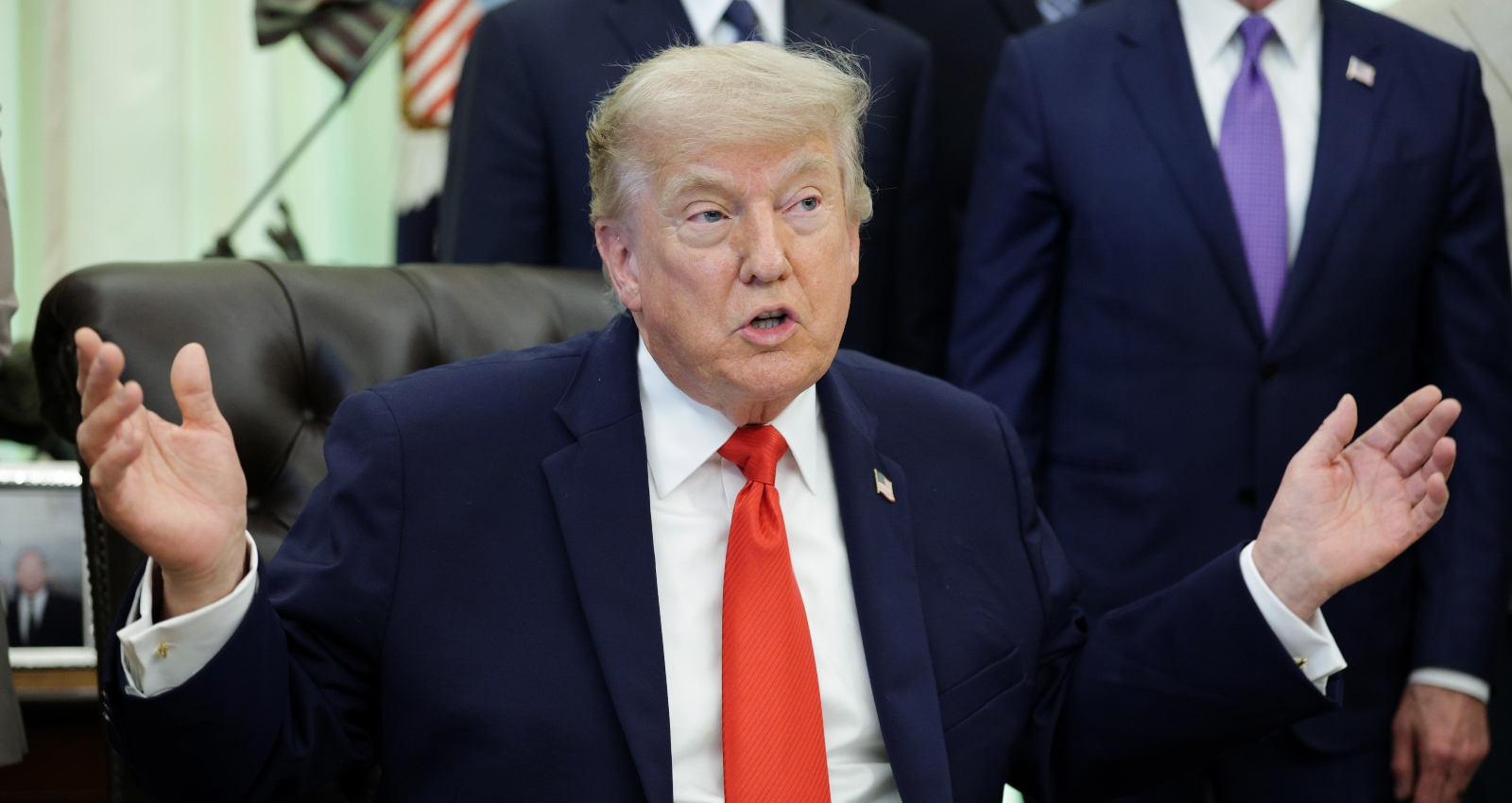
President Donald Trump made it clear he’s aware of the situation regarding spikes in gasoline and fuel prices in the U.S., and on Friday he did something about it.
Trump announced that European nations and other U.S. allies will begin tapping emergency fuel reserves as part of a coordinated effort to increase supplies and ease soaring diesel prices.
The announcement came as the Group of Seven nations agreed to release 100 million barrels of diesel, crude oil and other petroleum products through the International Energy Agency.
The release will begin immediately and continue over four months, with officials promising to put a “substantial” amount of diesel onto the market within the first 20 days.
Trump announced the development on Truth Social before the G7 released details of the agreement.
“Europe has just agreed to release a massive amount of their heavily stocked Diesel Oil,” Trump wrote. “The process will begin immediately.”
The president had spent recent weeks urging European governments to draw down their diesel inventories as prices climbed in the United States.
The administration had even considered restricting U.S. diesel exports if European countries refused to release additional supplies.
Trump said Friday that an export ban was no longer under consideration.
The agreement followed a videoconference of G7 leaders chaired by French President Emmanuel Macron.
The group includes the United States, France, Germany, Britain, Italy, Canada and Japan.
“We will implement our commitments with a coordinated release through the IEA of 100 million barrels to begin immediately over four months, including a frontloaded substantial diesel release within the first 20 days by G7 members and partners,” the leaders said in a joint statement.
Macron said increasing supplies should help reduce prices and provide additional liquidity to strained energy markets.
“This common decision and this unity should bring down prices,” Macron said.
Diesel has become a particularly serious problem in the United States.
The national average reached a record $6.52 per gallon on Sept. 22 and remained around $6.37 on Friday, according to AAA.
Higher diesel costs have consequences far beyond motorists who drive diesel-powered vehicles.
Trucks, trains, construction equipment and agricultural machinery rely heavily on the fuel, meaning sustained price increases can raise transportation and production costs throughout the economy. Heating oil is also closely related to diesel, adding pressure as colder weather approaches.
Several international developments have contributed to the supply crunch.
The continuing conflict with Iran has disrupted Persian Gulf refinery production and fuel exports, while Russia has restricted diesel exports. China also recently halted most fuel-product exports, adding further pressure to already tight international supplies.
The Trump administration had argued that Europe was capable of doing more to relieve the shortage.
Washington has already released nearly all of its approximately 172-million-barrel commitment from a larger emergency action coordinated by the IEA in March.
European countries, by comparison, had not yet released all of the roughly 92 million barrels they committed to that earlier effort.
Friday’s agreement also includes a G7 commitment to avoid restrictions on energy exports between member countries.
That provision effectively removes, at least for now, the possibility of Trump blocking American diesel shipments to Europe.
Europe has become increasingly dependent on U.S. refined petroleum products after reducing its reliance on Russian energy.
According to energy analytics firm Vortexa, the United States supplied approximately 41% of Europe’s diesel imports in September.
The prospect of an American export ban had therefore alarmed European governments and energy markets.
Some U.S. lawmakers had supported restricting exports, arguing that American diesel should remain at home while domestic prices were elevated.
Critics warned that such a restriction could backfire by disrupting refinery economics and international supply chains.
Trump settled the issue Friday.
“We’re not going to be doing the diesel export ban,” he told reporters.
Energy markets responded quickly to the coordinated reserve release.
International Energy Agency Executive Director Fatih Birol said oil prices began declining after the decision, with prices dropping about $5 following the announcement.
This article may contain commentary which reflects the author's opinion.
