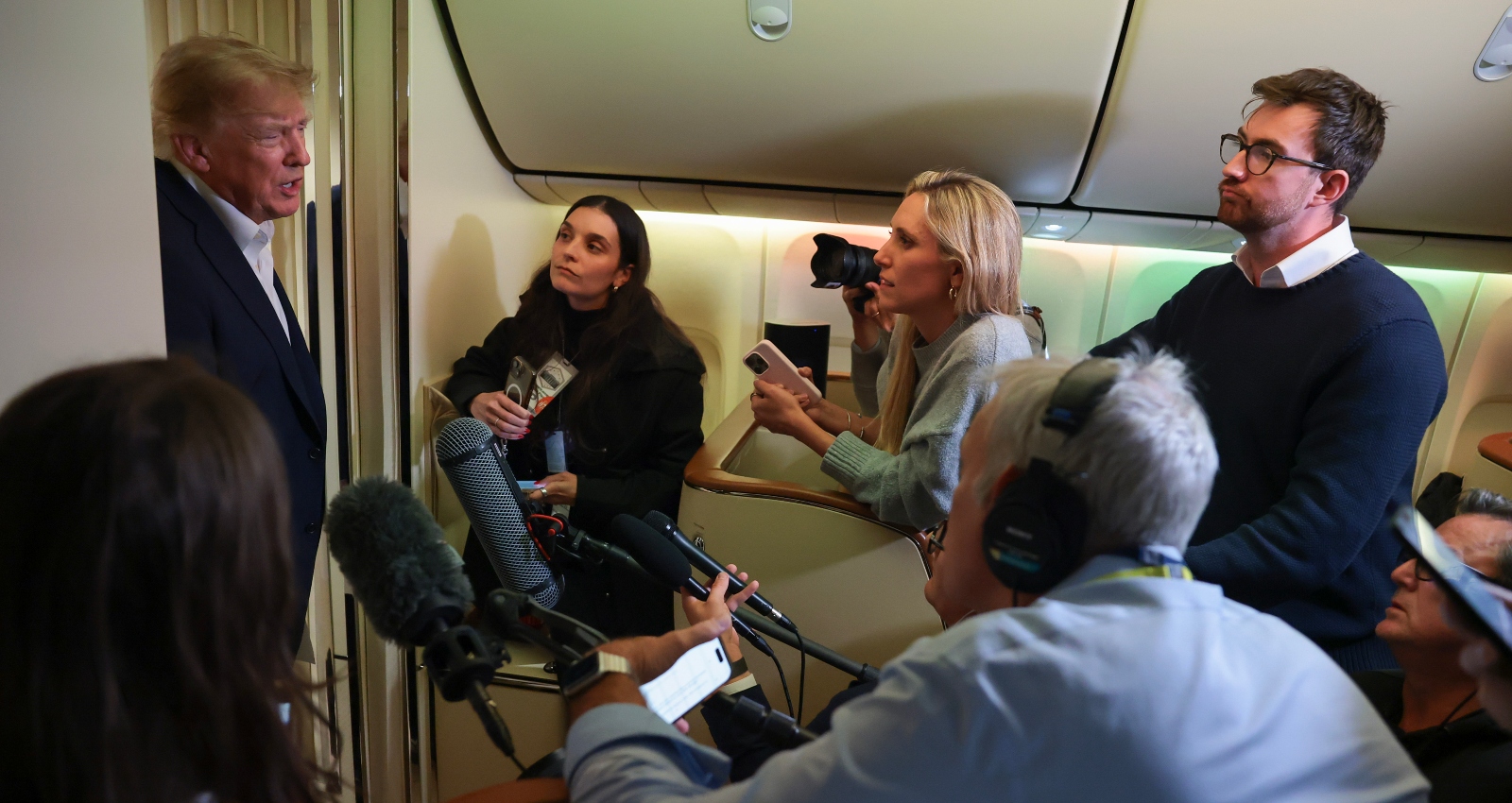
President Donald Trump rejected Iran’s offer to reopen the Strait of Hormuz, declaring Saturday that the United States was winning.
“Well I’m rejecting their deal,” Trump told reporters as he left the White House for Tennessee.
The blunt response came after Tehran proposed reopening the waterway within seven days in exchange for major American concessions.
Iran wanted the U.S. naval blockade lifted, sanctions on its oil sales waived and a ceasefire covering Lebanon.
Its proposal also called for nuclear negotiations to resume on an accelerated schedule.
Trump argued that Iran’s request showed economic pressure was working and Tehran needed money from oil exports.
The blockade and sanctions have squeezed Iran’s finances, increasing Tehran’s incentive to seek a quick deal.
He said Iran wanted to open the strait immediately because it was losing badly.
“We’re winning tremendously,” the president said while describing American control over the strategic shipping route.
Trump asserted that 29 ships had passed through the waterway the previous night.
He said he remained open to reaching an agreement, but insisted the terms Iran offered were unacceptable.
The president portrayed his naval blockade as a direct response to Iran’s interference with shipping.
He called the blockade a “wall of steel” and said it prevented Tehran from profiting while others could pass.
Washington says commercial shipping can continue through Hormuz even as Iranian ports remain under the U.S. blockade.
Trump argued that Iran had tried to create a global crisis by shutting the route.
Instead, he said, the U.S. operation left Iran unable to collect the revenue it expected.
The Strait of Hormuz carried about one-fifth of globally traded oil and gas before the war.
Its disruption has affected energy markets well beyond the Middle East and raised costs for consumers.
Iranian Foreign Minister Abbas Araghchi described the latest offer during a private gathering at the United Nations.
The proposal reached Washington through mediators, according to accounts of the negotiations.
It resembled a June understanding but replaced its 60-day interim period with a seven-day timeline.
That earlier arrangement collapsed after Iran resumed attacks on shipping in the strait.
Trump’s answer makes clear he is unwilling to exchange immediate relief for the reopening Tehran offered.
It does not mean the administration has ruled out every possible future agreement with Iran.
Before his remarks, Trump posted that Iran cannot be allowed to obtain a nuclear weapon.
That longstanding American demand remains central to any broader talks over Tehran’s nuclear program.
The president spoke while heading to a Tennessee football game involving the Volunteers and Texas Longhorns.
His comments followed a Wall Street Journal report that he had already turned down the Iranian proposal.
The Journal also reported Trump expected to resume bombing Iran after the November midterm elections.
Trump did not announce such a plan in the remarks reported Saturday.
Iranian President Masoud Pezeshkian separately said his country had little trust in Washington during an Al-Jazeera interview.
He argued that security in the strait must be achieved through negotiations rather than a regional enforcer.
Pezeshkian said Qatar and Pakistan were among the third parties conveying messages between Iran and the United States.
Other Gulf governments have also been involved in efforts to prevent further escalation.
Saudi Arabia reportedly has reservations about a deal that leaves threats to Red Sea shipping unresolved.
Iran-backed Houthi fighters have increased pressure around the Bab el-Mandeb strait near Yemen.
The possible inclusion of Lebanon in a ceasefire would add another complication to any agreement.
Hard-liners inside Iran have also criticized the diplomatic approach taken by Pezeshkian and Araghchi.
Some favor continuing or escalating the conflict to demand greater concessions from Washington.
The White House had described conversations with mediators as positive and constructive before Trump’s public rejection, The Wall Street Journal reported.
For now, the president is betting that the blockade gives Washington stronger negotiating power.
This article may contain commentary which reflects the author's opinion.
