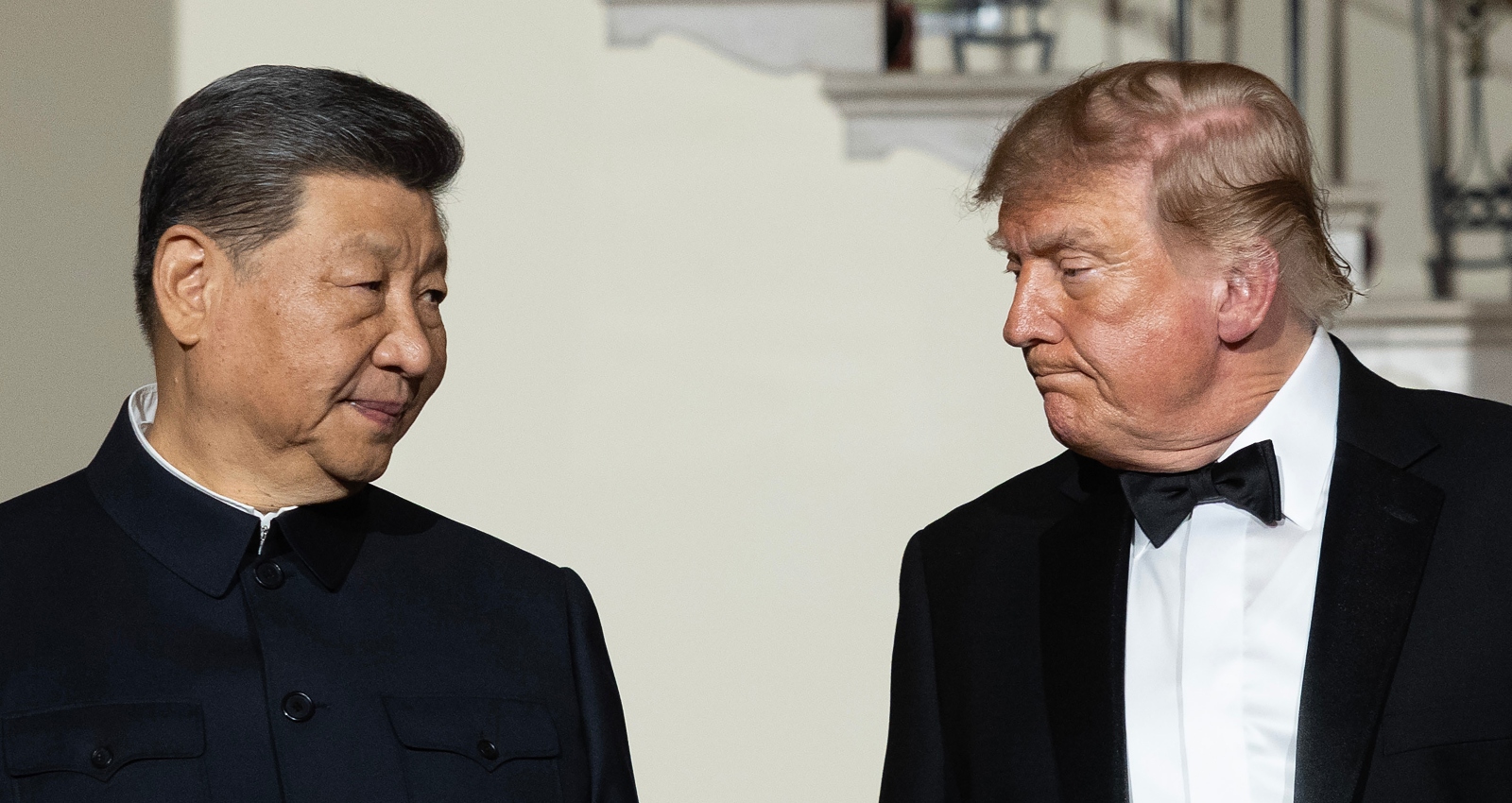
President Donald Trump and Chinese President Xi Jinping have reached an agreement to lower tariffs on tens of billions of dollars in goods moving between the world’s two largest economies, delivering one of the most significant economic agreements to emerge from Xi’s three-day state visit to Washington.
The agreement provides more favorable tariff treatment for $30 billion worth of “non-sensitive” goods exported in each direction, potentially affecting approximately $60 billion in annual two-way trade.
The White House announced details of the agreement following the conclusion of Xi’s visit Friday.
Under the arrangement, China will reduce tariffs on a group of American products including agricultural goods, fish and seafood, logs and wood products, cosmetics and medical devices.
The United States will provide similar tariff relief for selected Chinese exports including toys, small household appliances, holiday decorations and children’s car seats.
The specific tariff rates and complete list of eligible products have not yet been publicly released.
The agreement emerged through the newly established U.S.-China Board of Trade, one of several mechanisms created following Trump’s summit with Xi in Beijing in May.
The two governments formally put the Board of Trade into operation during this week’s Washington meetings.
U.S. Trade Representative Jamieson Greer has described the initiative as a way to expand trade in products that do not raise national-security concerns while preserving tariffs and other restrictions covering sensitive technologies and strategic industries.
That distinction means the latest agreement does not represent a broad rollback of Trump’s China tariffs.
🚨 JUST NOW: Treasury Sec. Scott Bessent CONFIRMS a $30 BILLION tariff reduction deal has been struck with China following President Trump's meeting with Xi Jinping
Bessent confirms 4 MEETINGS are expected between Trump and Xi this year alone!
WH CONFIRMED THESE WINS:
– Tariff… pic.twitter.com/CWaWiu2DZ1— Eric Daugherty (@EricLDaugh) September 27, 2026
Instead, Washington is maintaining restrictions on products involving national security while creating a separate channel through which less-sensitive goods can receive lower duties.
The White House said the agreement is intended to produce more balanced and reciprocal trade while expanding opportunities for American farmers, fishermen and manufacturers.
China also announced the agreement Saturday, saying the two countries had reached an eight-point consensus covering trade and other areas of cooperation.
The economic package extends beyond tariff reductions.
China has agreed to purchase at least 10 million metric tons of American coal in 2027 and another 10 million metric tons in 2028.
That commitment could provide a significant boost to U.S. coal producers.
China had previously been one of the five largest foreign markets for American coal before imports dropped sharply during the recent trade confrontation.
Washington and Beijing also agreed to establish a working group addressing agricultural trade barriers.
The two governments have struggled over market access for American farm products including soybeans, beef and other agricultural goods.
Trump said following his meetings with Xi that the summit would produce benefits for American farmers.
The tariff agreement follows another significant step taken before the two presidents formally met.
Treasury Secretary Scott Bessent announced that Washington and Beijing had agreed to extend their existing trade truce by two months.
The agreement had been scheduled to expire Nov. 10.
The extension gives negotiators additional time to work toward a more comprehensive economic agreement while preventing an immediate return to the escalating tariff measures that characterized earlier stages of the U.S.-China trade confrontation.
The current truce grew out of negotiations that followed an intense tariff battle between the two countries.
At various points, Washington and Beijing imposed steep duties on hundreds of billions of dollars in each other’s goods before agreeing to suspend or reduce some of the measures.
Despite the latest agreement, major economic disputes remain unresolved.
Rare earth minerals and other critical materials remain one of Washington’s biggest concerns.
China dominates global production and processing of many rare earths used in military systems, automobiles, electronics and advanced technologies.
The White House said the two governments continue working to address American concerns about supply shortages involving rare earths and critical minerals, with the goal of returning shipments to what it called “appropriate levels.”
The summit also produced progress outside traditional trade policy.
Washington and Beijing agreed to launch a dialogue on artificial intelligence, including a channel for communicating about major AI-related incidents.
AI has become another major area of competition between the countries as both governments seek leadership in increasingly powerful computing systems.
Trump and Xi did not resolve broader disagreements over advanced semiconductor exports, Taiwan or several other major national-security issues.
Reuters described the summit as producing greater stability in the relationship but no breakthrough on its most difficult disputes.
Trump characterized the meetings as highly productive. The presidents are expected to continue meeting.
This article may contain commentary which reflects the author's opinion.
