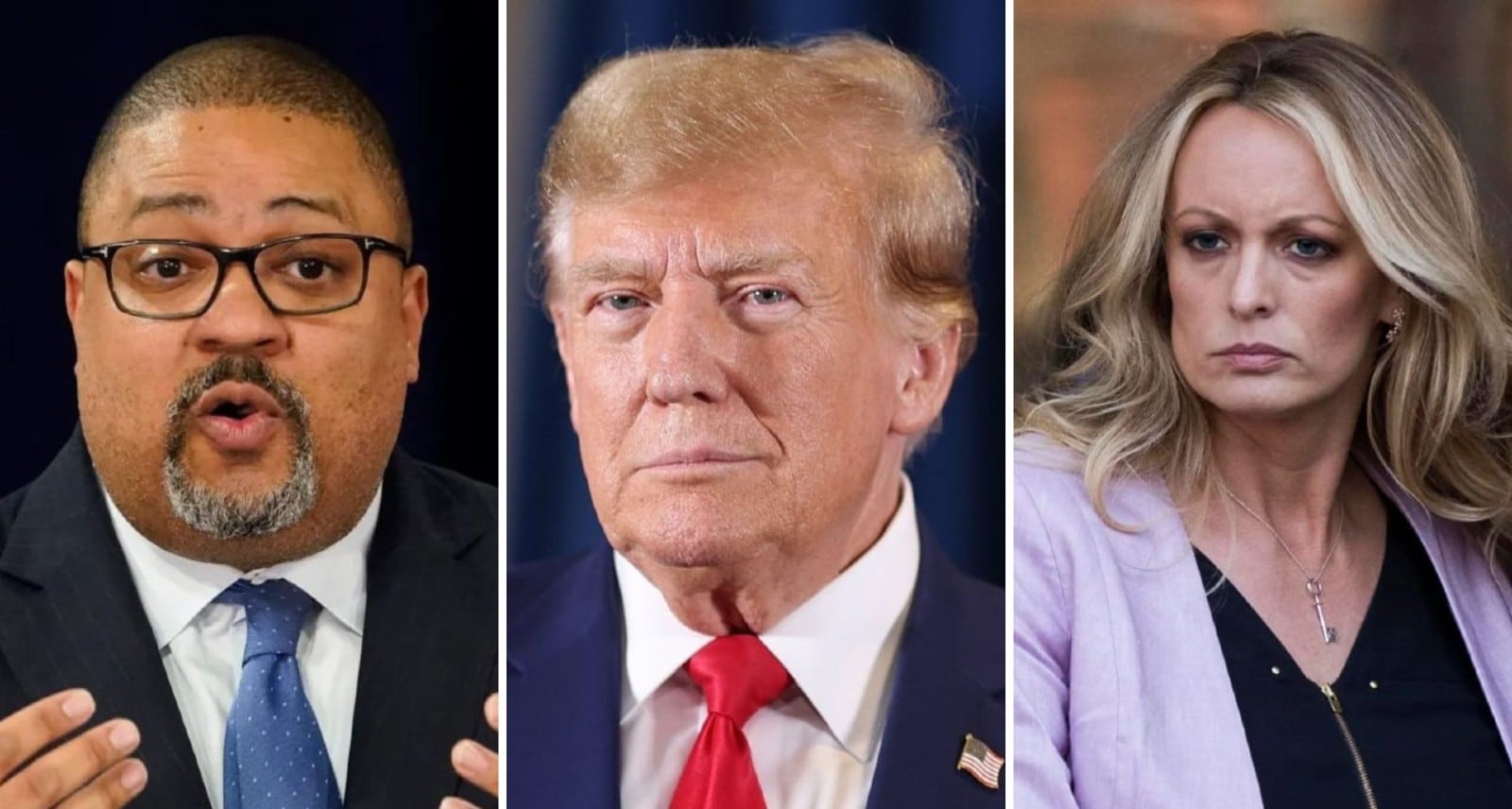
New York’s highest court rejected President-elect Donald Trump’s attempt to postpone his sentencing in the hush money case on Thursday, leaving the U.S. Supreme Court as his final avenue to delay the scheduled hearing on Friday.
Trump had appealed to both the Supreme Court and the New York Court of Appeals in an effort to block state Judge Juan Merchan from imposing a sentence in the case, in which Trump was convicted in May on 34 counts of falsifying business records, CNN reported.
In a brief two-sentence letter from the Court of Appeals on Thursday, Trump’s attorneys were informed that Judge Jenny Rivera had denied his request.
The Supreme Court can act at any time on Trump’s attempt to intervene and halt the sentencing, which was filed Wednesday after the New York Appellate Court, First Division, also denied his request to stay the hearing.
In a filing Thursday, Manhattan District Attorney Alvin Bragg argued to the justices that the broad protections granted to Trump in July for official actions during his presidency should not apply in this case, which involves actions taken in 2016.
Trump’s “extraordinary immunity claim is unsupported by any decision from any court,” Bragg, a Democrat, told the Supreme Court. “It is axiomatic that there is only one president at a time. … And as this court has repeatedly recognized, presidential immunity is strictly limited to the time of the president’s term in office.”
If Friday’s sentencing proceeds, Judge Merchan has already indicated that no punishment will be imposed on Trump. However, the sentencing of a former president—and soon-to-be sitting president—would be a symbolic, historic, and unprecedented moment in U.S. history.
Trump, who is expected to appear virtually for the sentencing, is set to be sworn in as president in less than two weeks. Yet, the intense efforts to prevent Friday’s sentencing across four separate courts highlight his determination to continue challenging his felony conviction, even as his November election victory has largely overshadowed his other legal issues.
Legal observers have closely watched Merchan’s handling of Trump’s hush money case, as he has delayed a sentencing hearing for months following Trump’s conviction in May on 34 felony counts of falsifying business records.
Shortly after the election, Merchan briefly entertained the possibility of dismissing Trump’s conviction, citing the defense’s argument that last year’s Supreme Court ruling grants Trump immunity from prosecution.
However, he later reversed course, deciding that the president-elect must face some form of punishment—even if it is delayed until after his next term in office.
Trump’s legal team on Wednesday petitioned the U.S. Supreme Court to intervene. His legal team argued that the hearing should be delayed or terminated altogether to ensure Trump can serve as president without the looming shadow of legal consequences.
“This Court should enter an immediate stay of further proceedings in the New York trial court to prevent grave injustice and harm to the institution of the Presidency and the operations of the federal government,” Trump’s lawyers wrote in the NY appellate court filing.
A spokesperson for Trump reiterated his lawyers’ claims that he is immune from charges and, therefore, should not face any punishment. “The Supreme Court’s historic decision on Immunity, the Constitution, and established legal precedent mandate that this meritless hoax be immediately dismissed,” Trump spokesman Steven Cheung said in a statement to NBC.
Trump’s legal team argued that because the reimbursements to then-personal lawyer Michael Cohen were finalized after Trump took office in 2017, the payment constituted an “official” act and was therefore protected under high court’s 2024 ruling exempting current or former presidents from criminal charges for official duties.
This article may contain commentary which reflects the author's opinion.
