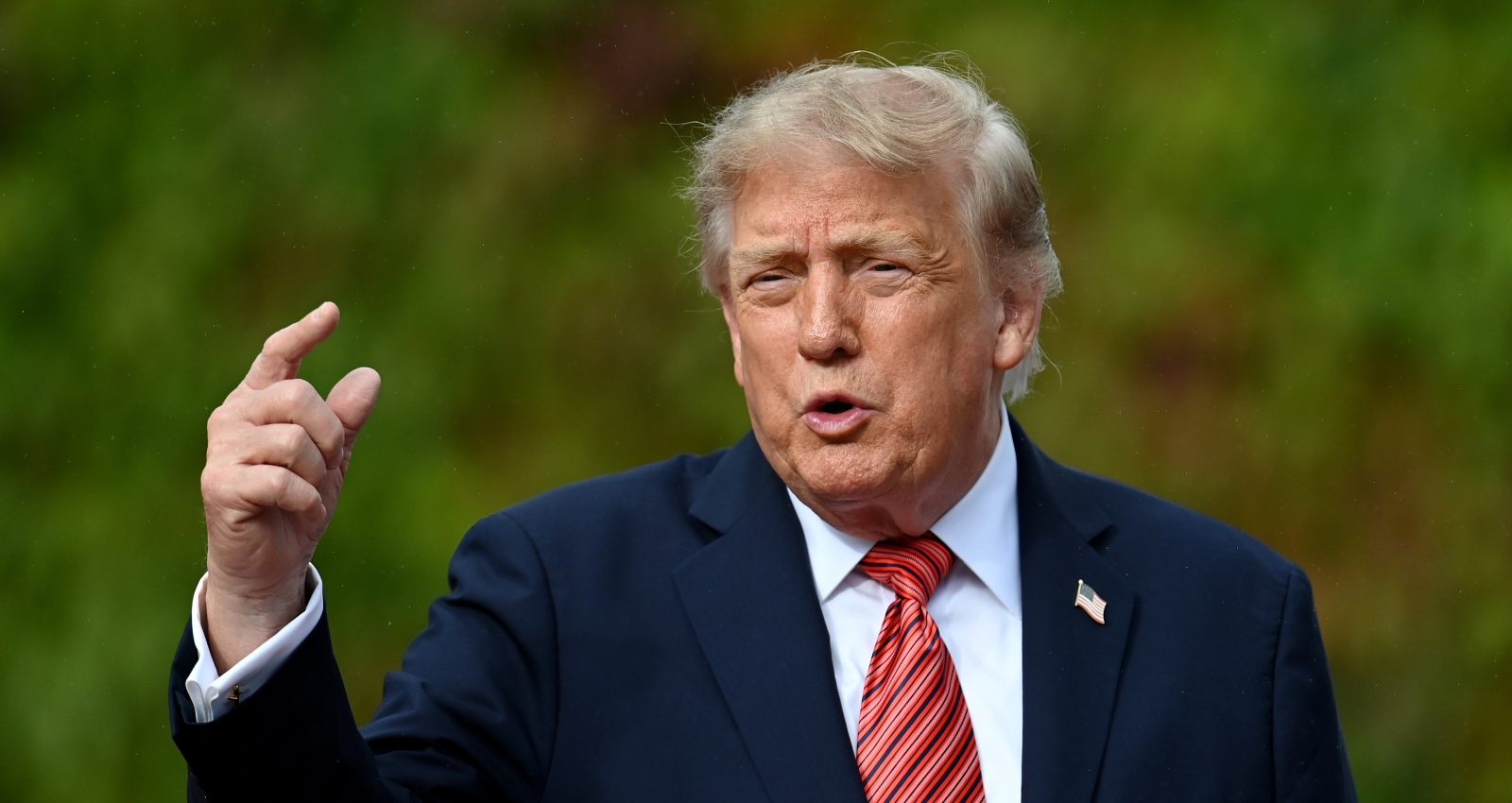
President Donald Trump is preparing to take a prominent role in the final stretch of the 2026 midterm campaign as Republicans fight to maintain control of both chambers of Congress.
James Blair, Trump’s political director and one of the president’s top midterm strategists, outlined the GOP’s closing strategy during an interview with Breitbart News Saturday, saying the effort will combine national messaging, aggressive turnout operations and substantial campaign spending in competitive House and Senate races.
Blair described the strategy as “twofold,” arguing that congressional elections are shaped by both national political conditions and the strengths and weaknesses of individual candidates.
“Elections are not all national and they’re not all local,” Blair said. “It’s a little bit of both.”
At the national level, Republicans intend to link Democratic candidates to positions taken by the broader Democratic Party, while GOP candidates will be encouraged to draw direct contrasts with their individual opponents. Blair argued that Republicans should prevent Democrats running in competitive states and districts from separating themselves politically from their national party.
A major component of the strategy will involve Trump himself.
Blair said the president will become “extremely active” during the final six weeks of the campaign, with appearances and political activity increasingly coordinated with the beginning of early and mail voting around the country.
Republicans also plan to encourage supporters to vote before Election Day rather than relying exclusively on the traditional Nov. 3 turnout operation.
“Vote now by mail if you want to. Vote in person early if that’s your preference. Don’t wait till Election Day,” Blair said.
That effort is particularly focused on what Blair called “low- and mid-propensity” Republican voters — people who supported Trump in presidential elections but are historically less consistent participants in midterms.
Trump’s political operation believes the president is particularly effective at reaching those voters and is building its turnout effort around that assumption.
The strategy comes as Republicans face a closely contested House battlefield.
The Cook Political Report currently lists 21 House races as Toss Ups, with another 16 classified as either Lean Democratic or Lean Republican. A Cook survey conducted Sept. 8-11 among 1,052 likely voters in 37 competitive districts found Democrats leading the generic congressional ballot in those districts 49% to 47%. The same districts backed Trump by an average of five percentage points in 2024.
Republicans, however, enter the final weeks with a significant financial advantage at the House campaign-committee level. The National Republican Congressional Committee raised $13.5 million in August and held approximately a $13 million cash advantage over its Democratic counterpart, according to Axios, which described it as the NRCC’s largest advantage at this stage of a midterm cycle.
Trump has also promised to unleash considerably more money.
Earlier this month, the president said his MAGA Inc. super PAC could spend between $400 million and $500 million helping Republican candidates during the midterms. The announcement came after some Republicans questioned how much of Trump’s political war chest would ultimately be directed toward congressional contests.
The Senate battlefield is broader.
Cook identified nine seats as forming the central Senate battleground as of early September, including six Republican-held seats and three held by Democrats, while noting that additional races in Kansas and Nebraska had also become more competitive.
Blair highlighted North Carolina, where Republican Michael Whatley is running against former Democratic Gov. Roy Cooper, while also pointing to Republican opportunities in Georgia, New Hampshire, Michigan and Minnesota.
In Georgia, Republicans are backing Rep. Mike Collins against Democratic Sen. Jon Ossoff. In New Hampshire, former Republican Sen. John Sununu faces Democratic Rep. Chris Pappas, while Michigan features Republican Mike Rogers against Democrat Abdul El-Sayed.
Blair acknowledged that the House contest remains particularly close, describing Republican prospects as “cautiously optimistic” rather than assured.
“We are not only defending Republicans, but we are coming after Democrats,” Blair said.
This article may contain commentary which reflects the author's opinion.
