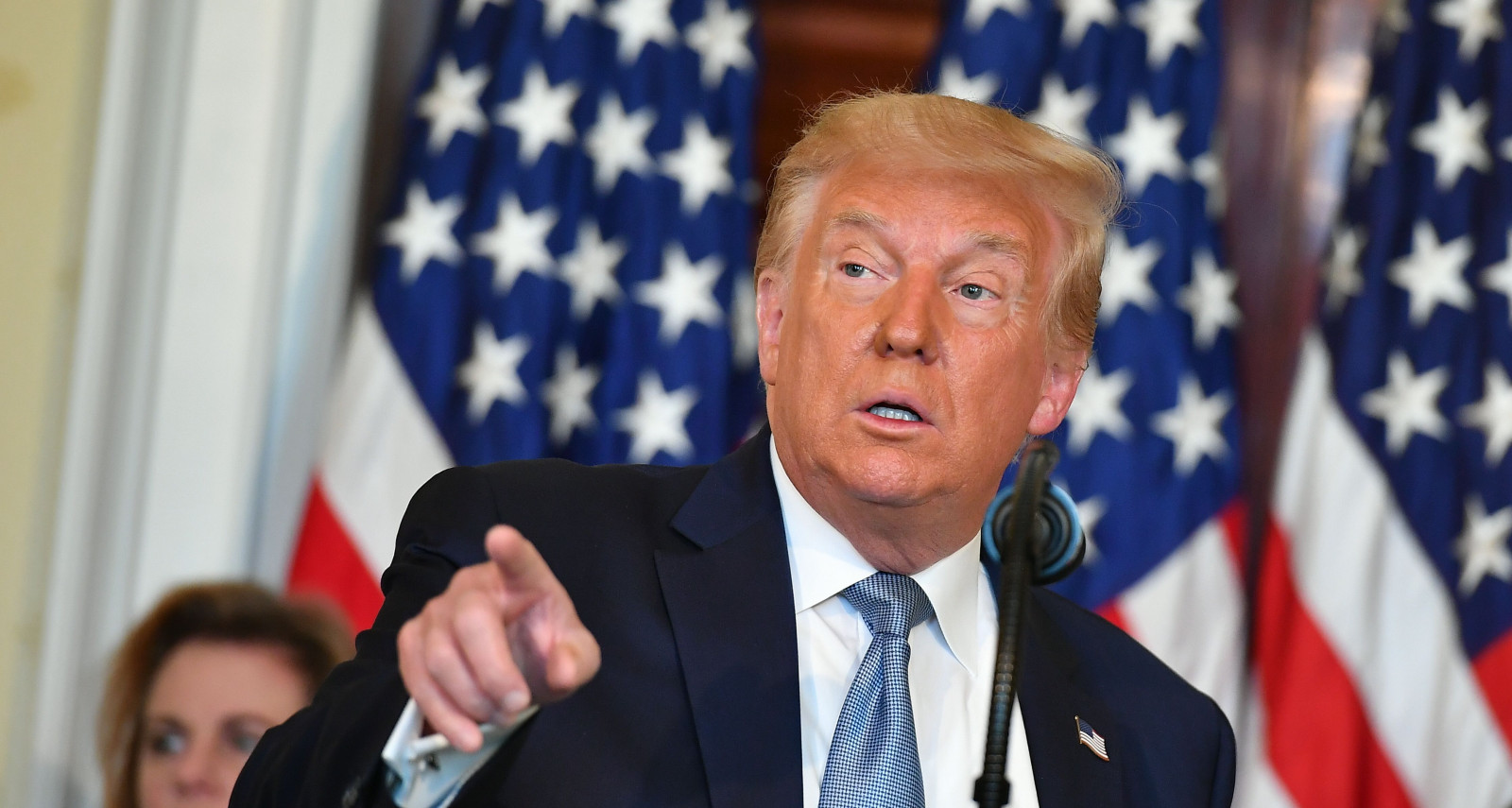
President-elect Donald Trump is doing what he always does regarding his comments about the Panama Canal — negotiating for a better deal in public.
That’s according to a column posted to FoxNews.com written by Van Hipp, the chairman of American Defense International, Inc. and a former deputy assistant secretary of the U.S. Army.
This week, Trump caught the attention of Panama and the entire international community by stating that the United States would demand the return of control over the Panama Canal if Panamanian officials do not put an end to what he called the “rip-off” of the United States.
Trump argued that the United States built and financed it, claiming that President Jimmy Carter “foolishly gave it away.”
President José Raúl Mulino responded that the Panama Canal belongs to Panama, but Trump then noted that “it was given to Panama and to the people of Panama, but it has provisions. You got to treat us fairly, and they haven’t treated us fairly.”
Panama purchased the canal for $1 via treaty, but the president-elect is correct that the agreement contains provisions that the Panamanian government is required to fulfill.
“Make no mistake what Trump is doing is negotiating a new treaty for the Panama Canal and hence, a better deal for the American people,” Hipp wrote. “This is much akin to the playbook executed by President Teddy Roosevelt, who maneuvered a complex situation involving the French, the government of Colombia, and the Panamanian people to build the Panama Canal.”
The Panama Canal is crucial to both global maritime trade and the national security interests of the United States, with approximately 73% of all ships passing through it bound for or departing from U.S. ports, Hipp added.
The canal also plays a key role in international supply chains. During World War II, it was instrumental in transporting goods essential for Allied forces, with thousands of U.S. troops stationed there to ensure its security, the former deputy assistance U.S. Army secretary added.
“Most concerning now is the growing influence of Communist China in Central and South America. In 2017, under the administration of former Panamanian President Juan Carlos Varela, Panama switched diplomatic recognition from Taiwan to Communist China,” Hipp wrote.
“The then Trump administration went into action and, following a visit by Secretary of State Mike Pompeo in October of 2018, the Varela government canceled five infrastructure projects with Chinese companies,” he wrote, adding:
Craig Fuller, CEO at FreightWaves, recently pointed out that there are concerns that “China might embed surveillance technology within the Canal’s infrastructure, which could be used to monitor U.S. naval and commercial movements.” He further notes that this potential for espionage increases strategic risks and could provide China with key insights into U.S. logistics and military operations.
This certainly helps explain why the commander of U.S. Southern Command, Gen. Laura Richardson, told the House Armed Services Committee earlier this year that “China is exercising our playbook of being present economically and equipping the United States’ hemispheric neighbors militarily.” From a timing standpoint, the new president of Panama, who took office earlier this year, is seen as being more aligned with Trump philosophically, and thus, much better to negotiate with.
All of that, according to Hipp, helps to explain why U.S. Southern Command commander Gen. Laura Richardson told the House Armed Services Committee earlier this year that “China is exercising our playbook of being present economically and equipping the United States’ hemispheric neighbors militarily.”
From a timing perspective, the new president of Panama, who took office earlier this year, is viewed as being more philosophically aligned with Trump, making negotiations more favorable.
After reviewing the history of America’s canal giveaway under then-President Jimmy Carter, Hipp went on to note that Trump is inheriting a very complex “foreign policy landscape.” However, he also holds the belief that Trump will emerge victorious.
“Whether it is the growing threat of Communist China, the thought of Iran with nuclear weapons, turmoil in the Middle East, or the Russian-Ukraine situation, Trump is facing constant national security challenges on the world stage,” Hipp writes.
“Yes, it is an international chess game and, thus far, America’s incoming commander in chief is playing it like the late World Chess champion Bobby Fischer,” he concluded.
This article may contain commentary which reflects the author's opinion.
