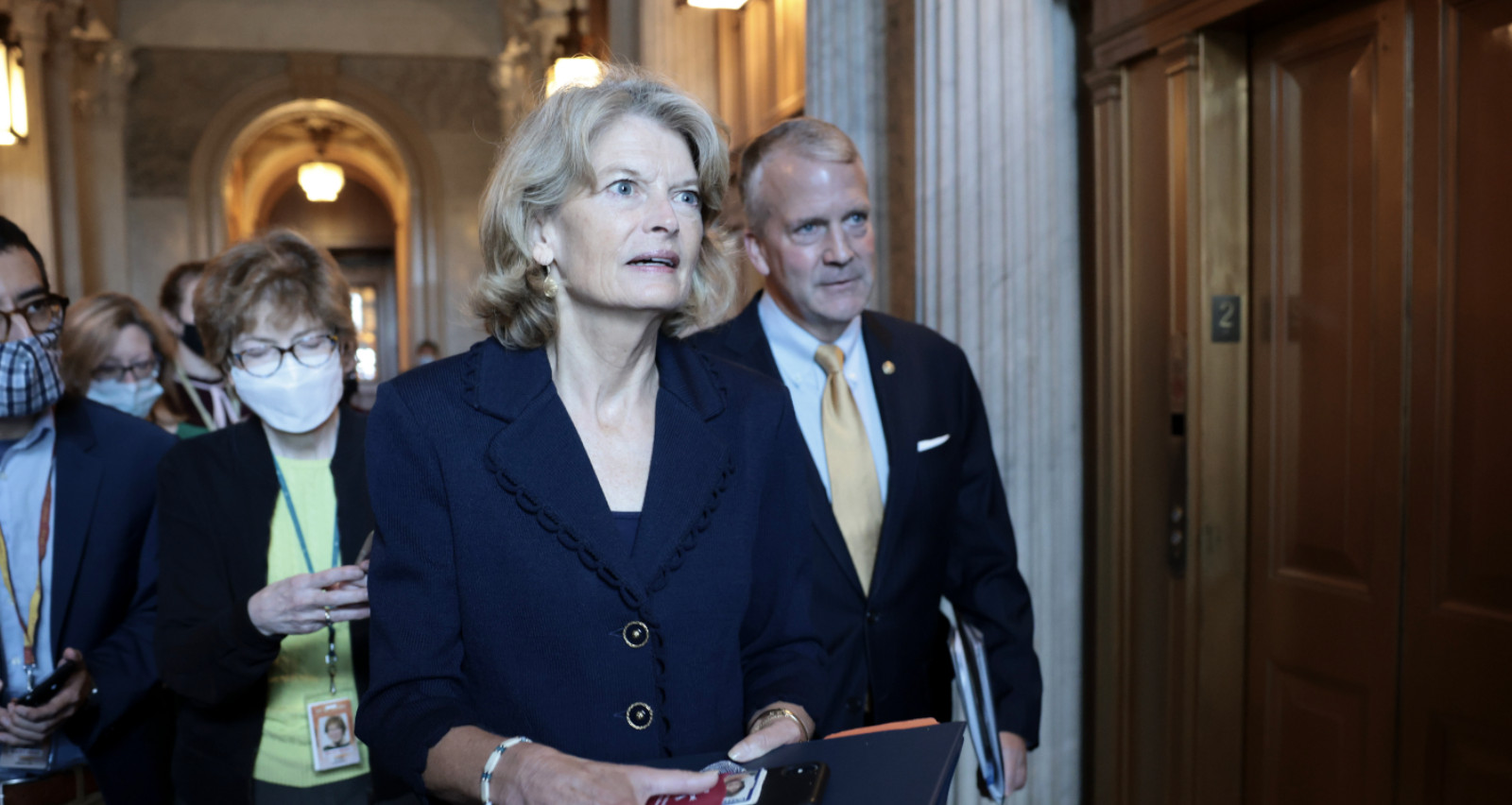
Vice President JD Vance is energizing voters in Alaska to go to the polls and vote for Republican Sen. Dan Sullivan.
Vance traveled to Alaska on Monday as Democrats are attempting to target another GOP-held seat in their battle for Senate control.
Before departing Washington, Vance acknowledged that former Democratic Representative Mary Peltola has made the Alaska race a bit tighter going into November—but that there was plenty of time to change that.
“You’re going to have a competitive Senate race in Alaska,” Vance told reporters before traveling north to campaign.
But Peltola’s crossover appeal and voter concerns surrounding affordability have given Democrats an opening in traditionally Republican territory.
Sullivan, a two-term Republican senator, is seeking another six years while helping Republicans defend their narrow Senate majority.
Republicans currently control 53 Senate seats, meaning Democrats need a net gain of four seats for an outright majority.
A 50–50 Senate would still leave Republicans effectively controlling the chamber through Vance’s constitutional power to cast tie-breaking votes.
Quantus Insights found Sullivan receiving 46.1% compared with Peltola’s 45.5%.
Sullivan defeated Begich in 2014 before winning reelection six years later and establishing himself as a durable Republican incumbent.
The Marine Corps veteran previously served in the George W. Bush administration before entering Alaska state government and eventually winning Senate office.
Peltola, meanwhile, became the first Alaska Native elected to Congress when she captured the state’s House seat in 2022.
She also became the first Democrat in roughly five decades to represent Alaska in the House.
Alaska LNG is happening thanks to a $50 billion+ investment from South Korea that we announced today at the @WhiteHouse. This project will deliver low-cost energy for Alaskans for generations and create 10,000+ good-paying jobs. A historic day for our state! https://t.co/XBQ9mmTbDG
— Sen. Dan Sullivan (@SenDanSullivan) September 30, 2026
Sullivan has countered by portraying Peltola as ultimately empowering national Democrats despite her carefully cultivated independent political image.
The Republican incumbent argues his seniority and relationships in Washington have delivered substantial federal support and economic benefits for Alaska.
Energy policy has become particularly important as voters confront high fuel costs and broader concerns surrounding household affordability.
Sullivan strongly supports expanded oil and natural-gas development, including drilling opportunities across Alaska’s resource-rich federal lands.
The Trump administration is simultaneously highlighting major energy investments as Republicans work to retain Sullivan’s seat.
The Energy Department is announcing $150 million for construction of approximately 223 miles of power transmission lines across Alaska.
The broader $400 million project would connect the Beluga power station with Healy and strengthen infrastructure serving much of Alaska’s population.
The administration is also promoting potential South Korean investment in Alaska’s massive proposed liquefied-natural-gas pipeline project.
That proposed pipeline would stretch approximately 807 miles from Alaska’s North Slope to a southern liquefied-natural-gas export terminal.
Trump has championed the project as an opportunity to unleash American energy while generating jobs and lowering costs for Alaskans.
Sullivan has long advocated developing Alaska’s natural resources and encouraged foreign investment capable of making major infrastructure projects economically viable.
The contest also unfolds under Alaska’s unusual election system, where voters rank candidates rather than selecting only one.
Three Republicans and Peltola currently occupy the November Senate ballot following changes after Alaska’s open primary.
Republicans are entering the final stretch of the 2026 midterm elections with a financial juggernaut that could prove decisive in the battle for Congress.
With control of the House and Senate at stake, President Donald Trump and Republican organizations have amassed hundreds of millions of dollars to defend GOP majorities and target Democrats across critical battleground states.
The numbers demonstrate just how formidable the Republican financial machine has become.
Federal Election Commission data through June showed Republican Party committees holding roughly $301 million in cash, compared with about $186 million for Democratic committees.
The Republican National Committee alone reported $128.5 million available, while the Democratic National Committee held just $16.3 million and carried $18.5 million in debt.
That advantage extends into the battle for the House.
The National Republican Congressional Committee announced in September that its war chest had reached $89 million, giving Republicans what the committee described as its largest cash advantage over Democrats at this stage of an election cycle.
Then came another extraordinary injection of cash.
An October fundraiser featuring Trump generated a record-breaking $36.8 million for the NRCC and Republican candidates, according to the committee.
But the biggest financial weapon available to Republicans may belong to Trump’s political operation.
MAGA Inc., Trump’s powerhouse super PAC, entered September with approximately $415 million available, an enormous stockpile that Republican strategists had spent months waiting to see deployed.
Now that money is pouring onto the battlefield.
Republican-aligned groups have reserved at least $888 million in political advertising during the closing stretch, compared with at least $666 million for Democratic groups, according to AdImpact figures reported by Reuters.
The Senate operation is equally formidable.
The Senate Leadership Fund, aligned with Senate Majority Leader John Thune, and affiliated organizations announced in August that they had raised more than $500 million this cycle.
More recent reporting indicates the organization alone has raised more than $600 million while deploying hundreds of millions into competitive Senate contests.
This article may contain commentary which reflects the author's opinion.
