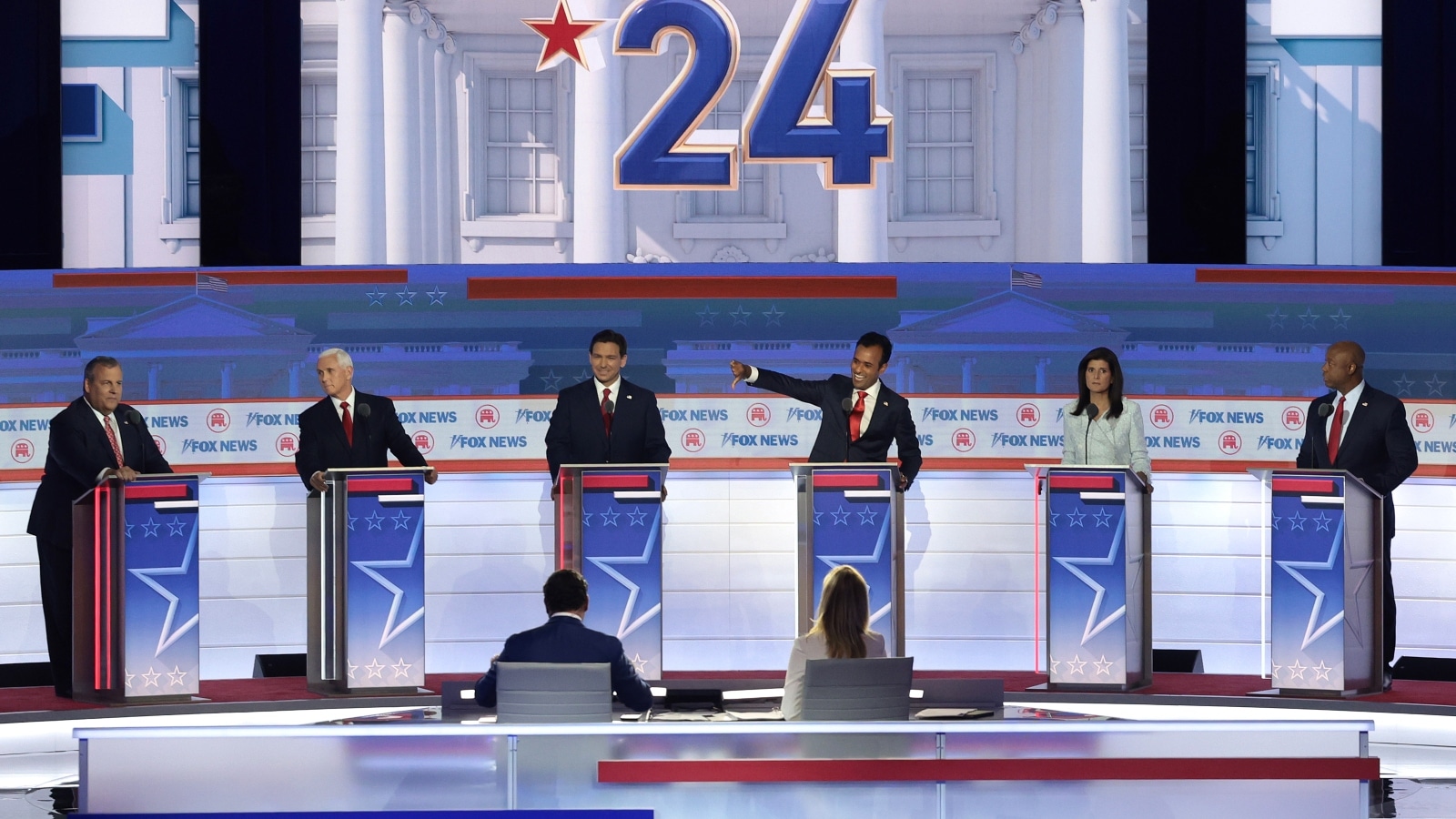
Another 2024 GOP presidential contender has chosen to call it quits after launching his admittedly long-shot campaign in February.
Steve Laffey, the former mayor of Cranston, R.I., announced on Friday he was getting out of the race, ABC News reported.
“I love being on the trail. I love meeting people,” he told ABC News. “I am crestfallen that I wasn’t able to cross the chasm.”
The outlet added:
Laffey never broke through in any national polls or had a breakout moment that could have placed him on potential voters’ radar, punctuated by his inability to qualify for the debate stage. He considers his low name recognition partially to blame for this.
Behind Miami Mayor Francis Suarez, he is the second Republican presidential hopeful to drop out. But unlike Suarez, Laffey decided to pull out because, aside from financial reasons, he no longer believes in the message of his party.
“I don’t have an avenue to tell people with a straight face, ‘It’s now October — how do I take off and take New Hampshire and keep going?’ But at the same time, I’m telling people the GOP is dead,” he said, adding that now he plans to re-register as an Independent.
NEW: Steve Laffey, the former mayor of Cranston, Rhode Island, is dropping out of the race for the 2024 Republican presidential nomination. https://t.co/vQRx4qlFbH
— ABC News (@ABC) October 6, 2023
“I am really, really upset about certain things with my party. I will be leaving the party,” he said.
Of course, he blamed former President Donald Trump.
“He’s an authoritarian figure who’s getting stronger,” Laffey told the outlet, adding that he thinks Trump should be in jail.
“There’s worse things than watching ‘Hawaii Five-0,’ the original one, on a Friday night eating some Breyers ice cream,” Laffey jokingly said of his immediate future. “You haven’t heard the last from me. It just won’t be, at least for now, as a Republican candidate for president, and it won’t be as a Republican.”
“I still think there’s a body of work that I can contribute to. I don’t know what it’s exactly going to be, I wish I did,” he said.
Trump is, by a mile, the leading GOP presidential contender heading into the primary season, despite being distracted by several indictments that he and tens of millions of his supporters see as little more than partisan political persecution.
But while he is far ahead of the Republican pack in surveys, he is running neck-and-neck with President Joe Biden in most national polls — so close, indeed, that one factor may make the difference in his favor next year, the winner likely depending on which candidate can muster the most support from eligible voters.
A recent national poll conducted by the Marquette Law School found that Trump received 51% of the vote to Biden’s 48% among registered voters, but that Biden had a slight 51%-49% edge among “likely” voters.
The poll shows that registered voters who are “very” or “somewhat” enthusiastic about the 2024 election favor Trump by a margin of 54% to 46%, Fox News reported.
“The difference in advantage shows how the outcome of the election may be determined by the success of respective efforts to mobilize voters over the coming 13 months,” the survey states.
Among “reluctant” voters, Biden leads Trump 47% to 51%.
The poll shows that 12% of voters intend to elect someone else besides Biden or Trump, with 4% saying they do not plan to vote.
“Registered voters view Trump as better able to handle the economy, immigration, inflation, creating jobs, and foreign relations, while Biden is seen as better at handling Medicare and Social Security, abortion policy, and climate change. A significant share says there is no difference or that neither candidate would be good on each issue,” the survey says.
A separate poll found even better news for Trump.
John McLaughlin, a leading pollster some consider to be the top in the nation, last week predicted a potential “electoral landslide” for Trump next year as Biden continues to slide in approval ratings and “Bidenomics” continues to eat into ordinary Americans’ paychecks.
This article may contain commentary which reflects the author's opinion.
